

By 5pm the client account manager is fielding the call nobody wants. By Tuesday 7am, two seats are empty, the client has docked the fill rate, and the candidate has ghosted the follow-up text.
The reflex is to blame the lab or the MRO. That is the wrong diagnosis. The lab did its job in 48 hours. What broke is the operations system on the agency side — the one that should have fired a recollection, a bench backfill, and a client update in parallel the instant the result code landed, not in sequence after a recruiter noticed it in a shared inbox.
The Monday-Afternoon Phone Call That Kills Tuesday Fills
A Friday collection is a bet against the calendar. Labs and MROs run limited weekend operations, so a specimen collected Friday afternoon typically clears validity screening Saturday and lands on the MRO's desk Sunday night or Monday morning. If it comes back clean, nobody notices. If it comes back dilute or non-negative, the agency has less than one business day to save a Tuesday morning start.
And the clock is not negotiable. When the creatinine level falls in the 2–5 mg/dL range, the Medical Review Officer will direct the employer to send the driver immediately for a recollection under direct observation. There is no "we'll schedule it tomorrow." The employer must immediately direct the employee to provide a new specimen under direct observation — no exceptions.
If the candidate refuses or fails to show, the consequence is worse than a missed fill. If the driver refuses, it is a refusal to be tested, which is a DOT violation requiring the DOT return-to-duty process. That candidate is now unplaceable at any DOT-regulated client until they complete return-to-duty — a process most staffing bench candidates will not survive.
The operational takeaway: the window between MRO notification and clinic close on Monday is the entire game. If your team is discovering the result in an email thread instead of a workflow trigger, you have already lost.
Why 'Dilute' and 'Non-Negative' Are Not the Same Problem
Recruiters routinely lump every MRO exception into one bucket labeled "failed drug test." That habit costs Tuesday starts because each result code has a different required action and a different clock. Treat them as one problem and you burn the recoverable cases along with the unrecoverable ones.
Here is the actual breakdown of what comes back from an MRO on a non-clean result:
| Result Code | What It Means | Required Action | Recovery Window |
|---|---|---|---|
| Negative-dilute (creatinine 2–5 mg/dL) | Specimen unusually close to substitution territory | Immediate observed recollection, mandatory | Same day if collection site is open |
| Negative-dilute (creatinine >5 mg/dL) | Valid negative, dilution flagged | Employer may direct one immediate retest, not observed | 24 hours per policy |
| Non-negative (awaiting donor callback) | Lab-confirmed non-negative, MRO in interview process | Donor must call MRO back, DER may need to assist | Up to 72 hours, sometimes 10 days |
| Invalid | Sample failed validity criteria | Depends on MRO instruction — often recollect | Varies |
| Cancelled | Fatal flaw in collection process | Full recollect, no shortcuts | Restart the clock |
The creatinine threshold matters because it dictates whether observation is legally required. When creatinine exceeds 5 mg/dL, the employer may but is not required to direct one immediate retest. This retest must not be conducted under direct observation unless there is a separate independent basis for observed collection.
Non-negatives sit in a different queue entirely. The candidate has to speak with the MRO before anything moves. The MRO must make three attempts to establish contact with the donor in the first 24 hours after receiving the non-negative result from the lab. If the contact attempts are unsuccessful, the MRO staff will ask the designated employer representative for assistance.
What happens next depends on donor behavior. If the DER makes contact with the donor, the DER notifies the MRO that contact has been made, and the donor has 72 hours to contact MRO back. If there is no contact back to the MRO by the donor within the 72 hours, the MRO releases the result as is to the employer. That is where a non-contact positive gets locked in — not because the donor was using, but because they never returned the call.
Operators who route every exception through the same recruiter inbox miss the distinction. A non-negative pending donor contact is potentially recoverable in 18 hours if the DER pings the candidate fast. A negative-dilute in the 2–5 mg/dL range needs a clinic slot booked before 5pm today. Same-day rebook on a >5 mg/dL dilute is a policy call, not an emergency. Different problems, different playbooks.
The Real Bottleneck Is Chain-of-Custody Paperwork, Not the Lab
Agencies obsess over lab turnaround times and negotiate SLAs on result speed. Meanwhile the actual bottleneck is a piece of paper the collection site was supposed to hand over on Friday.
After CCFs are obtained and matched to results, MROs review the documentation to ensure there are no fatal flaws which would cancel the tests. If Copy 2 of the Custody and Control Form is missing, illegible, or contains a fatal flaw, the MRO cannot release the result. The review stalls until the collection site produces the paperwork, and if the flaw is fatal, the entire test is cancelled and a fresh collection is required.
That means an agency can do everything right — same-day collection, credentialed candidate, confirmed clinic — and still lose Tuesday because a collector at a walk-in clinic wrote the wrong specimen ID or forgot to initial a box.
Warning
Fatal flaws on a CCF are not fixable after the fact. A cancelled test forces a full recollect and restarts the entire result clock. Verify CCF completion at the clinic door — not Monday morning when you're already short.
The practical fix is a checkpoint in your onboarding workflow that requires the candidate (or a mobile collector) to confirm CCF completion before leaving the collection site. A photo of Copy 4 uploaded to the candidate record is a two-minute step that saves the four-day recovery cycle when Copy 2 goes missing.

Building the Parallel-Path Response: Recollect, Backfill, Notify — At the Same Time
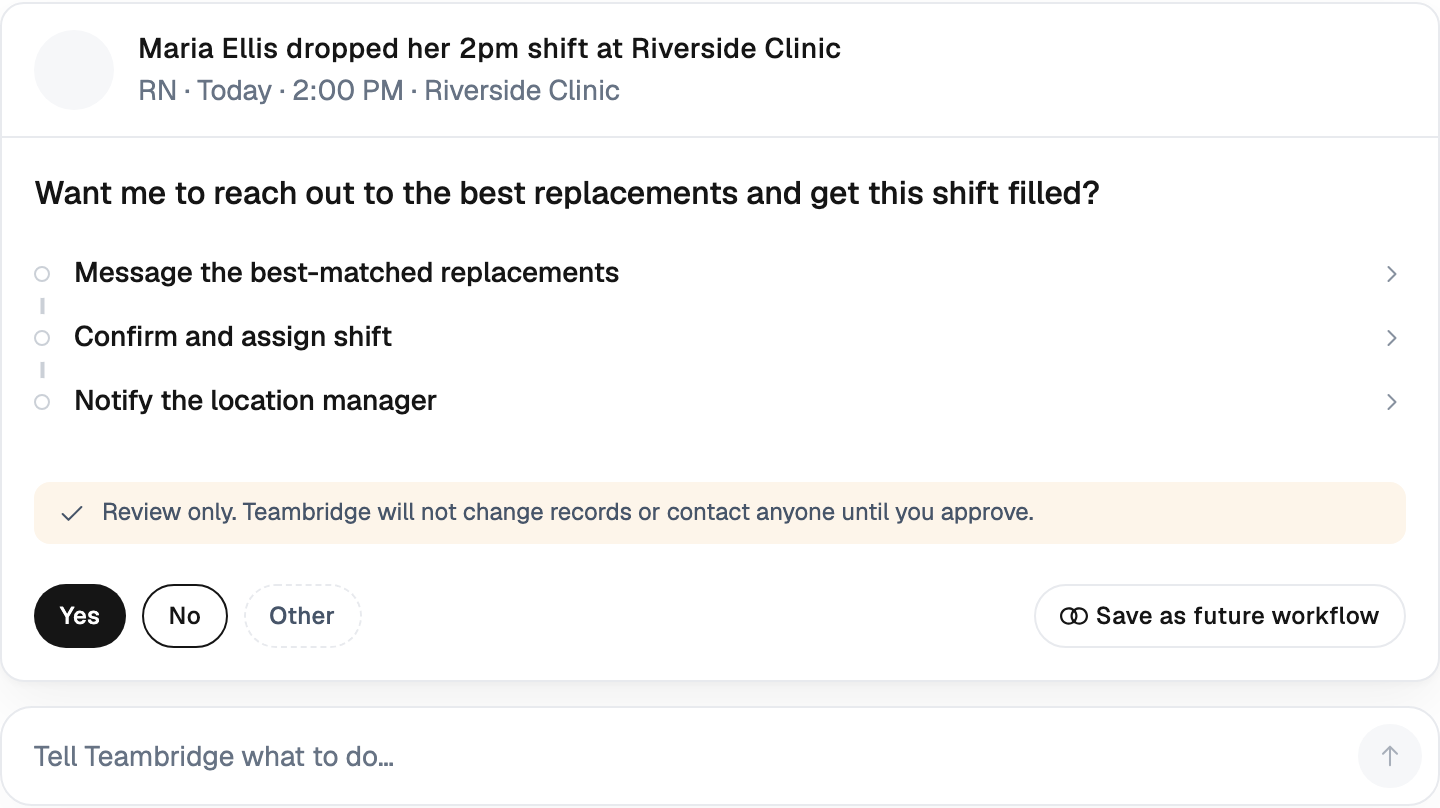
The agencies that hold their fill rates when MRO exceptions hit are not the ones with the fastest recruiters. They are the ones whose operations platform fires three workflows the instant the MRO webhook lands, before any human has read the notification.
Here is the playbook.
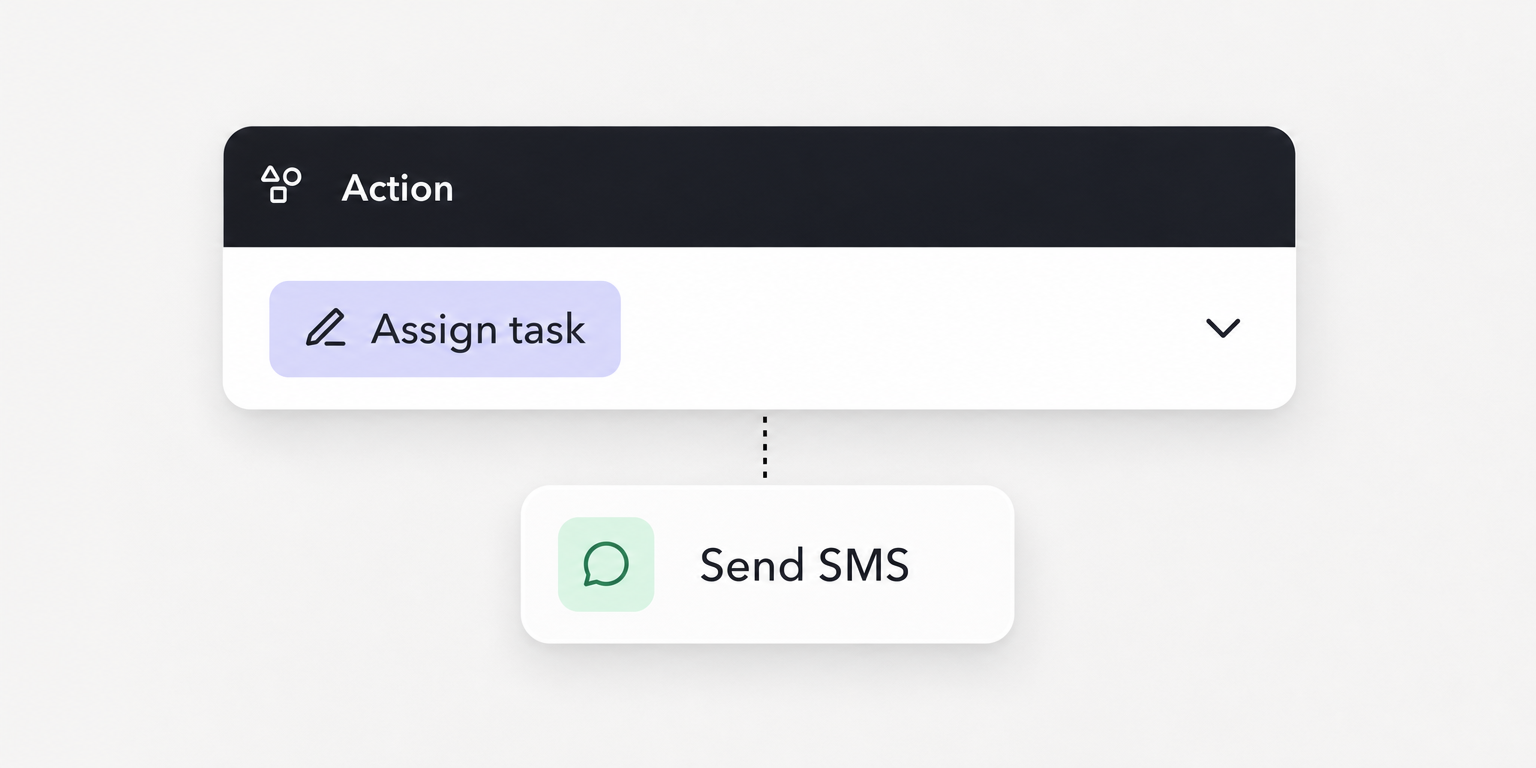
- Same-day observed recollection routed automatically. The workflow checks the result code, pulls the candidate's home ZIP, finds the nearest SAMHSA-certified collection site with hours remaining before close, books the slot, and texts the candidate the address plus a hard deadline. Direct-observation flag is included in the collector notification when the result is a 2–5 mg/dL dilute.
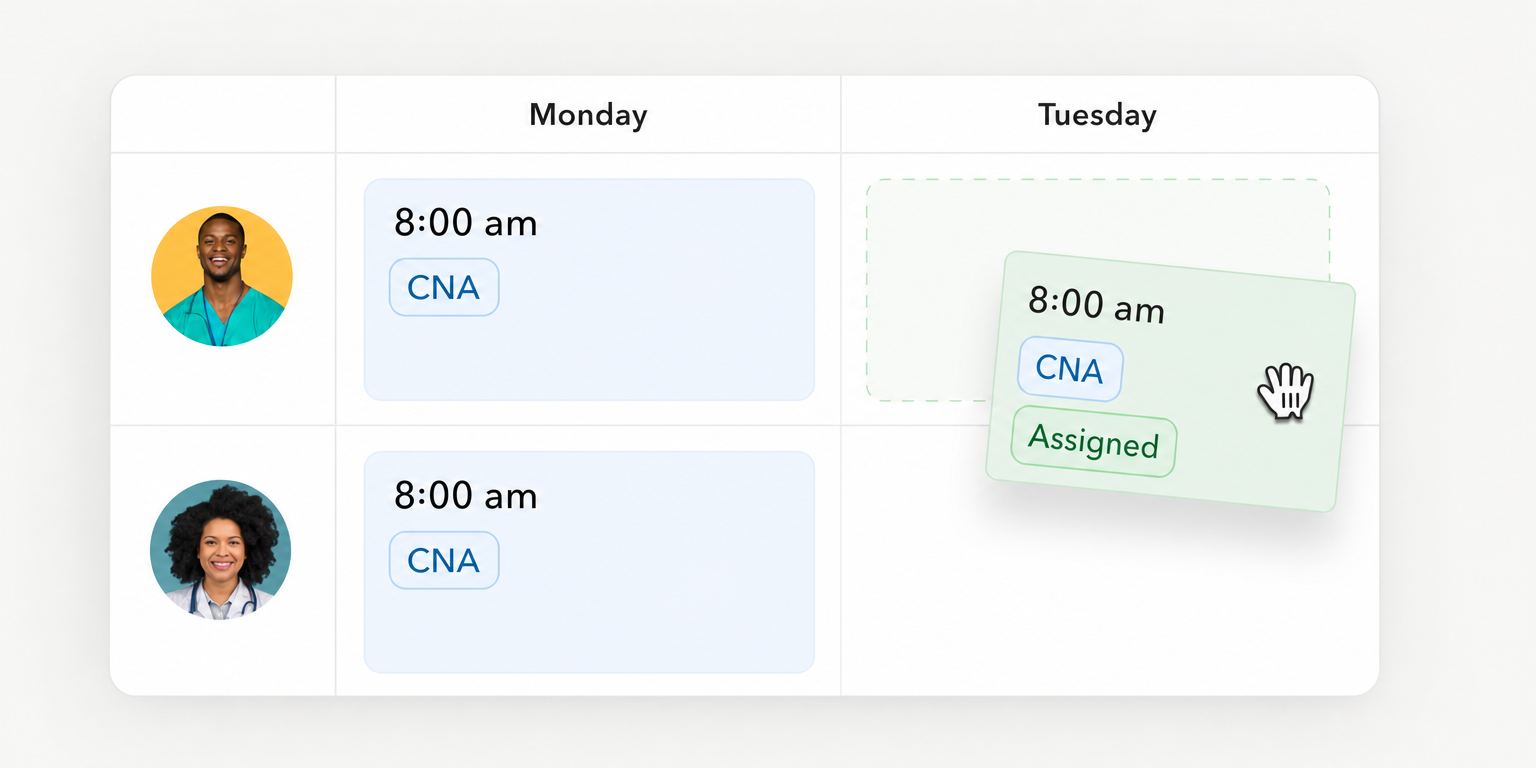
- Bench backfill pre-staged, not activated. Scheduling surfaces the top three credentialed backups for the Tuesday shift and sends them a conditional offer: confirm availability, but the shift is not yours yet. This costs nothing if the primary candidate re-tests clean by Monday evening, and saves the fill if they don't.
- Client account manager gets a templated status note. Not a panic call at 4:45pm. A composed update at 3:20pm: "One candidate in re-verification, backup pre-staged, will confirm Tuesday roster by 8pm Monday." Clients tolerate managed exceptions. They do not tolerate surprise no-shows.
Timing inside the day matters. If your recruiter submits the initial collection request at 4pm on Thursday, the candidate cannot reach the clinic before close and the whole timeline slides by 24 hours. Submitting collection requests in the morning gives the candidate a full business day to complete the collection and gives the lab a full business day of processing before the weekend clock takes over.
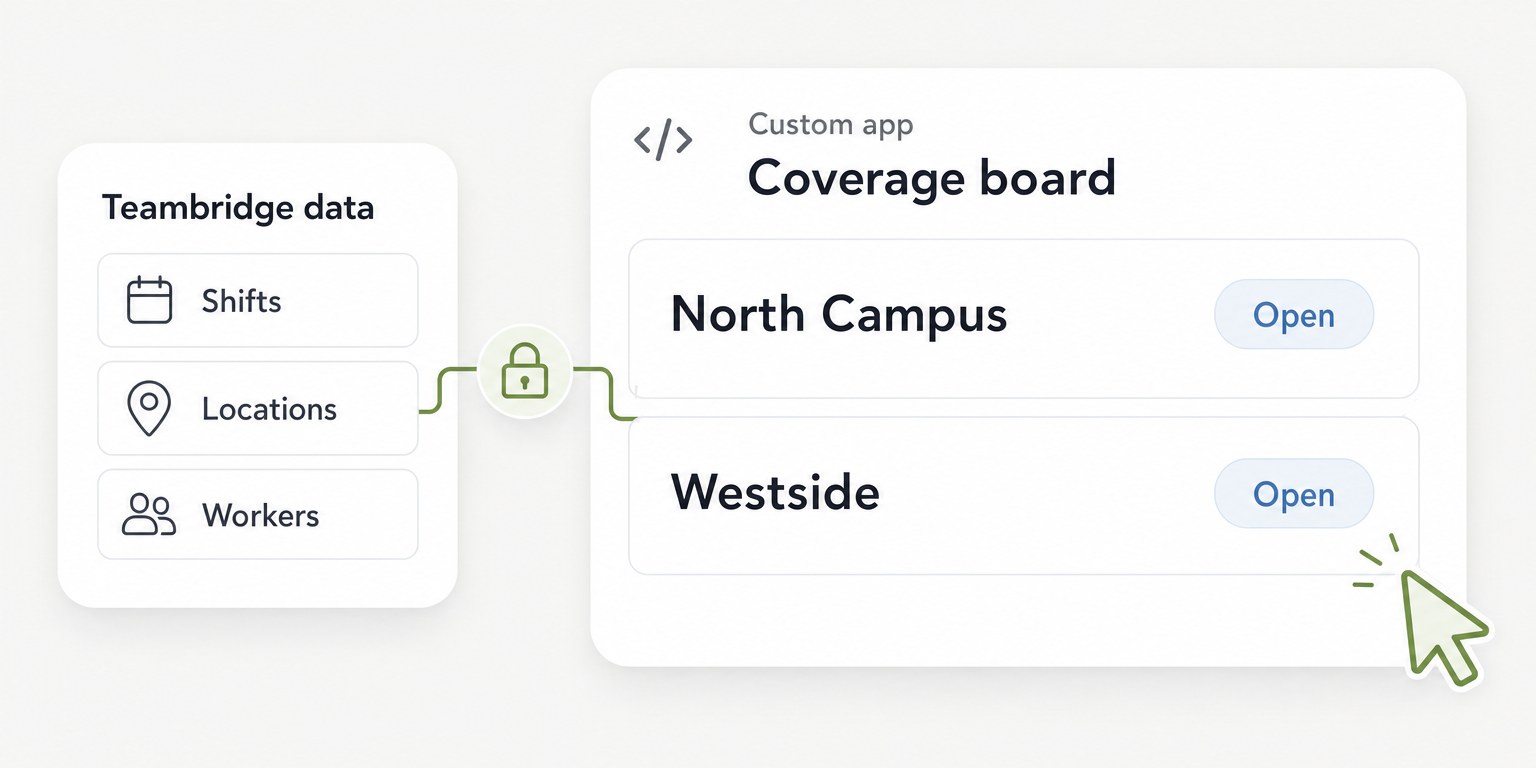
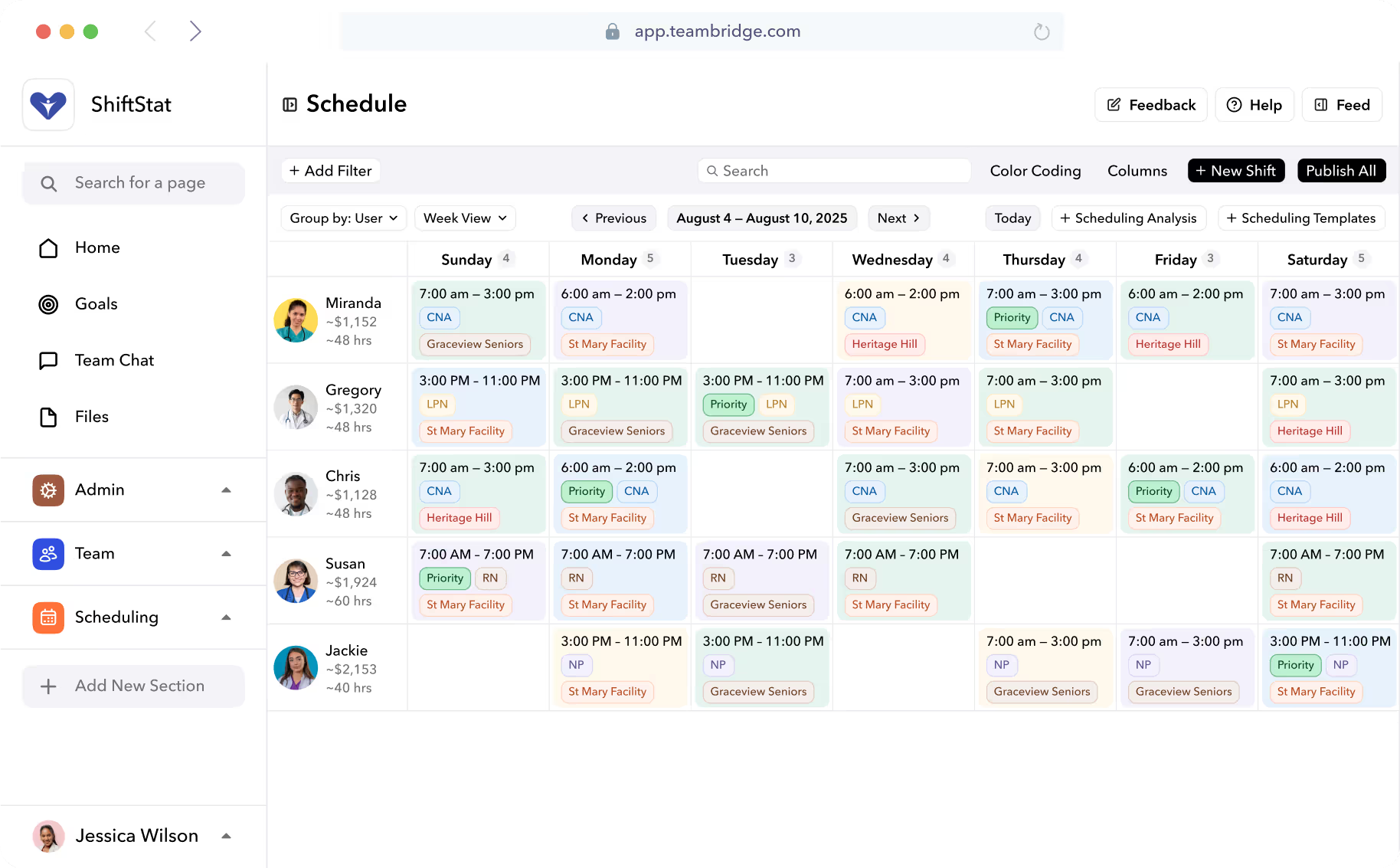
This is exactly the kind of trigger-driven ops that Teambridge Automations is built for — a no-code workflow builder that listens for MRO result webhooks and fires the recollect, backfill, and comms steps in parallel without a recruiter having to remember any of them. Scheduling handles the bench-backfill side, tagging at-risk shifts and enforcing credential rules on the auto-fill.
Ready to move?
Ready to see Teambridge in action?
Consistency Is a Legal Requirement, Not a Nice-to-Have
The biggest audit exposure is not the missed fill. It is the recruiter who decided to retest one candidate and skip another because the client was leaning on them for the Tuesday start.
Under DOT rules the equal-treatment requirement is explicit. You must treat all employees the same for this purpose. That is not a suggestion. It applies to the >5 mg/dL dilute retest decision and it applies to every discretionary step in the MRO exception process.
There is flexibility on how the policy is structured, but not on whether it gets applied uniformly. The employer must treat all employees the same — you cannot retest some and not others for the same test type. Different policies may be set for different test types (e.g., always retest pre-employment, never retest random). Employees must be informed of the policy in advance. Only one additional test is permitted — if the second result is also negative dilute, it stands as the final result.
That last point is the one recruiters forget. Only one recollection is allowed; the result of the second collection is the result listed, even if another negative dilute. There is no third bite at the apple.
The operational implication: your recollection policy needs to be documented, acknowledged during candidate onboarding, and enforced by the rules engine — not by whichever recruiter happens to be on the account. Ad-hoc decisions create discrimination exposure that lawyers love and clients don't understand. A centralized policy stored in Admin Tools with exception reports pulled monthly is the audit defense.
The moment a recruiter's judgment overrides a written recollection policy, you have two problems: an inconsistent test result and a discrimination claim waiting to be filed.
Friday Collections Are the Silent Killer of Tuesday Starts
Calendar math is the single biggest lever a scheduling coordinator has, and most branches ignore it.
A Friday afternoon collection near a holiday weekend hits limited weekend operating hours at both the lab and MRO. Even a clean result takes 48–72 hours to move through validity, confirmation, and MRO review. This process can take up to two weeks because every part of the process has a rule and when the rule is not followed, delays will occur. Drug testing involves much more than having a donor provide a sample in a cup. There are a lot of moving parts, and if even one part gets hung up, the entire process comes to a halt.
If the Friday collection comes back dilute Monday afternoon, the observed recollect eats what's left of Monday. And there is no shortcut back to the primary specimen. Bottle A retest is generally not permitted. The MRO cannot request a retest of the primary specimen to resolve a dilute result — a fresh collection is required, which means a new clinic visit, a new CCF, a new lab window.
Here is the operator's rule of thumb:
- Tuesday 6am industrial start: initial collection completed by Thursday close of business. Not Friday. Not "Friday if the candidate can make it."
- Monday start: initial collection completed by the prior Wednesday close.
- Anything collected inside the 72-hour buffer: flagged at-risk in scheduling with a pre-staged bench backup.
This is not conservative. It is the minimum viable buffer for a workflow that has to survive one MRO exception and still deliver the fill.
Rapid Testing at Placement: Where It Fits and Where It Doesn't
On-site instant urine cups and oral fluid kits solve part of this problem. For non-DOT roles they eliminate the clinic trip entirely and give the recruiter a pass/fail read in five minutes at intake.
The tradeoff is real but bounded. Instant screens do not replace lab-based MRO review for DOT-regulated positions. Transit of a sample may take 24 hours. Lab testing may take up to several days if a substance is found in the sample. A non-negative instant still requires lab confirmation — the instant only tells you which candidates need the full pipeline, not which candidates can skip it.
The pragmatic model for most light industrial staffing books:
- Instant screen at intake to filter obvious fails before onboarding investment (badges, PPE, transportation coordination).
- Lab MRO for the client-required record to satisfy the compliance and audit trail the client's HR team will ask for.
- DOT-regulated roles skip the instant entirely and go straight to lab collection to avoid dual documentation.
Instant screens are becoming the default for warehouse, fulfillment, and light manufacturing placements. That does not mean the lab pipeline goes away. It means the two systems run in parallel and your ops platform has to track both result states against the same candidate record. See how the pieces fit for warehouse and fulfillment operations on the Light Industrial side.
What to Automate This Quarter
One quarter of focused work replaces most of the Monday-afternoon scramble. Here is the checklist.
- Webhook the MRO/TPA result feed into your ops platform. Dilute and non-negative results should trigger the observed-recollection workflow within minutes, not hours. If your MRO doesn't publish webhooks, an email-parser workflow into the same trigger is a second-best that still beats a shared inbox.
- Document the recollection policy per test type and capture acknowledgment during onboarding. Pre-employment, random, post-accident, return-to-duty — each gets its own rule, each is written down, each is acknowledged in the candidate's onboarding record. See Onboarding for the acknowledgment capture step.
- Auto-tag at-risk shifts in scheduling. Any Tuesday industrial fill dependent on a Friday collection gets flagged, and a bench backup is pre-staged automatically. No recruiter judgment required, no reliance on institutional memory.
- Instrument the CCF-received checkpoint. A missing Copy 2 should raise an exception at the clinic door on Friday, not surface as a cancelled test on Monday. Photo upload from the candidate is the cheapest version of this.
- Build a Monday-morning MRO exception report. Every branch, every result code, every recovery status. If your ops leadership is finding out about Monday fills at Wednesday's stand-up, the feedback loop is too slow to improve.
The underlying principle: MRO exceptions are predictable, they follow published rules, and they can be routed by software. What kills Tuesday starts is not the science of the lab. It is the fact that most agencies still run this process on recruiter memory and email threads.
A workforce operations platform that ties credential status, MRO result state, and shift assignment together in one system of record — that is what turns the Monday-afternoon phone call from a fire drill into a workflow. The Teambridge Platform is built around exactly that model.
For the full regulatory text on what the MRO can and cannot do when a dilute result lands, the source is 49 CFR §40.197 at the US Department of Transportation.

About the author
Content Writer at Teambridge
Anis Nanai is a content writer at Teambridge, with a focus on workforce management and the realities of running hourly teams. He prioritizes conversations with customers, staying close to the market, and understanding how workforce needs are changing. His writing connects those concerns to practical decisions about scheduling, time tracking, staffing, and automation. He examines product developments through the questions that matter to operators: what does this solve, how would it work for my team, and what evidence supports it?
Company perspective: this author works at Teambridge. Customer outcomes are attributed to their published sources.
View LinkedIn profile