

The claim gets approved. The tax rate goes up. Nobody involved thinks this is a training problem, because it isn't. It's a system problem — one that repeats across every agency that runs shift offers through personal SMS threads instead of a channel that captures evidence.
Why staffing agencies bleed on UI claims that should have been denied
Staffing carries structurally higher unemployment exposure than almost any other employer category. Staffing firms see higher volumes of unemployment claims due to short-term assignments, frequent client-controlled terminations, and the transitional nature of temp work. Once an assignment ends without immediate reassignment, or a client releases a worker for attendance or poor performance, staffing agencies are often the "employer of record" attached to the claim.
That wouldn't matter if every claim were adjudicated on the merits. It isn't. Each SUI claim filed and approved can influence your agency's SUI tax rates — more claims typically equal higher future rates. Effective claims management minimizes approvals, keeps your costs lower, and directly contributes to a healthier bottom line.
The moment that decides most of these claims — a temp declining a specific, offered assignment — happens in a text message, a WhatsApp thread, or a two-minute phone call. It rarely gets captured in a form the state will honor 30, 60, or 90 days later at an appeal hearing.
The state doesn't care what the recruiter remembers. It cares what the recruiter can prove.
The "suitable work refusal" rule, in plain operator language
Federal law gives you the hook. Refusal of suitable work or referral or failure to apply with an employer after accepting referral, without good cause, is reason for disqualification. Three major considerations determine whether or not to impose a denial. First: Was there a bona fide offer of work or referral to work?
What counts as "bona fide" is more specific than most recruiters realize. The offer of work must be for a specific job. The details of the job, i.e., duties, starting pay, hours of work, etc., must be documented. A vague "we've got shifts, let me know if you want them" is not an offer. A named client, a start time, a wage, and a role — that's an offer.
Seventeen states go further and require the worker to check in with the agency between assignments before they can claim. Per the National Employment Law Project, seventeen states, including Arkansas, Colorado, Connecticut, Delaware, Florida, Georgia, Idaho, Iowa, Kansas, Michigan, Minnesota, Nebraska, New Mexico, North Dakota, Oklahoma, Rhode Island, and Texas, have this provision.
The other side of the map is worse for agencies. Some states, like California and Ohio, presume temp workers eligible for unemployment unless the employer can show otherwise. In those states, the burden of documenting a refusal falls entirely on you.
What the state actually looks at
| Element the state expects | Where it usually lives at a staffing agency | Where it should live |
|---|---|---|
| Specific shift offered (client, role, pay, hours, location) | Recruiter's memory or Slack DM | Broadcast log tied to shift ID |
| Method of offer (SMS, call, app push) | Personal iMessage thread | System-of-record with timestamp |
| Delivery / read receipt | Screenshot, maybe | Automated delivery status |
| Worker's response or non-response window | Reconstructed from texts | Accept/decline/no-response state |
| Reason for refusal | "She said something about her kid" | Reason code + free-text note |
| Signed acknowledgment of the reassignment rule | Paper file in a drawer | Versioned e-signature record |
Where the evidence usually falls apart
Here's the concrete failure mode. A recruiter offers a Wednesday shift by text from her personal phone. The temp replies "can't do it, sorry." The recruiter moves on. Six weeks later, the state sends a notice. Now the SUI coordinator has to reconstruct what happened.
She calls the recruiter. The recruiter left in April. She pulls the ATS notes — there's a line that says "declined 4/14." No shift ID. No pay rate. No client. No proof of delivery. At the appeal hearing, opposing counsel asks: what shift, at what wage, at what location, and how do you know the worker received the offer?
Meanwhile, workers are being coached from the other side. Legal aid organizations publish playbooks telling former temps to save any message that says "we don't have work for you right now" — because that flips the case. Under Massachusetts precedent, when a temporary staffing agency refused to offer an employee additional assignments after the employee quit his current assignment without prior notice, the employee's separation from his employment with the temporary staffing agency is considered due to "discharge" not "quit."
The worker is walking in with screenshots. You need the mirror image: proof of a specific, suitable shift offered, delivered, and refused.

What a defensible shift-level refusal record actually contains
Stop thinking about this as a claims task. It's a data model. A record that survives a state hearing has to tie together seven things:
- The shift itself — client name, role, physical location, pay rate, start time, end time, total hours, commute distance from the worker's address.
- The offer transmission — the exact message sent, the channel (SMS, in-app push, email), the timestamp.
- Delivery status — did the message reach the device, and when.
- The worker's response — accept, decline, or no-response with a defined window.
- A reason code — if they gave a reason, capture it in a structured field, not a paragraph of prose.
- A suitability note — why this shift is comparable to their prior assignment in wages, hours, and conditions.
- The signed acknowledgment — the onboarding document where the worker agreed to contact the agency for reassignment.
This is not overkill. It's what the Department of Labor's adjudicator guide actually asks for. The investigation covers two questions: Was there a genuine offer of work? And was the offer successfully conveyed to the claimant?
The deadlines are punishing. Most states give employers 10 to 14 days to respond to a claim notice. Miss the window and the claim is approved by default. Regardless of the perceived complexity of the claim, always respond within the statutory period. The 2011 Unemployment Insurance Integrity Act requires timely and adequate responses — or agencies face significant penalties and risk negative reputational impact with state workforce agencies.
Warning
A late or incomplete response is not a neutral event. Under the Unemployment Insurance Integrity Act, repeated inadequate responses can strip your right to relief from charges even when you win the underlying case. The clock starts the day the notice is mailed, not the day someone in your office reads it.
Ready to move?
Ready to see Teambridge in action?
The onboarding gap that kills the appeal before it starts
Here's the ugly twist. You can have a perfect refusal log and still lose — if the worker was never properly notified that failing to contact you for reassignment could cost them benefits.
Oklahoma is a clean example. A temporary worker can be disqualified if they refuse a suitable job assignment without good cause, inform the temp agency of a decision to cease seeking or accepting assignments, become unavailable to accept a suitable job assignment without good cause, or accept employment with a client of the temporary help firm. But those limitations only bite if the paperwork was done right. In order for these limitations to be effective, the worker must have been advised of their obligations and been provided a copy of a document that clearly outlines these provisions and that clearly states that unemployment benefits may be denied for failure to comply.
Massachusetts case law is even more specific about what counts. The Mass Legal Services precedent digest shows how easily notices get voided. Where the claimant had not worked for the employer temporary-staffing agency for over two years and was not provided with a new written notice or reminded of the requirement to request re-assignment during his latter period of employment, the claimant had good cause for his failure to request re-assignment; the absence of contact information on the form given to the employee eliminated the requirement that the employee call at the end of an assignment; and a claimant was entitled to UI where he was neither advised in writing of the contact requirement nor told of means by which to contact the employer.
Read that carefully. A missing phone number on the notice was enough to void the requirement. And the notice must also specify that failure to request a new assignment may affect eligibility for UI benefits.
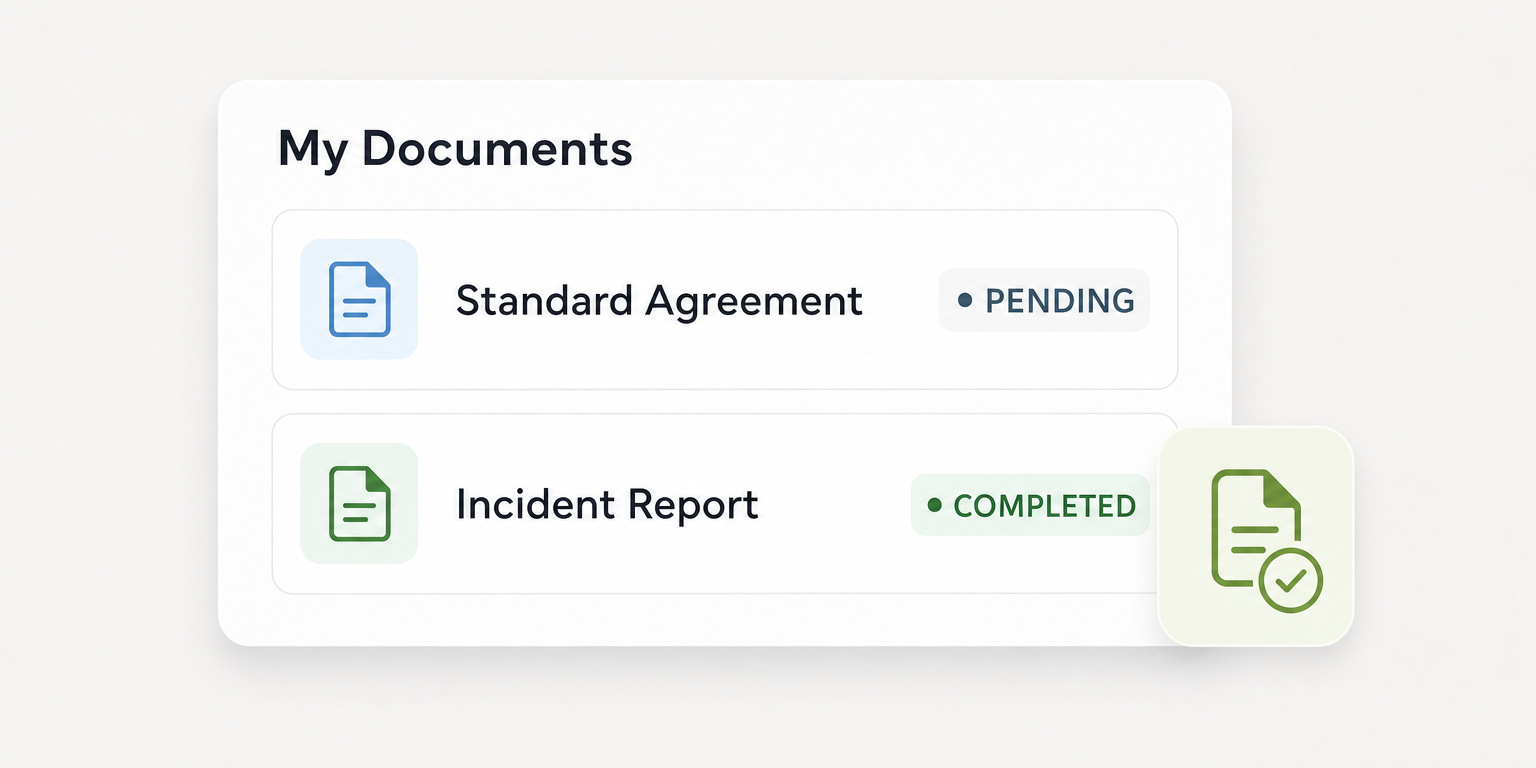
This is why the onboarding acknowledgment can't be a scanned PDF sitting in an email folder. It has to be a versioned, timestamped, e-signed record in the same system that captures your shift offers. When the state asks, you need to produce: the exact document the worker signed, the date they signed it, and the language it contained. Teambridge's Onboarding module handles the signature capture and version history so the SUI team can pull it in one query.
Building refusal capture into the shift offer workflow, not on top of it
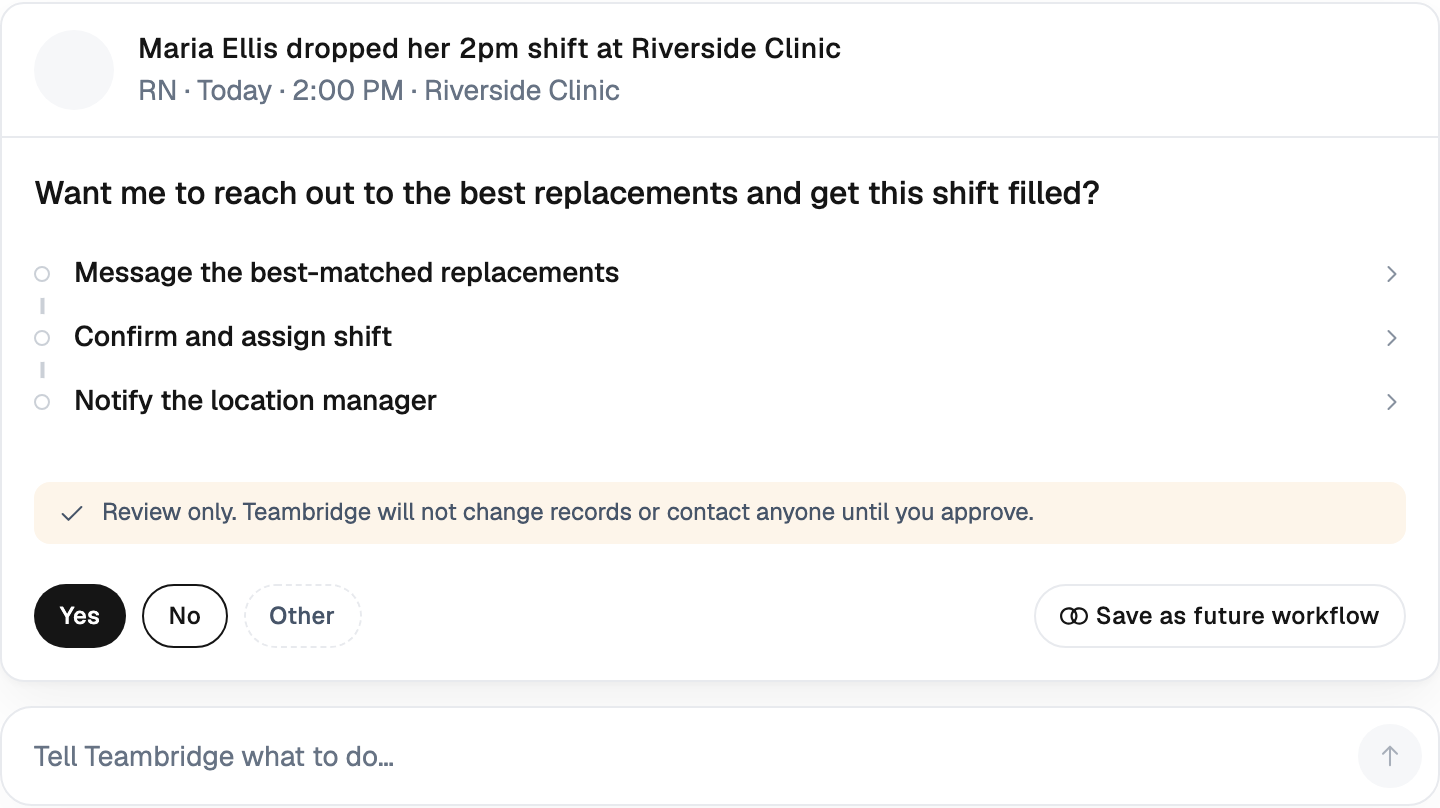
Refusal evidence can't be a post-hoc scramble. If the recruiter has to remember to log something after the fact, they won't. The refusal record has to be a byproduct of how shifts get offered in the first place.
That means every offer — whether it goes out as a 500-worker broadcast or a one-off DM — passes through a channel that automatically logs:
- The shift metadata (client, role, pay, time, location)
- The recipient list
- The transmission method and timestamp
- Delivery and read status per recipient
- Each worker's response state: accepted, declined, or no-response after N hours
- Optional reason code when declining
When a claim notice arrives, the SUI coordinator queries by worker ID and pulls every shift they were offered in the disputed period, every response, and the signed onboarding acknowledgment. One report, one export, one PDF stapled to the protest form.
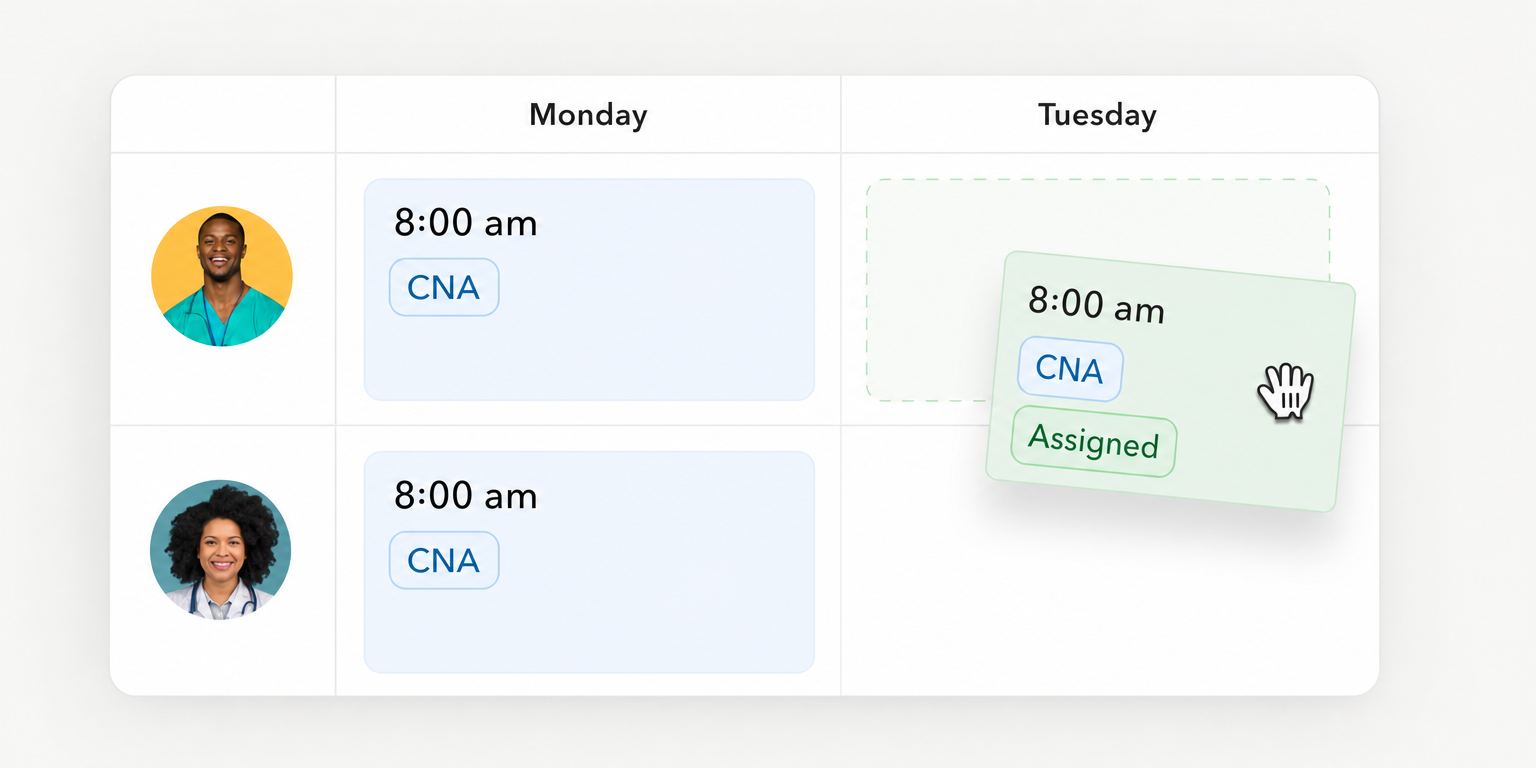
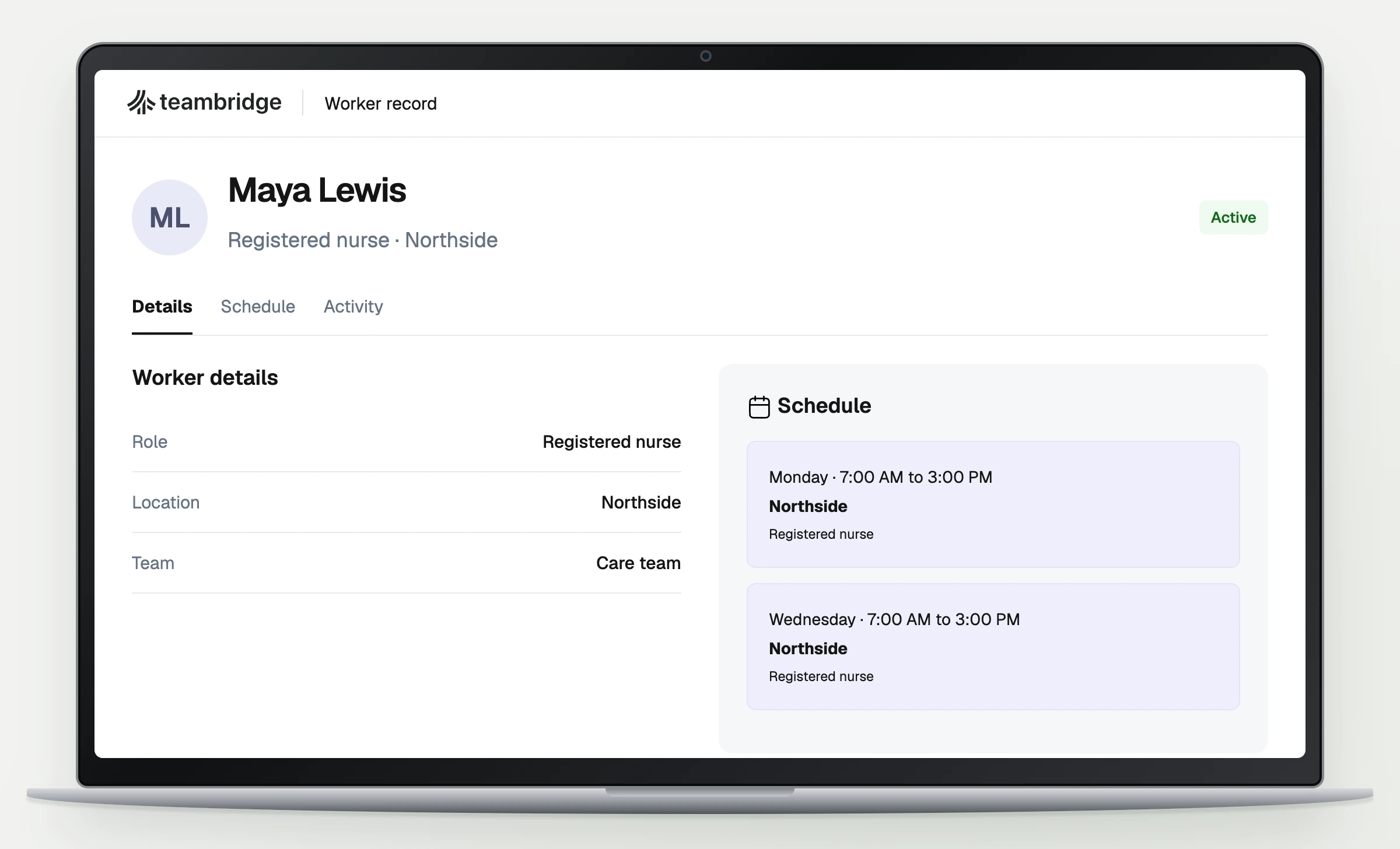
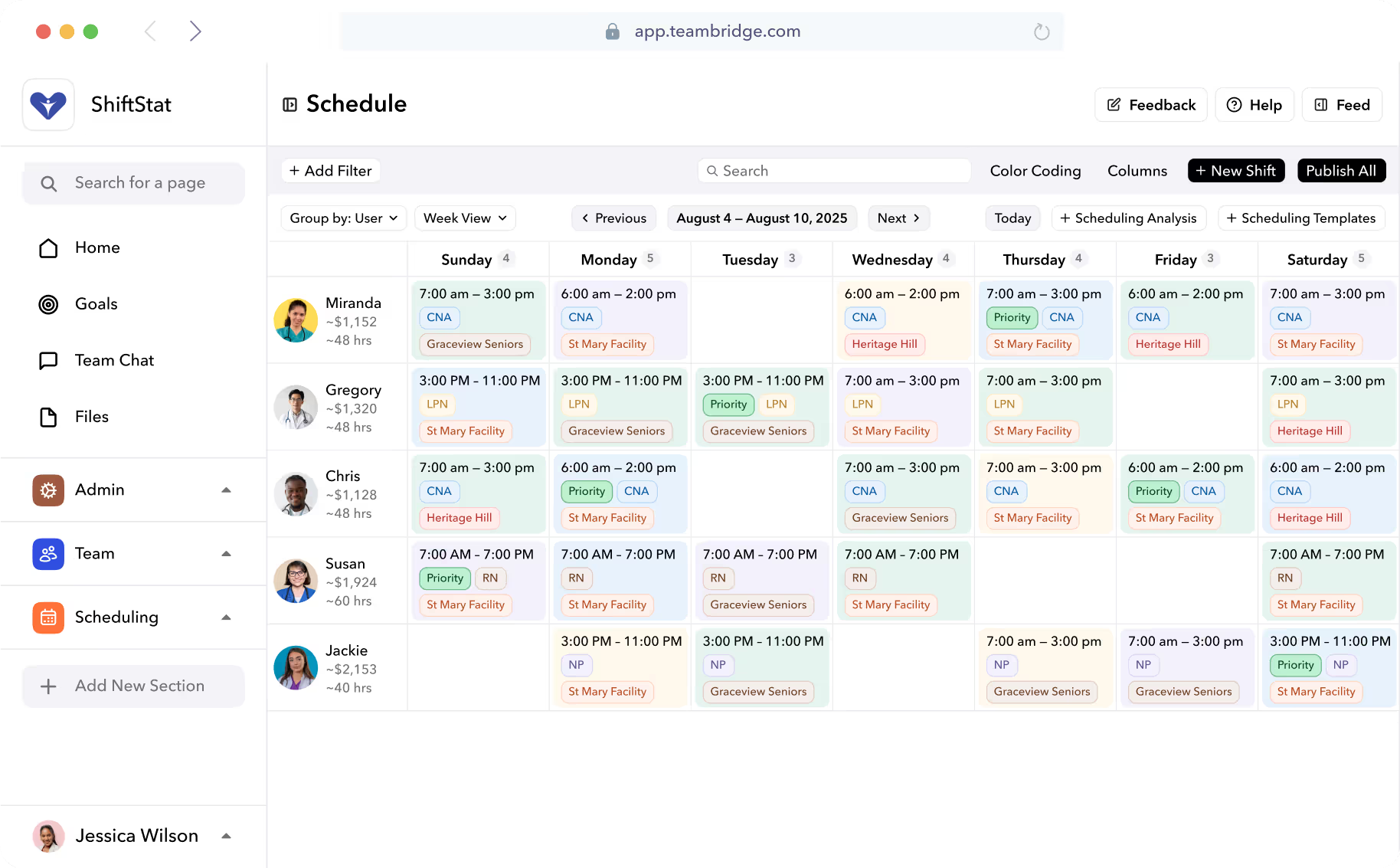
This is exactly the architecture behind Teambridge's Communication and Scheduling products — offers happen inside the platform, with the Mobile App as the worker-facing surface. The recruiter's personal phone is not part of the evidence chain.
Before and after: what a UI response actually looks like
| Step | Recruiter-phone workflow | System-of-record workflow |
|---|---|---|
| Notice arrives | Coordinator emails 4 recruiters asking who worked with the claimant | Coordinator queries claimant ID in one platform |
| Reconstruct offers | Recruiters dig through personal texts, some already deleted | Report shows every shift offered in the disputed window |
| Prove delivery | Screenshot, if it exists | Automated delivery + read receipts attached |
| Prove suitability | Recruiter memory of prior assignment | Assignment history and pay rate in same record |
| Prove onboarding notice | Search shared drive for a scanned PDF | Pull signed, versioned acknowledgment by worker ID |
| Time to filing | 6–9 days, often late | Under 48 hours |
The 10-day response drill
Operationally, the cadence looks like this once the system is in place:
- State notice hits the SUI shared inbox and is routed to the coordinator the same day.
- Coordinator opens the worker's profile in the platform and pulls the assignment history, the last shift offered, the refusal log with delivery status, and the signed onboarding acknowledgment.
- Suitability is verified against the worker's prior earnings and role.
- Protest is drafted with exhibits attached, filed inside the statutory window — well before the 10 to 14 day deadline.
- A calendar reminder is set for the appeal date and the file is preserved.
Compare that to the typical scramble: three recruiters, two former recruiters, one shared inbox, four personal phones, a Dropbox folder nobody has access to, and a paralegal trying to reconstruct dates from a Slack channel that only goes back 90 days.
Tip
Set your internal SLA at 5 business days, not the state's 10. The extra buffer absorbs mail delays, PTO, and the inevitable second-round document request from the adjudicator.
What to fix this quarter
Don't try to solve everything at once. Five moves, in order:
- Move all shift offers into a channel that logs metadata and delivery. No more offers from personal phones. If a recruiter texts a worker directly, that offer doesn't exist for UI purposes.
- Rewrite the onboarding acknowledgment to meet your state's specific notice requirements. Include the reassignment contact number, the exact statutory language, and the consequence of non-compliance. Store the signed version with a timestamp and a version hash.
- Define a reason-code taxonomy for refusals. Ten codes, no more: transportation, childcare, illness, accepted other work, pay too low, commute too long, hours don't fit, health/safety concern, other with note, no response. Train recruiters to tag every decline.
- Set an internal SLA that beats the state's 10–14 day window by at least 3 business days. Route claim notices to a single owner. Automate the reminder.
- Run a quarterly audit of every contested claim you lost. For each loss, trace the failure back to a missing artifact: no shift ID, no delivery receipt, no signed onboarding notice, missed deadline. Fix the class of failure, not the individual case.
The agencies that get this right stop treating UI as a compliance tax and start treating it as an operational output of the shift lifecycle. The evidence is generated in the ordinary course of offering work. The SUI coordinator pulls a report instead of an investigation.
For a deeper look at how the offer, response, and record layers connect, see the Staffing Agencies industry page and the Teambridge platform overview.

About the author

Content Writer at Teambridge
Anis Nanai is a content writer at Teambridge, with a focus on workforce management and the realities of running hourly teams. He prioritizes conversations with customers, staying close to the market, and understanding how workforce needs are changing. His writing connects those concerns to practical decisions about scheduling, time tracking, staffing, and automation. He examines product developments through the questions that matter to operators: what does this solve, how would it work for my team, and what evidence supports it?
Company perspective: this author works at Teambridge. Customer outcomes are attributed to their published sources.
View LinkedIn profile