It's 6:47 AM Monday. Your recruiter's phone lights up. A temp who was supposed to be picking orders at a light-industrial client is standing in the parking lot with sneakers on and no record of site-specific hazard training. The gate guard sent him home. The client just called to say don't bother sending a replacement — they'll use the other agency on the MSP list this week.
Every ops leader in staffing has lived this. The instinct is to blame the worker or the recruiter. That's the wrong root cause. Gate turnaways are almost always a handoff failure between three systems: what the host employer requires, what your ATS and scheduler know, and what the worker has on their phone when they show up. Close that loop and Monday mornings stop bleeding fills.
The Monday 6 AM turnaway: what actually happens at the gate
The scene repeats across warehouses, food-processing plants, and manufacturing sites every week. A worker is dispatched Friday afternoon. The recruiter confirms attendance Sunday night. Monday morning the worker arrives and the site safety lead asks for proof of the two-hour forklift-adjacent pedestrian awareness module the host requires. There's no proof. Turnaway.
The direct cost is one lost fill and one bill-back. The indirect cost is bigger: a client who now questions whether your agency can be trusted with the volume ramp they're planning for Q4. Multiply that by even three or four incidents a month and you've eroded a book of business.
Host employers aren't tightening the gate arbitrarily. The safety data justifies it. In 2021, the rate of injuries and illnesses in warehousing was 5.5 incidences per 100 workers, more than double the national rate of 2.7 workers across all industries, according to a DOL Office of Inspector General audit. That's the operating environment your clients are managing. They will not budge on site-specific training, and they shouldn't.
The gate isn't getting looser. Every operational improvement you make has to assume stricter attestation, not less.
Who owns what: the OSHA split most agencies still get wrong
Ask five ops leaders where the agency's training responsibility ends and the client's begins and you'll get five answers. OSHA has actually been explicit about this for a decade.
The staffing agency should provide generic safety and health training when hiring new employees, and the host employer should provide site-specific training when bringing temporary employees onto its project. That's the baseline division. But splitting the work doesn't split the liability. Staffing agencies have a duty to inquire into the conditions of their workers' assigned workplaces. They must ensure that they are sending workers to a safe workplace. Ignorance of hazards is not an excuse.
And both parties are on the hook if training doesn't happen. Temporary staffing agencies and the employers that hire temp workers are jointly responsible for providing a safe work environment, including joint responsibility for providing any required training. OSHA could cite both the hiring employer and the staffing agency for violations. The hiring employer should provide site-specific and task-specific training, while the staffing agency provides general safety and health awareness training.
Here's the concrete RACI most agencies can adopt without a lawyer:
| Task | Staffing Agency | Host Employer |
|---|---|---|
| General safety orientation (hazard communication, right-to-report) | Responsible | Consulted |
| Site-specific hazard training (this warehouse, this equipment) | Verifies received | Responsible |
| PPE identification per job code | Consulted | Responsible |
| PPE supply (who buys, who issues) | Per contract | Per contract |
| Confirming training completed before first shift | Responsible | Accountable |
| Removing worker if training gap discovered | Responsible | Consulted |
| Documenting all of the above | Both | Both |
The agency's job is not to teach the client's forklift rules. The agency's job is to know those rules exist, know they were delivered, and have a record before the worker walks through the gate.
The three data gaps that cause gate turnaways
When you audit a month of turnaways, root causes cluster into three buckets. All three are data gaps, not training gaps.
1. The hazard list never made it into your system
The account manager took the client meeting. Somewhere in the SOW there's a line about steel-toed boots and high-vis vests. It's in a PDF in a shared drive. It's not in the job-code record inside your scheduler or ATS, so when the recruiter fills the shift, no PPE requirement fires. The worker gets a text with the address and the start time and nothing else.
2. Site-specific training was completed but never confirmed back
OSHA's guidance is precise on this handoff. Host employers must train employees on worksite-specific hazards, then send confirmation of that training back to the staffing agency, and both parties must maintain records. When that confirmation never arrives — or arrives via email and dies in an inbox — the agency has no way to gate the schedule on it.
3. The worker has no attestation record on their phone
Even when training happened and confirmation was filed, the worker often can't prove it at the gate. The site safety lead asks "did you complete the orientation?" and the worker shrugs. If there's no digital pass, no signed acknowledgment on their device, the gate treats it as if it never happened.

The Sunday-night pre-flight check every dispatched temp should pass
Think of this like an airline pre-flight: no single item is complicated, but the checklist has to run every time, and any red flag grounds the flight. Before shifts release Monday morning, every dispatched worker should clear five gates:
- PPE assignment confirmed. Job code requires steel-toes, cut-resistant gloves, high-vis. Worker has been issued them, or acknowledged in writing that they own compliant gear.
- Site-specific hazard briefing acknowledged. The host's orientation module is complete and the worker has tapped through the acknowledgment on their phone.
- Host-employer confirmation received. Written confirmation from the client that site-specific training occurred, on file, within the three-business-day window.
- Credentials current through the shift end date. No forklift cert expiring Tuesday for a Monday-through-Friday assignment.
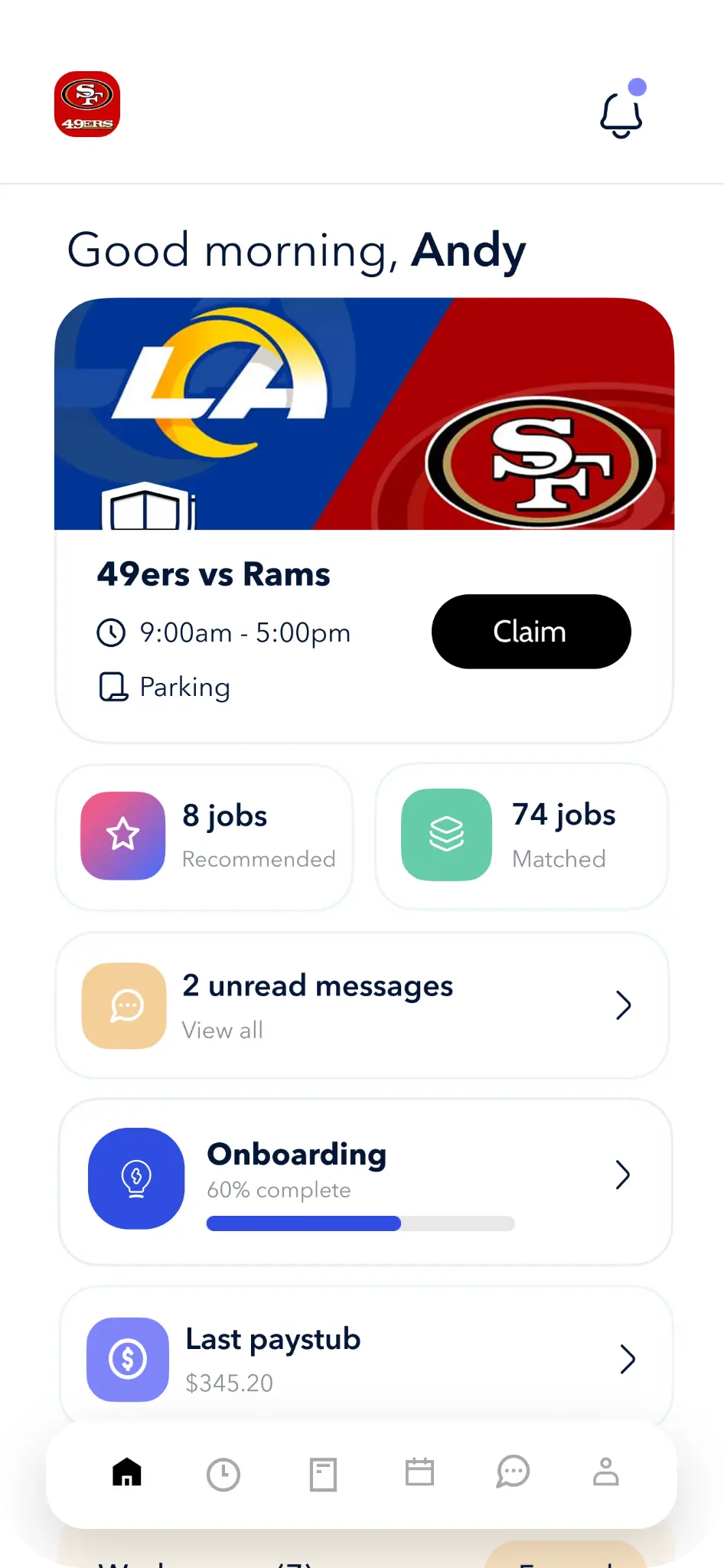
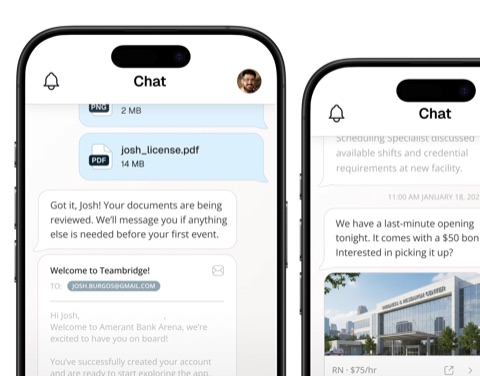
- Mobile-accessible pass. The worker can pull up a screen at the gate showing name, client, job code, training complete, PPE issued, and shift window.
Tip
Run this as a scheduler rule, not a checklist a coordinator eyeballs. Humans miss items at 4:30 PM Friday. Rules don't.
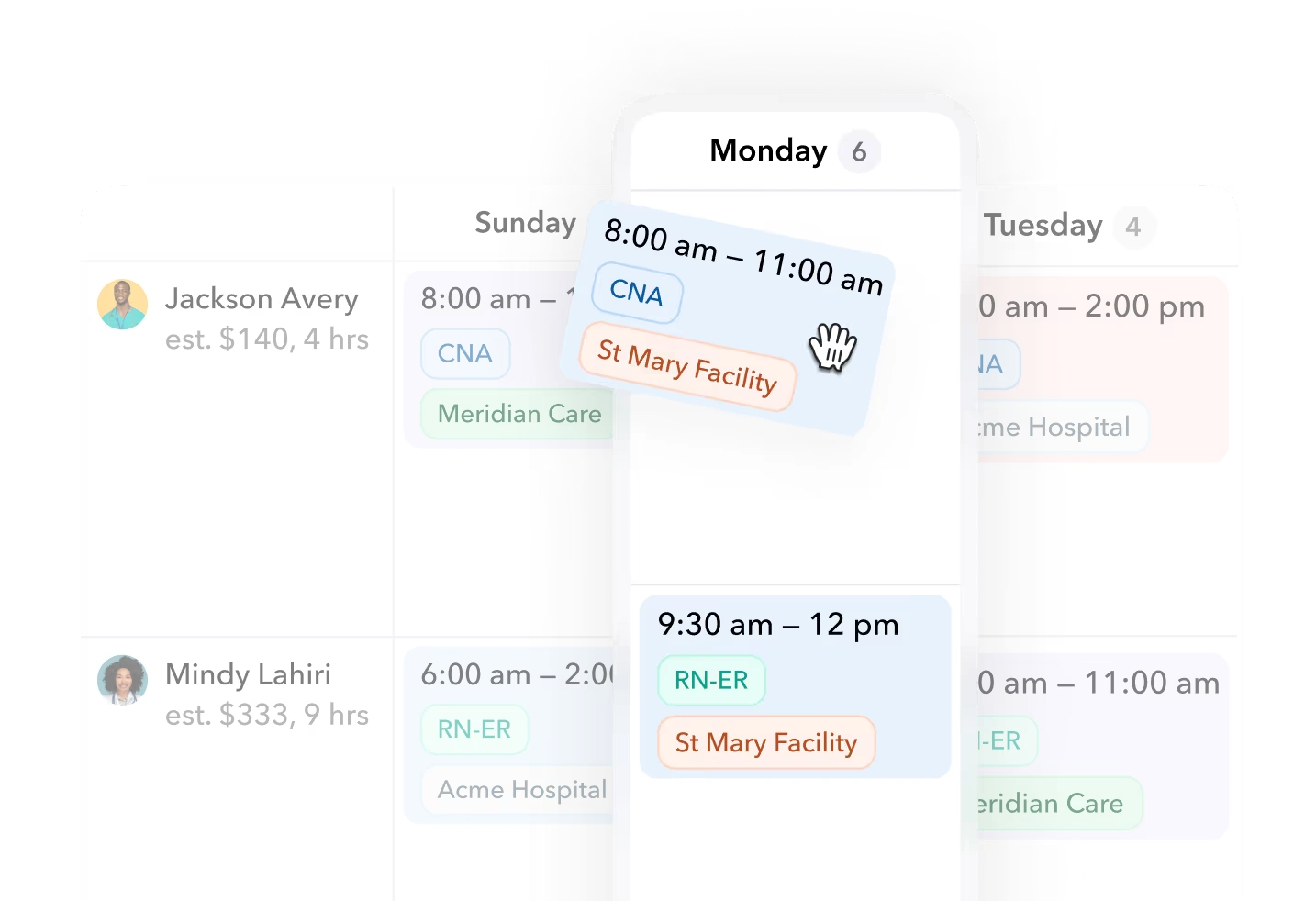
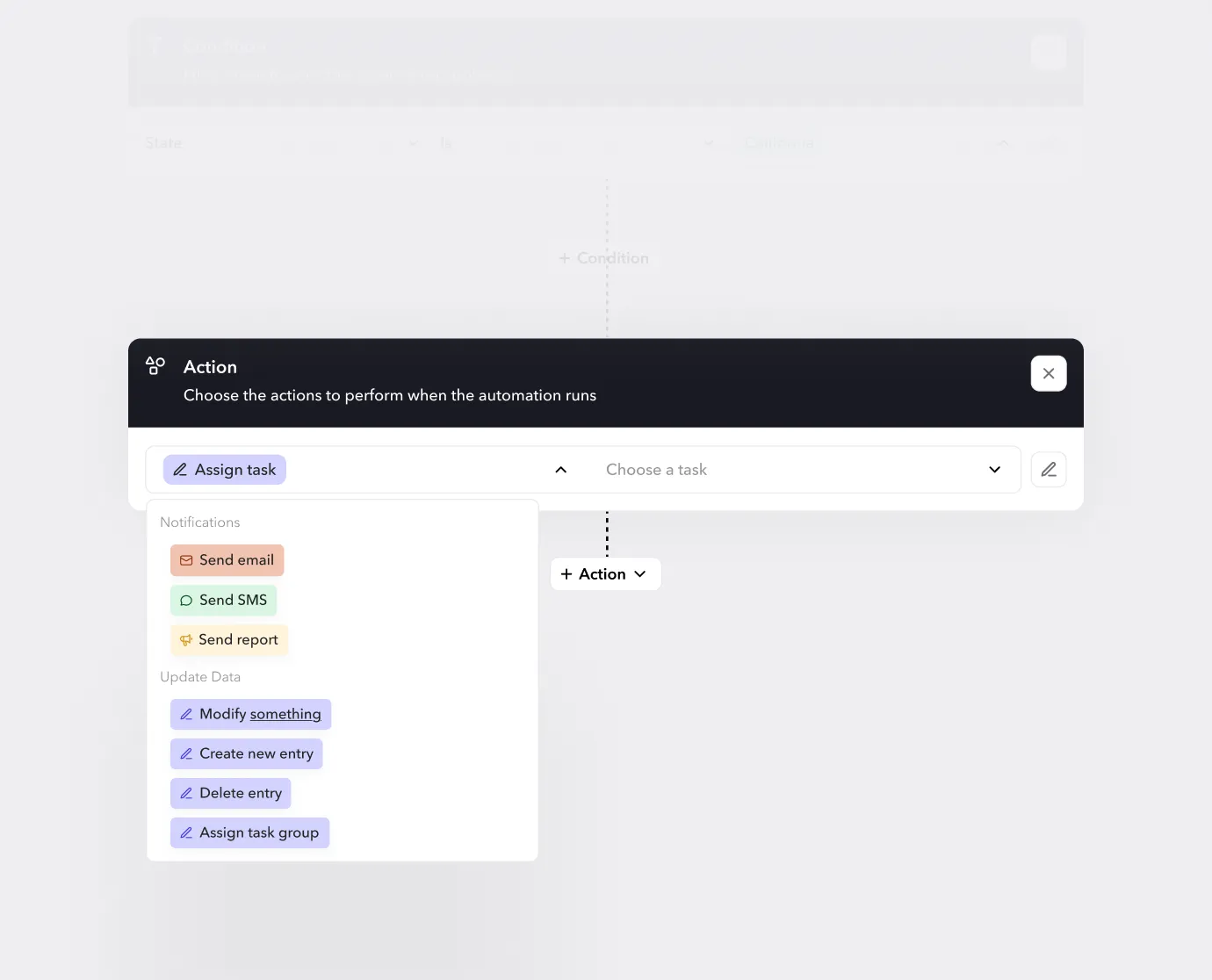
This is the point where Onboarding and Scheduling have to talk to each other. Training, PPE issuance, and credential status all live on the worker profile. The scheduler reads that profile at dispatch and either releases the shift or blocks it. Automations chase the missing pieces on a clock — 24, 48, and 72 hours out — so the coordinator isn't manually pinging the client every Friday afternoon.
Ready to move?
Ready to see Teambridge in action?
Contract language and hazard intake: fix it upstream with the client
Most gate failures are actually sales-handoff failures. The AE closed the account, the ops team inherited a job order, and nowhere in that transition did anyone codify what PPE is required for which job code, who supplies it, and who confirms training.
OSHA has been direct about what the contract needs to say. Defining, clarifying, and communicating the employers' and worker's responsibilities protects the workers of both the staffing agency and of the host employer. The contract should specify who is responsible for all such communications with the temporary worker. On PPE specifically, Required personal protective equipment (PPE) needed. The contract with the staffing agency should clarify which employer will pay for and supply any required PPE.
Build a hazard-intake template your account manager fills at client onboarding. It should capture, per job code:
- Physical hazards present (forklift traffic, heights, chemicals, heat)
- Required PPE and who supplies each item
- Host-employer training modules and how completion is confirmed
- Tasks the worker is prohibited from performing without additional approval
- Point of contact for site emergencies
That intake data doesn't live in a spreadsheet. It gets pushed into the client record in your scheduler as a placement rule. If a recruiter tries to dispatch a worker who doesn't clear the rule, the system stops them before the shift releases — not after the gate turns them away.
When to walk: the removal rule most agencies won't enforce
Here's the conversation most ops leaders avoid. If a host employer is not delivering site-specific training and you know it, keeping workers on that site is your liability. OSHA's guidance is explicit that the agency has a decision to make, and both options are legitimate.
It is OSHA's view that staffing agencies and host employers are "jointly responsible" for temporary workers' safety and health. As these blogs make clear, fulfilling the shared responsibility for temporary worker safety requires thoughtful coordination between staffing agencies and host employers. OSHA has previously acknowledged that a host employer may have more knowledge of the specific hazards associated with the host worksite, while the staffing agency has a more generalized safety responsibility to the employees. As a result, OSHA allows host employers and staffing agencies to divide training responsibilities based upon their respective knowledge of the hazards associated with the specific worksite.
And the follow-through, from the same Seyfarth analysis: the agency either fixes the training gap with the client, provides its own site-specific training after a walkthrough, or removes its workers from the site.
Warning
A documented removal is cheaper than a citation, an injury, or a wrongful-death suit. The financial math is not close. Enforce the rule.
Give your recruiters and account managers a written removal-authority policy. Spell out who can call the removal (ops manager, not the recruiter), what triggers it (missing training confirmation past 72 hours, refused walkthrough, prior incident on-site), and the exact language for the client conversation. When it's scripted, it happens. When it's judgment-call, it doesn't.
One record, one workflow: what this looks like in Teambridge
The fix is not another training module. It's collapsing credentials, PPE assignments, host-employer training confirmations, and dispatch rules into one workflow.
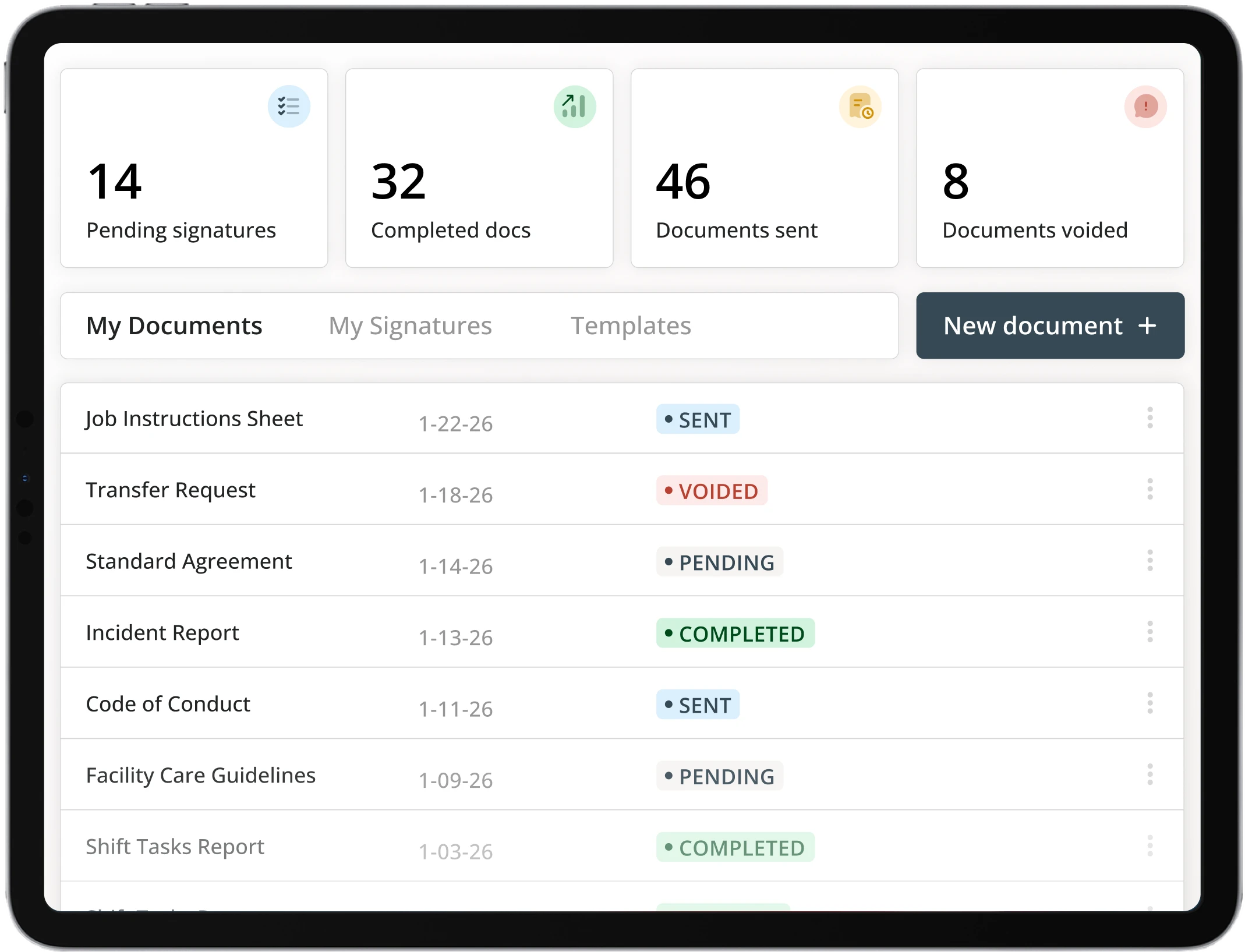
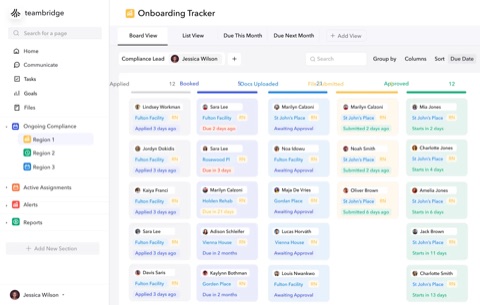
Inside Teambridge for staffing agencies, the worker profile holds all of it: generic safety orientation completed by the agency, host-employer training confirmed per client and job code, PPE issued or worker-owned attestation, credential expirations tracked forward. The Scheduling engine enforces the rule at dispatch. No shift releases for Client X, job code Y, unless training-confirmed equals true and PPE-issued equals true.
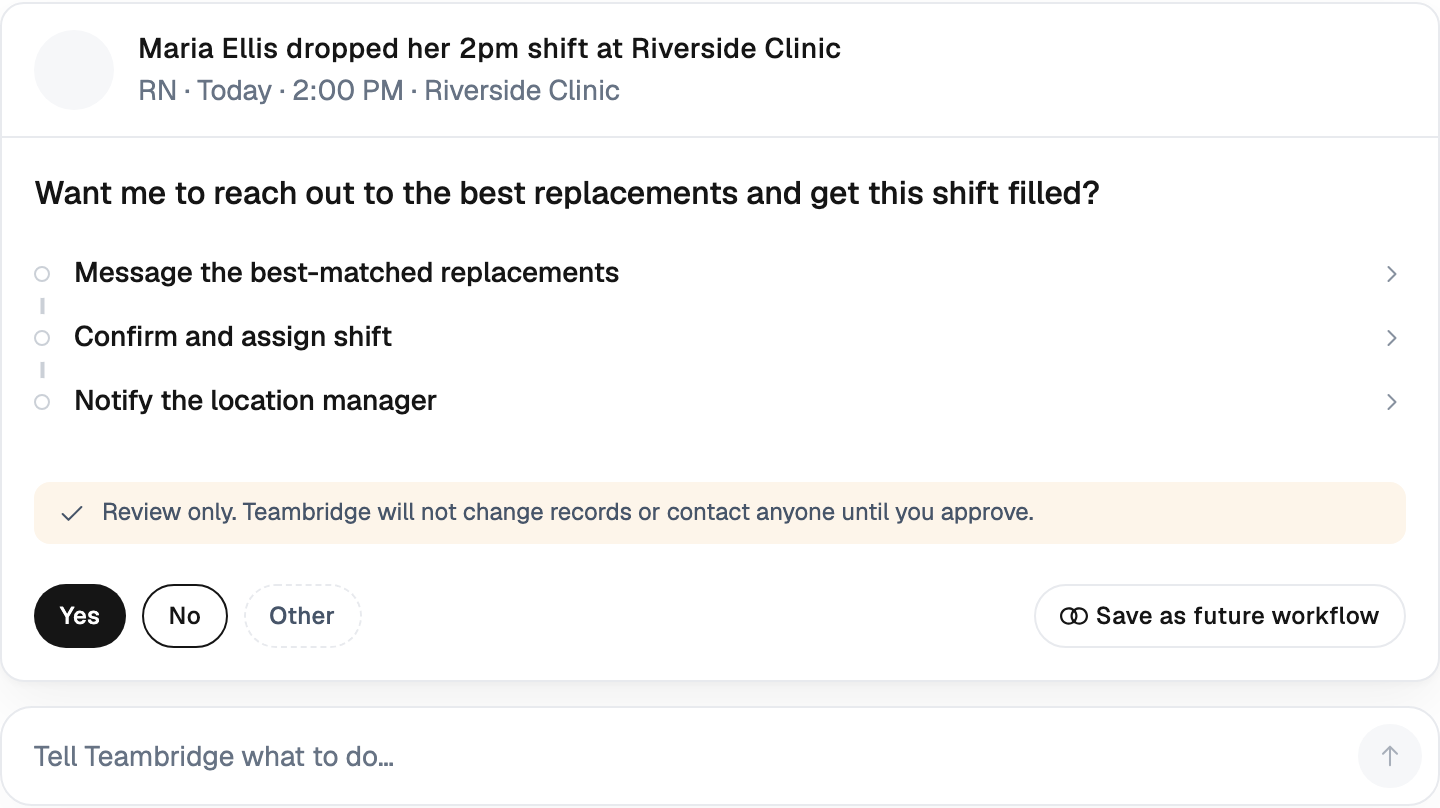
Automations handle the follow-through. When a placement is made, a workflow fires to the host contact asking for training confirmation. If it's not received at 24 hours, a reminder. At 48 hours, an escalation to the account manager. At 72, the shift is auto-flagged for removal review. That sequence is the three-business-day OSHA window, translated into an operational cadence a coordinator doesn't have to remember.
For agencies running high-volume light industrial placements, this is where the ROI shows up. Turnaway rates drop because the system won't let non-compliant workers dispatch. Client trust rebuilds because you're proactively sending training confirmations instead of scrambling for them after an incident.
The playbook: what to change this week
You don't need a six-month transformation. You need five moves before next Monday:
- Audit the last 30 days of gate turnaways. Tag each by root cause: PPE gap, missing training confirmation, expired credential, unknown site requirement. Whichever bucket is biggest is where you start.
- Add a hazard-intake field to every client contract and renewal. Job codes, required PPE, training modules, who supplies what. If it's not in the contract, it's not enforceable.
- Build the pre-flight rule in your scheduler. No shift releases without PPE-issued, training-confirmed, credentials-current, and mobile-pass-available all true.
- Set the 72-hour confirmation automation. 24-hour reminder, 48-hour escalation, 72-hour flag. Every placement, every client, no exceptions.
- Publish a written removal-authority policy. Who can call it, what triggers it, exact client language. Train account managers on the conversation.
Gate turnaways stop looking like bad luck once you treat them as a data problem. The credentials exist. The training happens. The PPE is available. What's missing is a single workflow that forces all of that into one record before Sunday night — so Monday at 6 AM the worker walks through the gate and starts earning revenue instead of driving home.