

Except it isn't working that way. In warehouses, distribution centers, and light manufacturing plants, these systems are terminating six-year veterans alongside chronic no-shows, generating wrongful-termination lawsuits, and quietly inflating overtime budgets. The problem isn't accountability. The problem is that the system can't tell the difference between a reliable worker who had a bad month and a worker who never intended to show up in the first place.
The math that fires your best forklift driver
Here's how a typical no-fault attendance policy works: an unexcused absence costs one point, a late arrival or early departure costs half a point, and hitting the threshold — five points in a rolling six months, in one documented case — triggers termination automatically. No judgment call. No context. The system counts, and the system fires.
That automation is exactly the failure mode now playing out in court. According to Business Insider's reporting on lawsuits filed by West Coast Trial Lawyers, attorneys litigating wrongful-termination cases against Walmart and Amazon describe a recurring fact pattern: managers approved or knew about a worker's leave, failed to enter it into the system, and the automated system terminated the worker the moment points crossed the threshold. One attorney described a Walmart HR representative confirming in a 2023 deposition that the five-point rolling system operated exactly that way.
This isn't an edge case. A 2020 report from the advocacy group A Better Balance estimated that 18 million US workers across 66 employers work under points-based or no-fault attendance policies. And the lawyers involved say calls from fired workers have surged — many of them told by HR that the termination was a mistake that never got fixed.
"Half of them say that the HR department or the direct supervisors will tell them, 'We messed up, you should not have been fired, we will fix this,' and they don't fix it." — Nick Yasman, West Coast Trial Lawyers, via Business Insider
The point system doesn't distinguish your best forklift driver from your worst hire. It counts events. That's the entire design — and the entire problem.
Why light industrial gets hit hardest
Point systems cause damage anywhere, but light industrial operations absorb it differently because of how the work is structured.
- Shift-based coverage with zero slack. One auto-termination on a Tuesday afternoon means an uncovered line Wednesday morning. There's no salaried bench to absorb the gap.
- Thin margins on labor. Light industrial runs on tight bill rates and markup. Every unplanned replacement costs more than the spreadsheet assumed.
- High performers accumulate points too. A reliable worker with car trouble, a childcare gap, or a late bus accrues points at the same mechanical rate as a disengaged one. The difference: the reliable worker has options. They get terminated — or see the termination coming — and they don't come back.
The workers you can least afford to lose are the ones with the most alternatives. A point system doesn't know that. It treats your most placeable operator as a number that hit five.

Ready to move?
Ready to see Teambridge in action?
The overtime spiral nobody attributes to the policy
Unplanned absences are already expensive — commonly estimated at roughly $3,600 per hourly employee per year in lost productivity, supervisor time, and replacement costs. Point-system terminations stack a second cost on top, and it compounds.
Here's the loop most operations never trace back to the policy:
- The system terminates a worker at the points threshold.
- The remaining crew absorbs the shift gap at 1.5x overtime — often the same shrinking bench you just removed someone from.
- Sustained overtime drives fatigue. Fatigue drives more absences and tardies.
- More absences generate more points. More points generate more terminations.
- Backfill cost climbs, bench depth drops, and the cycle tightens.
Warning
If your overtime spend is climbing and your termination rate is climbing, check whether they're the same trend line. Point-threshold terminations often show up in the budget as an overtime problem, not a policy problem — which is why the policy never gets examined.
The compliance exposure hiding in "no-fault"
"No-fault" sounds like legal cover. It isn't. It describes how points accrue — it says nothing about whether those points were lawful to assign.
Points assessed for absences protected under FMLA, the ADA, or state leave laws create direct exposure:
- FMLA interference claims when protected leave is counted as an occurrence.
- ADA discrimination claims when absences tied to a disability or accommodation request trigger discipline or termination.
- State-law violations in California, New York, and other states with sick-leave and predictive-scheduling protections that national policies were never written to incorporate.
That last point is verbatim from the Walmart and Amazon litigation: attorneys argue the policies "were created and are applied at a national level, so they do not, on their face, incorporate, reference, or consider more restrictive state laws, most notably in California and New York."
The automated system is the liability. A policy that can't distinguish protected leave from a no-show doesn't just make mistakes — it manufactures wrongful-termination fact patterns at scale, with a clean audit trail proving it.
Caution
If your attendance system applies points without checking them against leave approvals, every termination at threshold is a potential claim. The automation that makes the policy feel defensible is the same automation that makes it indefensible.
It's a data problem, not a discipline problem
Read the lawsuit fact patterns again. The manager approved the leave. The manager failed to log it. The system fired the worker.
That's not a discipline failure. That's a data gap — the distance between what the supervisor knew and what the system recorded. Most wrongful point-system terminations trace to exactly this: clock-in data, leave approvals, and shift swaps living in different places, so the point system counts phantom absences.
The fix is connecting the records so the system counts what's real:
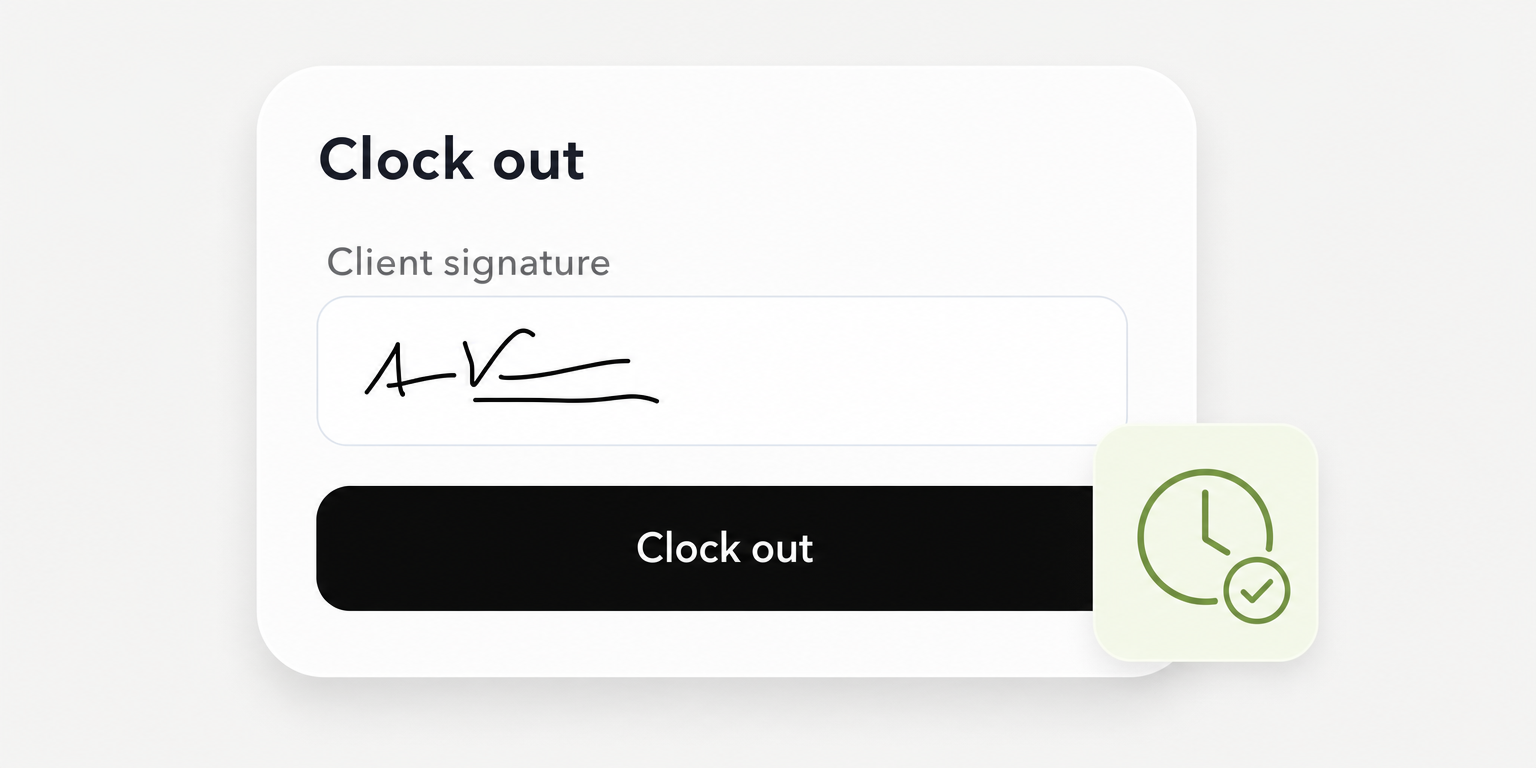
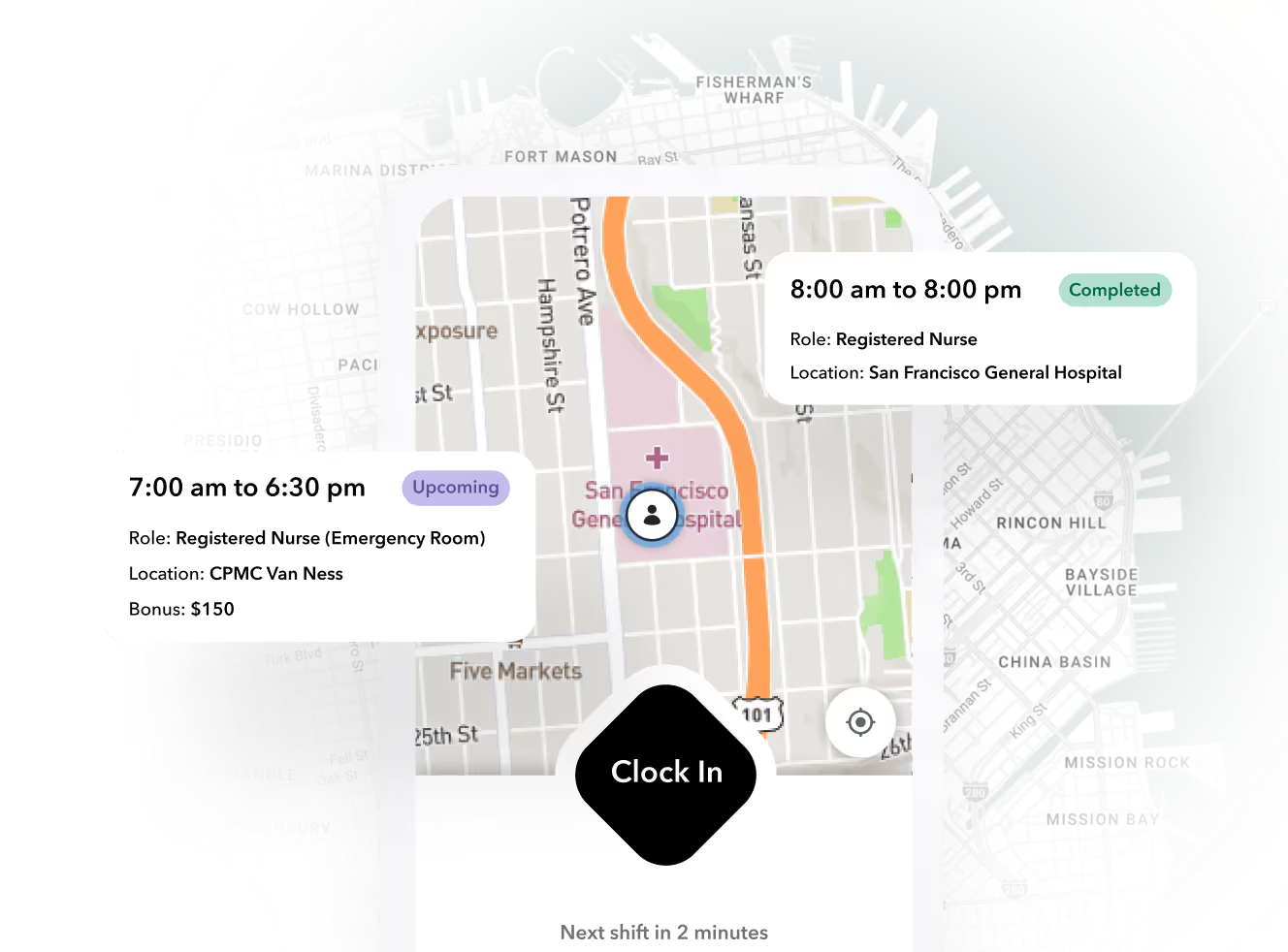
- GPS-verified clock-in so presence is confirmed at the source, not reconstructed later from a supervisor's memory.
- Timecard exception workflows that flag discrepancies for human review before they become points — not after termination paperwork is signed.
- Leave approvals tied to the attendance record so an approved absence never enters the point count in the first place.
- Automatic overtime calculation so the backfill cost of every termination is visible in the same system that triggered it.
When attendance data lives in one place, the point count reflects reality. Teambridge's time tracking is built around exactly this: GPS-verified clock-in, exception handling before errors cascade, and overtime math that stays accurate as shifts change.

What to do instead: attendance signals, not attendance traps
You don't have to abandon accountability to stop auto-firing good workers. You have to change what the system does with the data. Practical alternatives:
| Mechanism | How it works | What it fixes |
|---|---|---|
| Rolling-window resets | Points expire on a fixed window so old incidents don't linger | Long-tenured workers permanently near threshold |
| Point buy-back | Perfect attendance streaks erase prior points | Rewards recovery instead of only punishing slips |
| Early-warning outreach | Human contact at 60% of threshold, not termination at 100% | Catches life-events before they become terminations |
| Predicted no-show flags | Absence risk triggers backfill before the shift starts | Covers the line without the morning scramble |
The common thread: the system surfaces a signal and a person acts on it, instead of the system acting alone. Notably, Amazon itself told Business Insider that managers are alerted at the threshold and "required" to reach out — the lawsuits exist because that human step fails when the data feeding it is wrong.
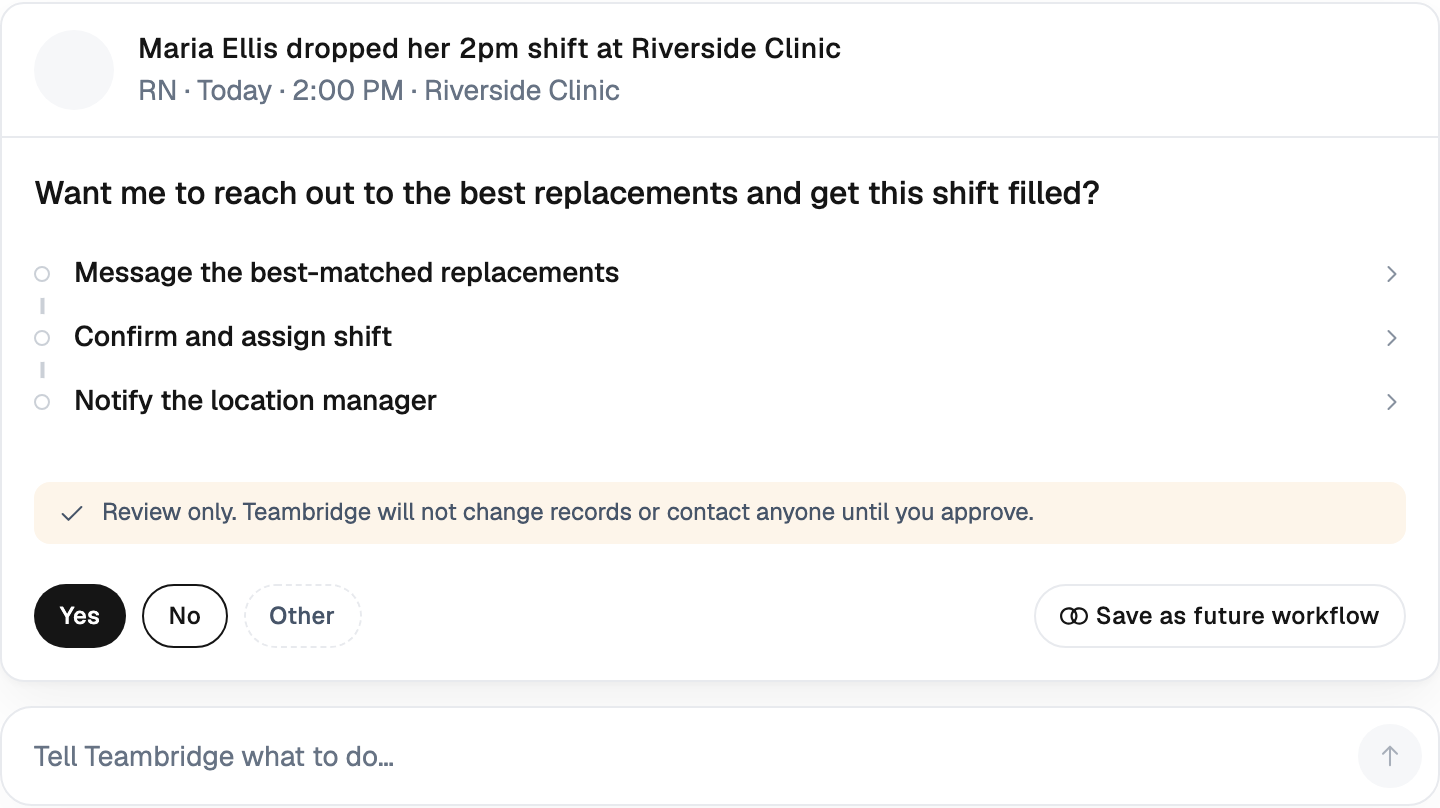
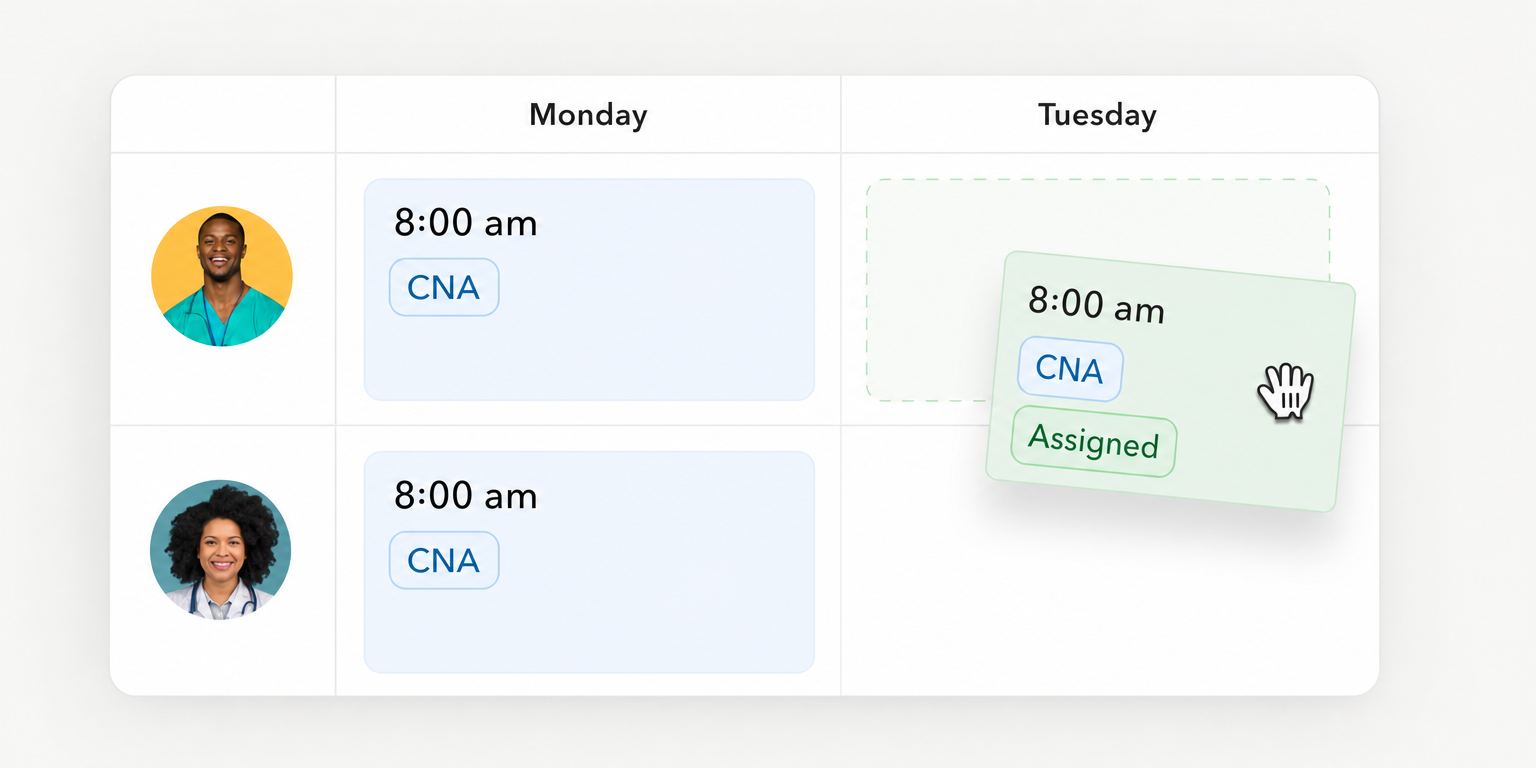
This is where connected tooling matters. AI-driven scheduling can predict no-shows and auto-fill gaps before the shift starts, and broadcast and 1:1 messaging makes the early-warning outreach step something a supervisor can actually execute at 5 a.m., with SMS fallback for workers who don't check apps. Attendance becomes a signal you manage, not a trap that springs.
Keep the accountability, lose the auto-firing
Attendance accountability in light industrial is real and necessary. Lines need coverage, clients need SLAs met, and chronic no-shows do need consequences. None of that requires a system that fires a six-year operator because a supervisor forgot to log an approved absence.
The failure mode is automation without context. The fix is better data in and a human checkpoint before termination out.
Start with an audit. Pull your last 20 attendance-related terminations and answer three questions: How many were point-threshold events with no human review? How many involved an absence a supervisor knew about or approved? And what did the backfill overtime actually cost? If the answers make you uncomfortable, that's the policy talking — not the workforce. See how other operators have rebuilt these workflows in our customer stories, or look at the Teambridge platform that ties scheduling, time tracking, and communication into one record.
Tip
One number to track this quarter: the ratio of point-threshold terminations to total backfill overtime hours. If it moves together, your attendance policy is an overtime generator.

About the author

Content Writer at Teambridge
Anis Nanai is a content writer at Teambridge, with a focus on workforce management and the realities of running hourly teams. He prioritizes conversations with customers, staying close to the market, and understanding how workforce needs are changing. His writing connects those concerns to practical decisions about scheduling, time tracking, staffing, and automation. He examines product developments through the questions that matter to operators: what does this solve, how would it work for my team, and what evidence supports it?
Company perspective: this author works at Teambridge. Customer outcomes are attributed to their published sources.
View LinkedIn profile