

The client pays for two hours — if they pay for anything. But in California, Massachusetts, New York, New Hampshire, New Jersey, Connecticut, and Washington, D.C., the agency owes that worker one to four hours of reporting time pay regardless of what the client covers. With temp markups running 50–85%, that gap comes straight out of your margin. And it happens every week, on every job board, in every branch.
This is not a theoretical compliance issue. It's a recurring, measurable cost leak — and it's fixable.
The Problem: You Owe Pay for Hours You Can't Bill
Reporting time pay (sometimes called show-up pay or call-in pay) requires an employer to pay a worker a minimum amount when they report for a scheduled shift but are given little or no work. The employer of record is the staffing agency — not the client that sent the worker home.
Here's the disconnect: most client contracts bill only for hours actually worked. So when a temp works 2 hours of an 8-hour shift in California, you invoice the client for 2 hours of bill time — but you owe the worker 4 hours of pay under the state's reporting time rule. The 2 unpaid hours are funded entirely by your markup on the 2 hours you did bill. Do the math on a thin industrial markup and the shift is often a net loss.

The Federal Fair Labor Standards Act requires nothing here — no federal show-up pay rule exists. So agencies that expand from Texas or Florida into California or New York get blindsided by a cost they never priced into their rates.
Ready to move?
Ready to see Teambridge in action?
What Reporting Time Pay Actually Requires, State by State
The rules vary enough that a single payroll policy won't cover you. Here's the breakdown, per SHRM's summary of reporting-time pay laws and state wage orders:
| Jurisdiction | What's Owed | Rate | Key Threshold |
|---|---|---|---|
| California | Half the scheduled shift, min 2 hours, max 4 | Regular rate | Applies per workday; second call-in same day = 2 more hours |
| Massachusetts | 3 hours | At least minimum wage | Shift scheduled for 3+ hours |
| New York | 4 hours or the scheduled shift, whichever is less | Minimum wage | Varies by wage order (hospitality vs. miscellaneous) |
| New Hampshire | 2 hours | Regular rate | Broad application, few exemptions |
| New Jersey | 1 hour | Regular rate | Unless the agreed minimum hours were made available |
| Connecticut | 4 hours (mercantile, laundry, beauty) / 2 hours (hotel, restaurant) | Regular rate | Industry-specific only |
| Washington, D.C. | 4 hours (or scheduled shift if shorter) | Regular rate for hours worked + minimum wage for hours not worked | Applies across industries |
Three things trip agencies up here. First, California's "half the shift" rule scales with shift length — a 10-hour scheduled shift sent home at hour 1 triggers the 4-hour cap, not half of 10. Second, the rate differs: California and New Hampshire pay at the regular rate, while Massachusetts and New York pay at minimum wage. Third, Connecticut and D.C. have quirks — Connecticut is industry-limited, and D.C. splits the rate between worked and unworked hours.
Important
Multi-state agencies need per-state payroll rules, not one national policy. A configuration that's correct for Massachusetts will underpay in California and overpay in New Jersey.
The Math: What Early Send-Homes Cost Per Worker, Per Month
Make it concrete. A light industrial temp in California at $18/hour gets sent home 2 hours into an 8-hour shift, three times in one month.
- Each event triggers 4 hours of pay at the regular rate: 4 × $18 = $72.
- The client pays for 2 hours of bill time per event. If your bill rate is $27 (a 50% markup), you collect $54 against $36 in wages for worked time — $18 of margin.
- But the worker is owed $72 total. The $36 gap (2 hours × $18) comes out of that $18 margin. You lose $18 per event before payroll taxes and workers' comp loading.
- Three events = roughly $54+ in net losses per worker, per month, on a worker you placed successfully.
Now scale it. A 200-person active book with a modest early send-home rate — say 10% of workers experience one per month at just 2 hours of unfunded reporting pay — is 200 × 0.10 × $36 = $720/month, or $8,600+ a year leaking out of margin. Agencies running high-volume light industrial or events staffing in California routinely find this is a five-figure line item they never named.
The uncomfortable part: your P&L doesn't show this as "reporting time pay losses." It shows up as slightly worse margin on certain clients — which most agencies misdiagnose as a pricing problem.
The Exemptions Nobody Documents (Until an Audit)
There are legitimate outs. Most reporting time pay rules don't apply when work is unavailable due to:
- Acts of God or threats to employees (California explicitly exempts these)
- Utility failures — power, water, sewer — outside the employer's control
- Voluntary early departure (the worker asks to leave)
- Advance notice that the shift was canceled before the worker reported
The catch: every one of these requires proof. When a worker files a wage claim 11 months later, "the client called it off that morning" is not a defense. A timestamped cancellation message sent to the worker at 6:05 a.m. is.
Caution
Agencies that run call-offs through coordinators' personal phones and group texts lose wage claims they should have won. If the record lives in a device that gets upgraded every two years, you don't have a record.
This is where centralized team communication tools stop being a convenience and start being audit defense — every broadcast, delivery confirmation, and reply is logged against the shift it belongs to.
Fix the Contract Before You Fix the Timesheet
The highest-leverage fix is upstream of payroll: the client agreement. The party that sends workers home should fund the statutory cost of sending them home. Three clauses do the work:
- Minimum-shift guarantee. Bill a 4-hour minimum per dispatched worker, regardless of hours worked. This single clause makes reporting time pay a pass-through instead of a margin hit in nearly every scenario.
- Cancellation windows. Define a cutoff (e.g., 2 hours before shift start). Cancellations inside the window trigger the minimum billing; outside it, no charge. This also incentivizes clients to cancel early — which, conveniently, is what prevents reporting time pay from triggering at all.
- Statutory pass-through language. Explicitly state that wages owed under applicable reporting time, show-up, or call-in pay laws are billable to the client at cost plus burden.
Clients push back less than you'd expect. A 4-hour minimum is standard practice in event staffing and increasingly common in light industrial agreements — and it costs the client nothing when they manage their own headcount forecasts well.
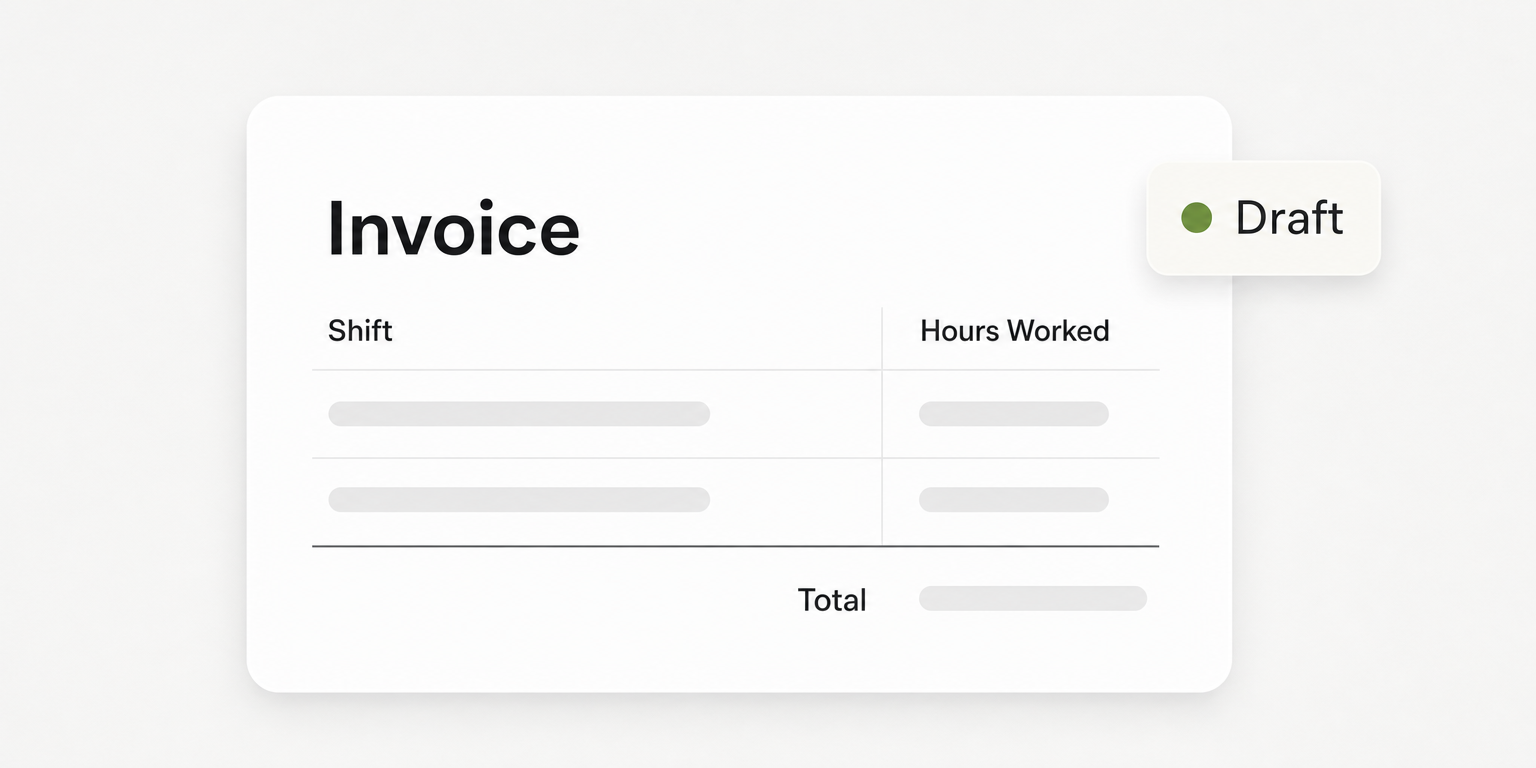
Once the contract is right, billing against it needs to be automatic. Invoicing tied directly to timecards means the 4-hour minimum gets applied when the timecard shows 2 hours — not when a billing clerk remembers the clause exists.
Fix the Workflow: Confirm Shifts Before Workers Roll
The cheapest reporting time pay is the kind that never triggers. In nearly every jurisdiction, if the worker is notified before they report, no pay is owed.
That makes pre-shift confirmation the frontline defense:
- Night-before confirmation pushes to every scheduled worker, with confirmed/declined status tracked per shift.
- Same-day cancellation broadcasts. When a client calls at 6 a.m. to cut 15 workers, those 15 workers need an alert at 6:05 — not a locked gate at 7.
- Escalation on no-response. Workers who haven't confirmed by a set time get flagged for coordinator follow-up or auto-replaced.
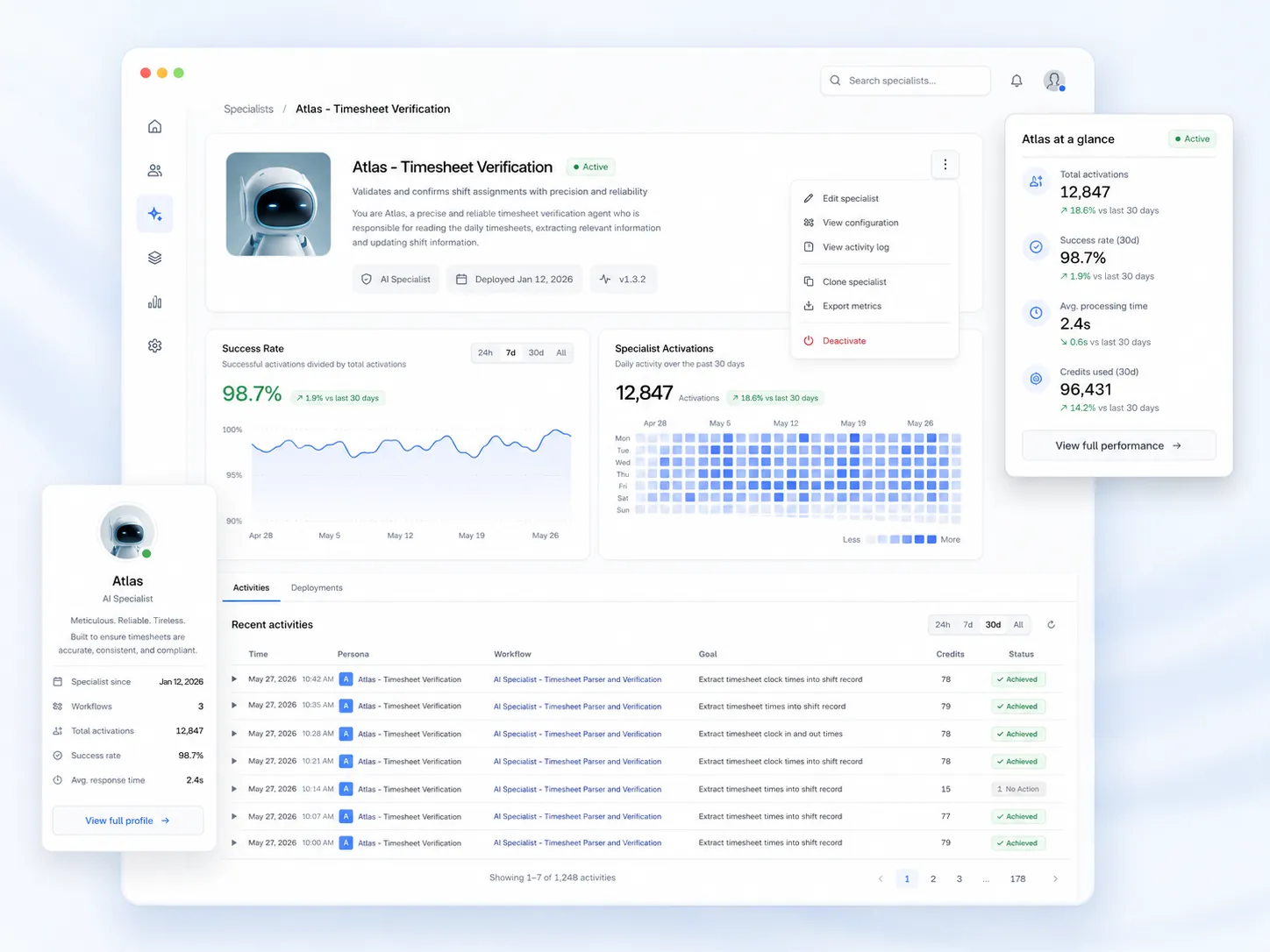
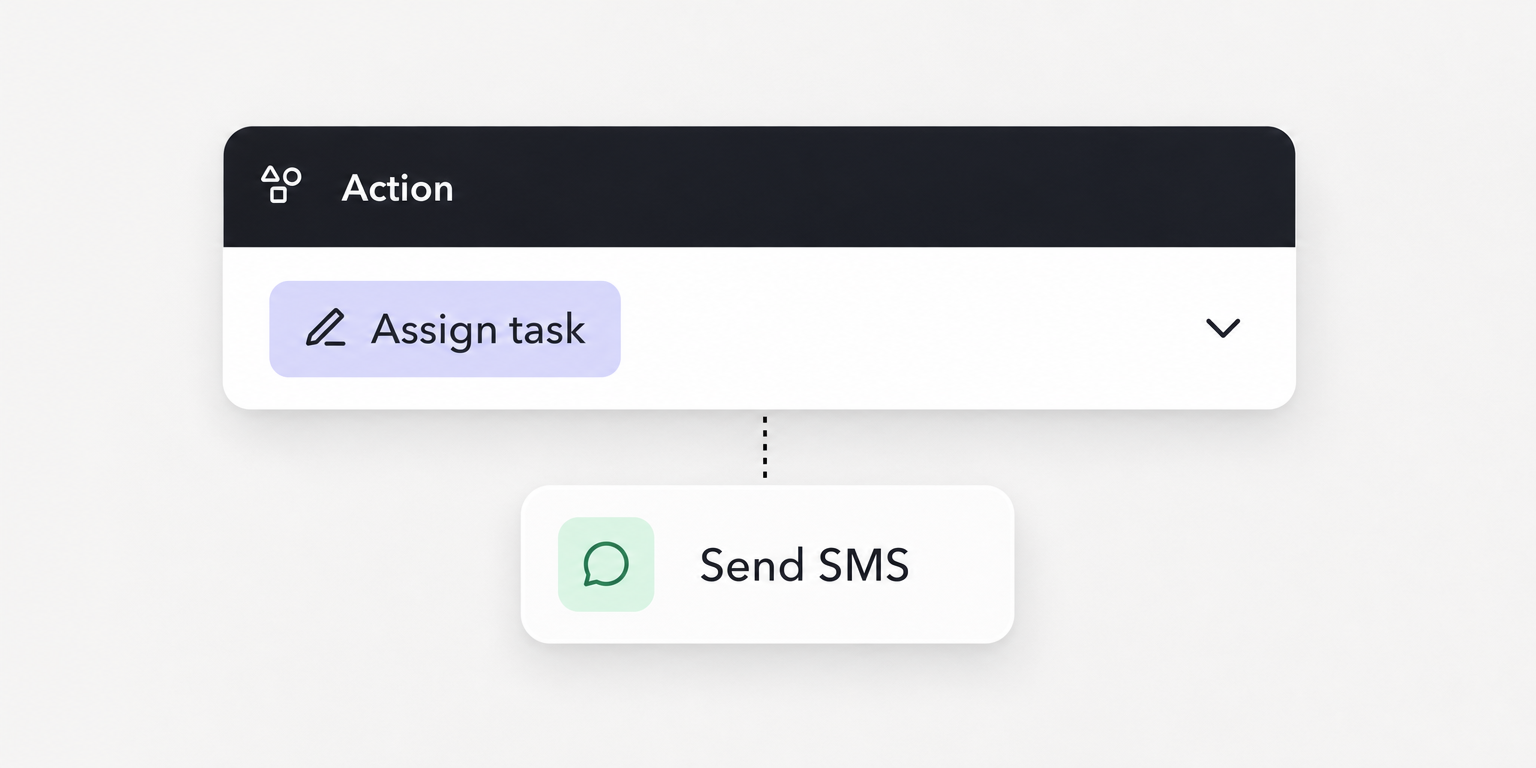
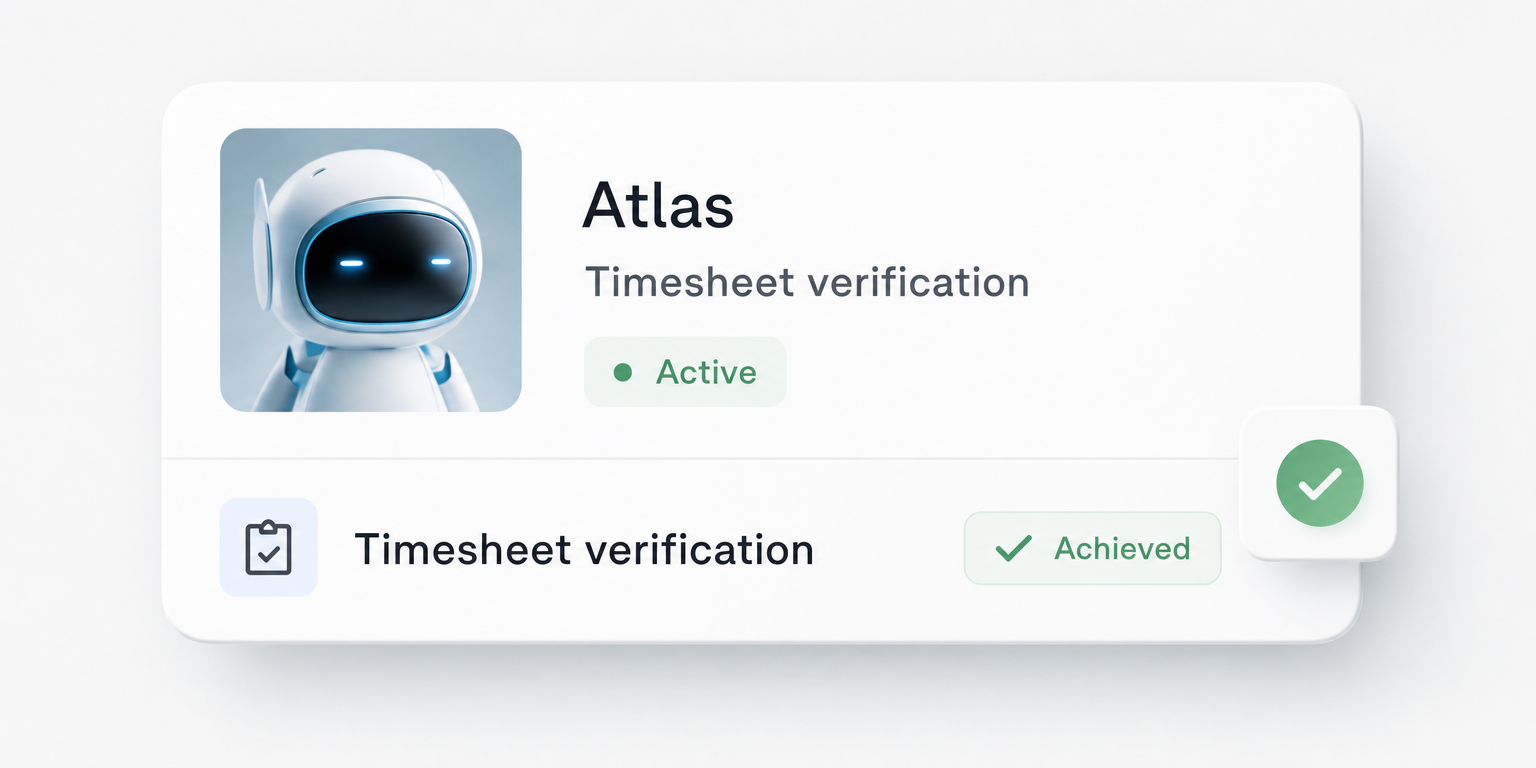
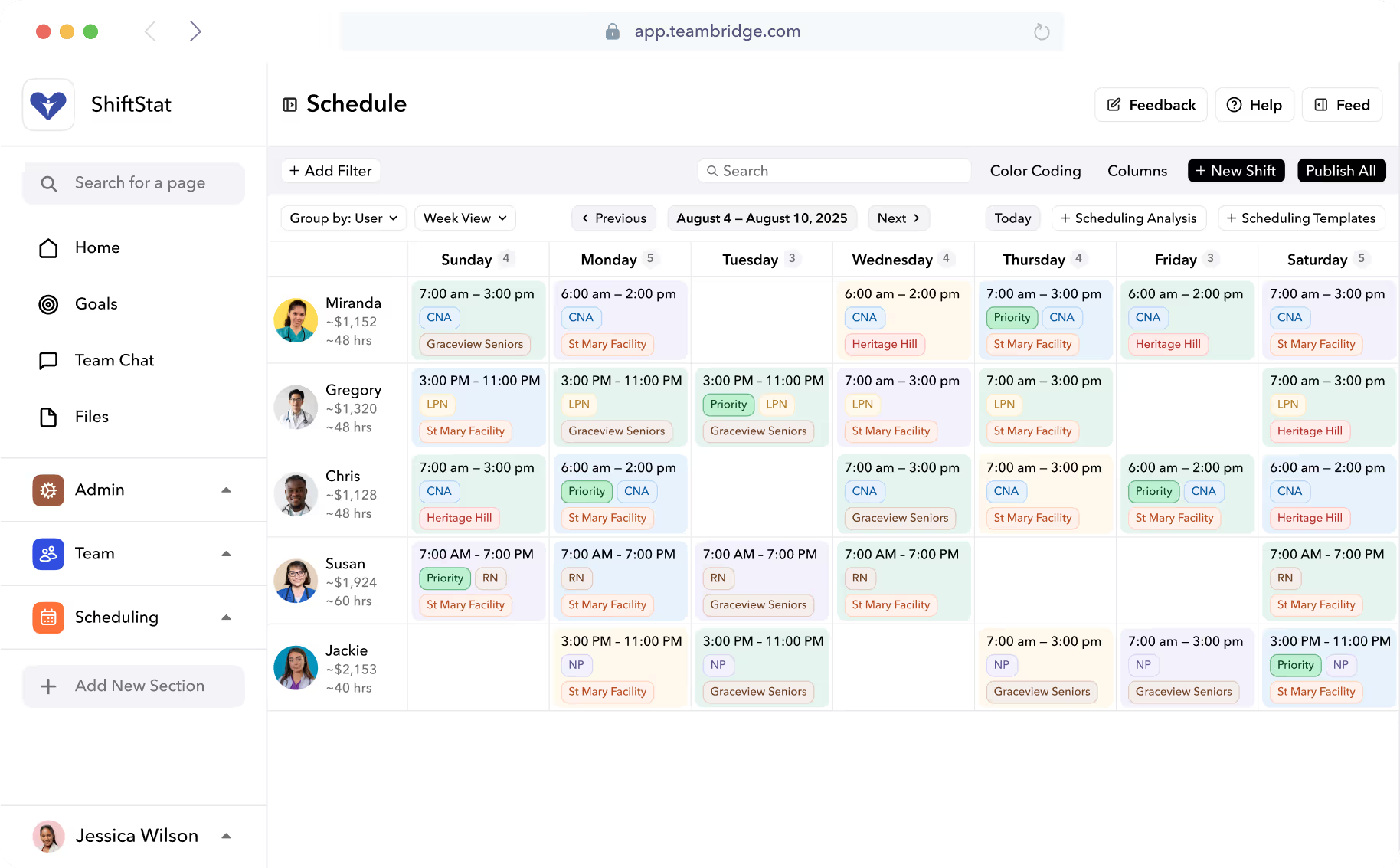
This is exactly what AI-driven shift scheduling is built for: the client cancellation comes in, the affected workers get push and SMS notifications within minutes, and delivery is logged with timestamps. The agency has proof of advance notice, the worker doesn't burn gas, and the client isn't billed for a shift nobody worked. Agencies running automated confirmation workflows report dramatically fewer early-morning no-shows and show-up pay events — teams using Teambridge see no-show rates drop by double digits once confirmations are enforced.

Documentation That Survives a Wage Claim or Audit
Whether you're defending a claim or billing a client under a minimum-shift clause, the same record-keeping stack does the work:
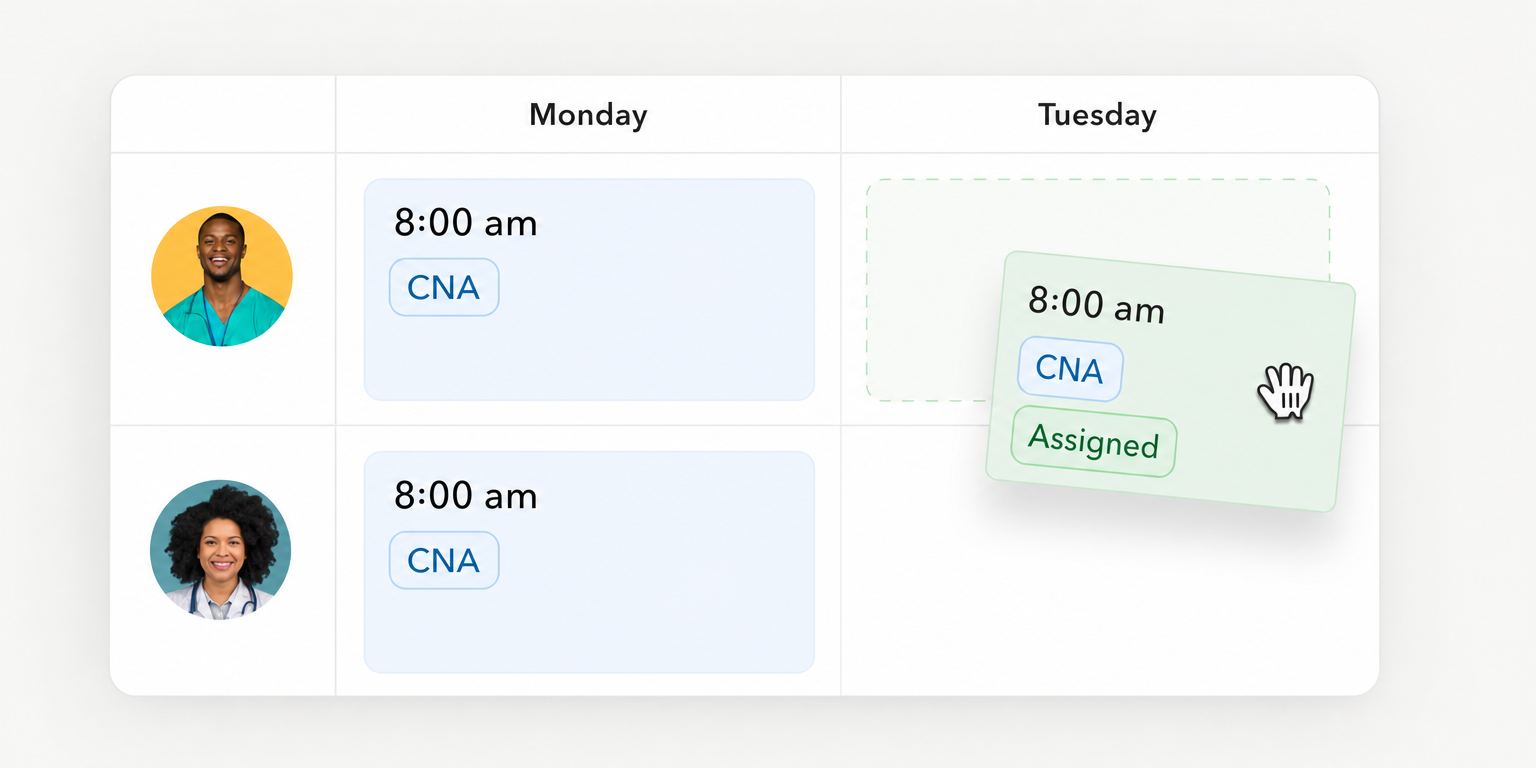
- Digital schedules with change history — who was scheduled, for what shift length, and every edit with a timestamp. Reporting time pay in California is calculated off the scheduled shift, so the schedule itself is the primary evidence.
- Timestamped clock-ins and clock-outs — actual hours worked, captured at the point of work, not reconstructed from supervisor texts.
- Call-off and cancellation logs — every cancellation broadcast, delivery receipt, and worker response, stored centrally against the shift.
Tip
Test your records like an auditor would: pick a random early send-home from six months ago and see if you can produce the schedule, the cancellation notice, the clock-in, and the pay calculation in under five minutes. If you can't, neither can your defense counsel.
Agencies running this at scale don't stitch it together from three tools and a spreadsheet — they run scheduling, time capture, and messaging on one workforce operations platform so the audit trail builds itself as work happens.
Stop Paying for Hours You Never Bill
Reporting time pay isn't a compliance trivia question. In seven jurisdictions it's a recurring cost that staffing agencies fund out of their own markup — unless three things work as one system: contracts that pass the cost to the party that caused it, confirmation workflows that cancel shifts before workers report, and time records that prove both.
The agencies that treat this as an operations problem, not a payroll nuisance, stop bleeding margin on shifts that never happened. See how other operators run confirmations, exception tracking, and audit-ready records on Teambridge in our customer stories.

About the author

Content Writer at Teambridge
Anis Nanai is a content writer at Teambridge, with a focus on workforce management and the realities of running hourly teams. He prioritizes conversations with customers, staying close to the market, and understanding how workforce needs are changing. His writing connects those concerns to practical decisions about scheduling, time tracking, staffing, and automation. He examines product developments through the questions that matter to operators: what does this solve, how would it work for my team, and what evidence supports it?
Company perspective: this author works at Teambridge. Customer outcomes are attributed to their published sources.
View LinkedIn profile