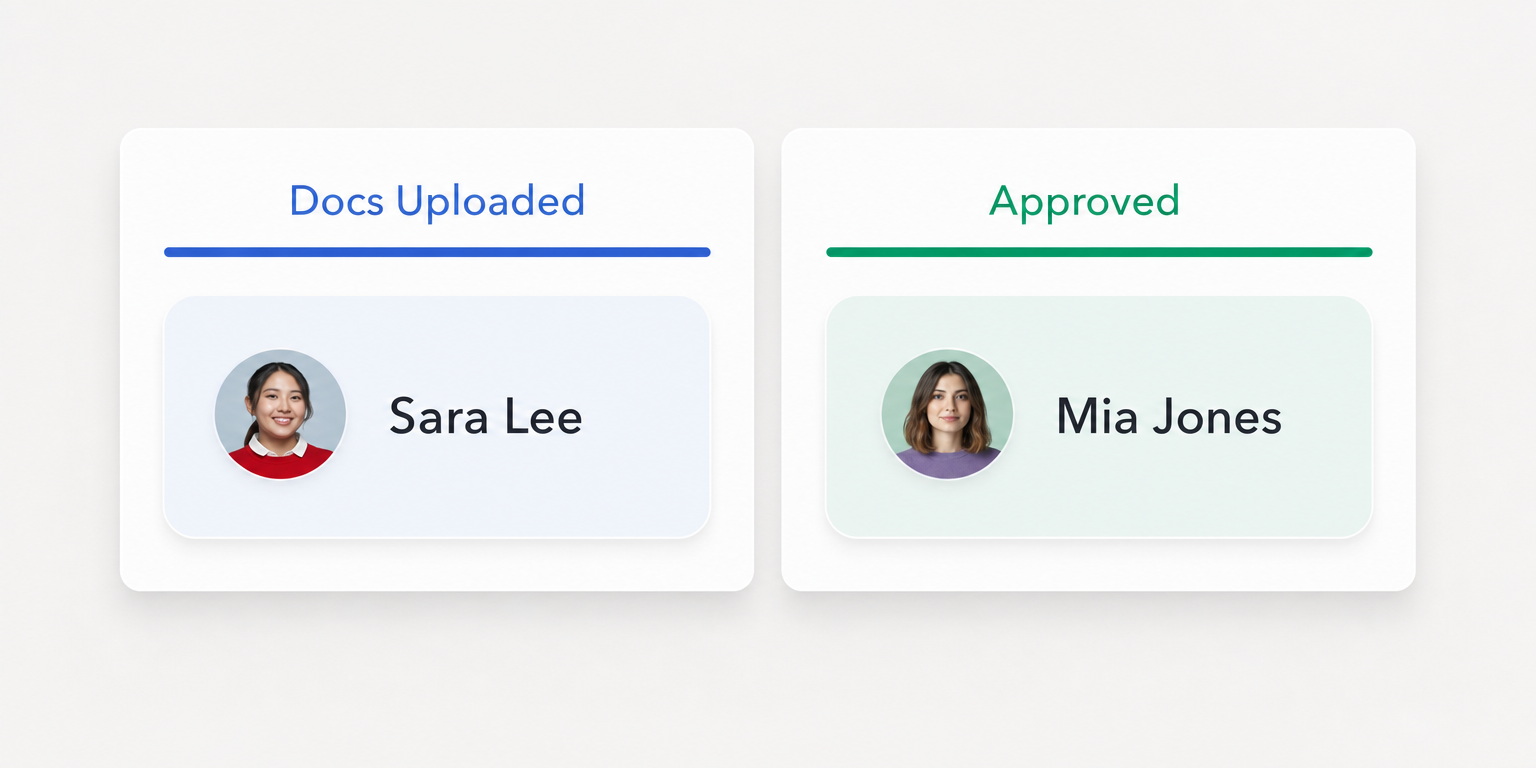


A completed background report is not approval to start a shift
The FTC’s background check guidance distinguishes the reporting company from the employer making the decision. Your operating process should make that distinction visible. A report marked complete should not become dispatch approval without the designated decision maker’s review.
Use this checklist when evaluating a screening provider and the internal process around it. These are recommended acceptance criteria, not legal standards or verified vendor capabilities.
| Owner | Acceptance criterion | Vendor question | Evidence captured |
|---|---|---|---|
| Account manager and legal reviewer | Approved role and jurisdiction scope | How are assignment requirements recorded and approved? | Scope version and approval |
| Recruiting lead | Authorization and missing information are distinguishable | Show an incomplete candidate submission. | Disclosure, permission and follow up history |
| Screening operations lead | Every pending case has an owner and next action | Show a delayed court search and escalation. | Pending reason, last update and next action |
| HR decision maker | Disputes and adverse decisions have separate paths | Show how each path is handled. | Notice records, dispute routing and decision history |
| Dispatch manager | Assignment approval differs from report completion | What can dispatch see without unnecessary report details? | Access demonstration and assignment decision |
The operations leader owns the handoff across these roles. In a smaller agency, one person may hold several responsibilities. Keep the responsibilities separate even when the names repeat.
Define the screening scope for each role before ordering
Start with the assignment, not a default package. The account manager should record the role, actual duties, client requirements and assignment jurisdiction. The legal reviewer should then distinguish applicable requirements from client preferences and approve the screening criteria.
A client request alone does not establish that an exclusion policy is appropriate. The joint EEOC and FTC employer guidance explains that employers must comply with federal nondiscrimination requirements and should check state and municipal rules. Build those reviews into scope approval rather than asking recruiters to interpret them while filling an open shift.
For criminal records, the EEOC’s enforcement guidance discusses targeted screening based on the nature and gravity of the offense, time elapsed and nature of the job. That supports criteria connected to actual duties instead of one blanket rejection rule across every client assignment.
Individualized assessment can help an employer consider fuller information about a candidate’s circumstances. The EEOC does not say Title VII necessarily requires it in every circumstance. Have counsel define when and how assessment belongs in your process.
Save the approved scope with its owner and effective version. If a client changes the role or adds a screening request, route that change back for review. Do not quietly expand an order and assume the original approval covers it.

Recruiting must verify disclosure and permission before the order
When obtaining an employment background report from a reporting company, employers must provide a written disclosure in a standalone format and obtain written permission. The EEOC and FTC guidance describes these federal requirements. Burying the disclosure inside the employment application is a specific mistake to prevent.
Assign the recruiting lead responsibility for confirming that the approved disclosure and authorization process is complete before an order proceeds. Keep the evidence retrievable by authorized reviewers. Have counsel approve the ordering timeline under applicable state and municipal rules as well as federal requirements.
An incomplete candidate submission needs a follow up owner, not a vague pending label. Record what is missing, who will contact the candidate and when the next contact is due. Avoid collecting sensitive identity information through an improvised channel just because the shift start is close.
Warning
Missing permission, missing candidate information and a completed report awaiting review are different conditions. Keep them separate so recruiters know what they can resolve and dispatch knows what remains undecided.
A candidate who has not finished a submission has not received an adverse screening result. That distinction should survive every handoff, including phone calls and spreadsheets used during a busy dispatch window.
Use an exception ownership checklist to evaluate screening vendors
Screening speed matters when an assignment has a fixed start. Checkr’s staffing page emphasizes faster screening and placement, but that is vendor positioning rather than a performance guarantee for your agency. Its data status service also documents court processing delays, including manual research backlogs.
That is why the checklist starts with ownership and evidence rather than a promised turnaround. A clean completed report tells you little about how the vendor handles the case still unresolved at the dispatch cutoff.
Ask each vendor to demonstrate these independent exceptions using test records:
- A candidate starts the submission but leaves required information incomplete.
- A court search remains pending while the intended shift approaches.
- A candidate disputes information after the report reaches the employer.
For each demonstration, identify who has access to act, what action they take and what record remains afterward. Ask where the case goes if the normal action fails. If the vendor cannot show the path, record the limitation instead of accepting a verbal promise as evidence.
Also establish which steps the vendor handles and which remain with your agency. Put package scope, support escalation, any separate charges and implementation responsibilities into the purchasing review. A provider’s ability to send a notice does not settle who approves its content or decides when it should be sent.
A completed checklist can still leave dispatch on hold
Hypothetical example: Assume an agency is preparing a warehouse assignment, counsel has approved its screening scope and one ordered court search remains pending. This is an operating example, not a customer result or a claim about any vendor.
The account manager and legal reviewer record the approved role scope. The recruiting lead records completed disclosure and permission. Screening operations records the court delay, assigns the case and sets the next update before the agency’s dispatch cutoff.
HR records that no assignment decision has been made and that no dispute has been reported. Dispatch sees the assignment as unresolved, without receiving unnecessary report details. Under this recommended process, the agency considers another eligible worker rather than treating the pending search as approval or rejection.
That completes the checklist with a usable outcome: everyone knows the owner, next action and dispatch consequence. It does not manufacture certainty about when the court search will finish.
Put the workflow into practice
See how your team could use this workflow
HR owns report review, disputes and adverse action decisions
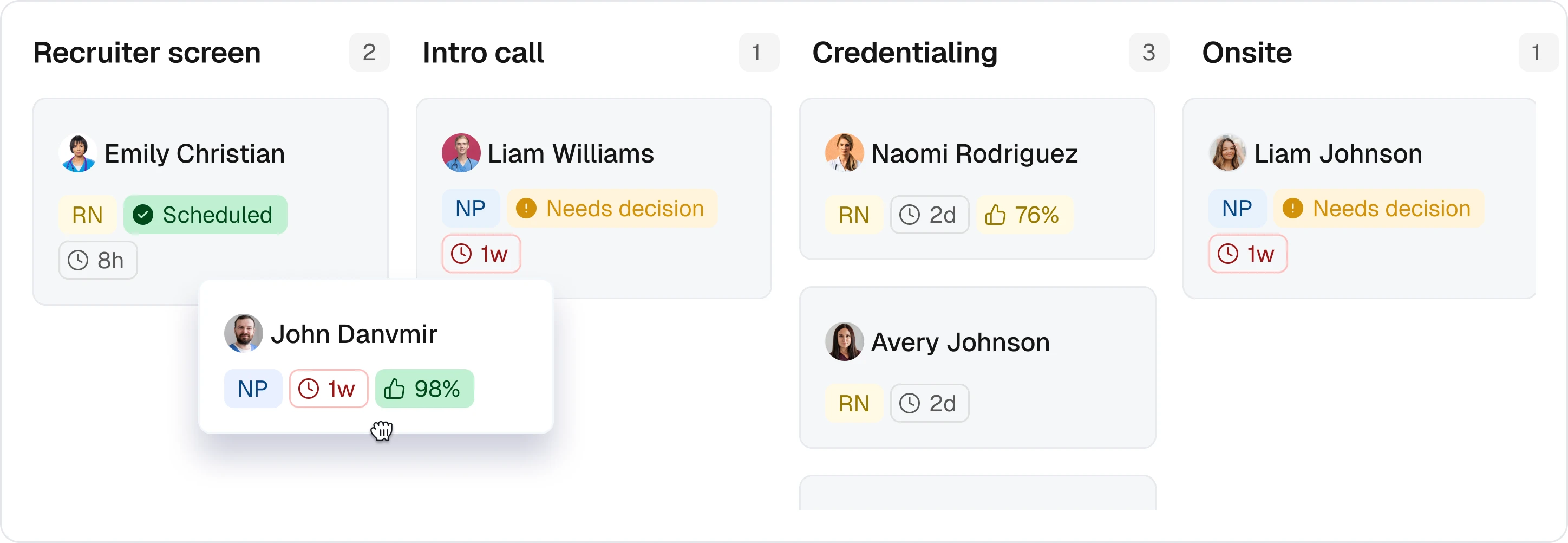
Route completed reports to the designated HR decision maker. A vendor flag should trigger the approved review process, not automatic rejection. The decision maker needs the assignment scope and applicable criteria, not just the report status.
Before taking adverse action based on a background report, federal guidance calls for giving the person a copy of the report and the Fair Credit Reporting Act summary of rights. This gives the person an opportunity to review the information and explain or challenge it. The joint employer guidance describes the sequence.
After adverse action, the required notice includes the reporting company’s contact information, a statement that it did not make the decision and information about dispute and report access rights. The FTC’s guidance explains those rights. Have counsel confirm applicable timing and local requirements rather than building the process around an assumed nationwide waiting period.
Operator view
Supporting evidence
Keep a dispute about report accuracy distinct from the employer’s employment review. Assign an HR owner to track the dispute route, candidate communications and any updated report. Do not close the internal case merely because someone sent the candidate the reporting company’s phone number.
Restrict access to sensitive information and have counsel approve retention and disposal practices. The operating record should show the decision basis and required communications without spreading the full report through routine dispatch channels.
Give dispatch the assignment decision without unnecessary report details
Once review is resolved, HR should record the decision and identify the assignment scope it covers. Dispatch should confirm that the decision applies to the intended role and location. An approval associated with one assignment should not silently become universal approval for every client.
As a recommended handoff, give dispatch the assignment identifier, decision status, decision owner and date. Keep unnecessary report details out of that view. If the assignment changes or the decision is missing, return the case to its owner before approving dispatch.
The useful dispatch question is: “Has the designated reviewer approved this worker for this assignment?”
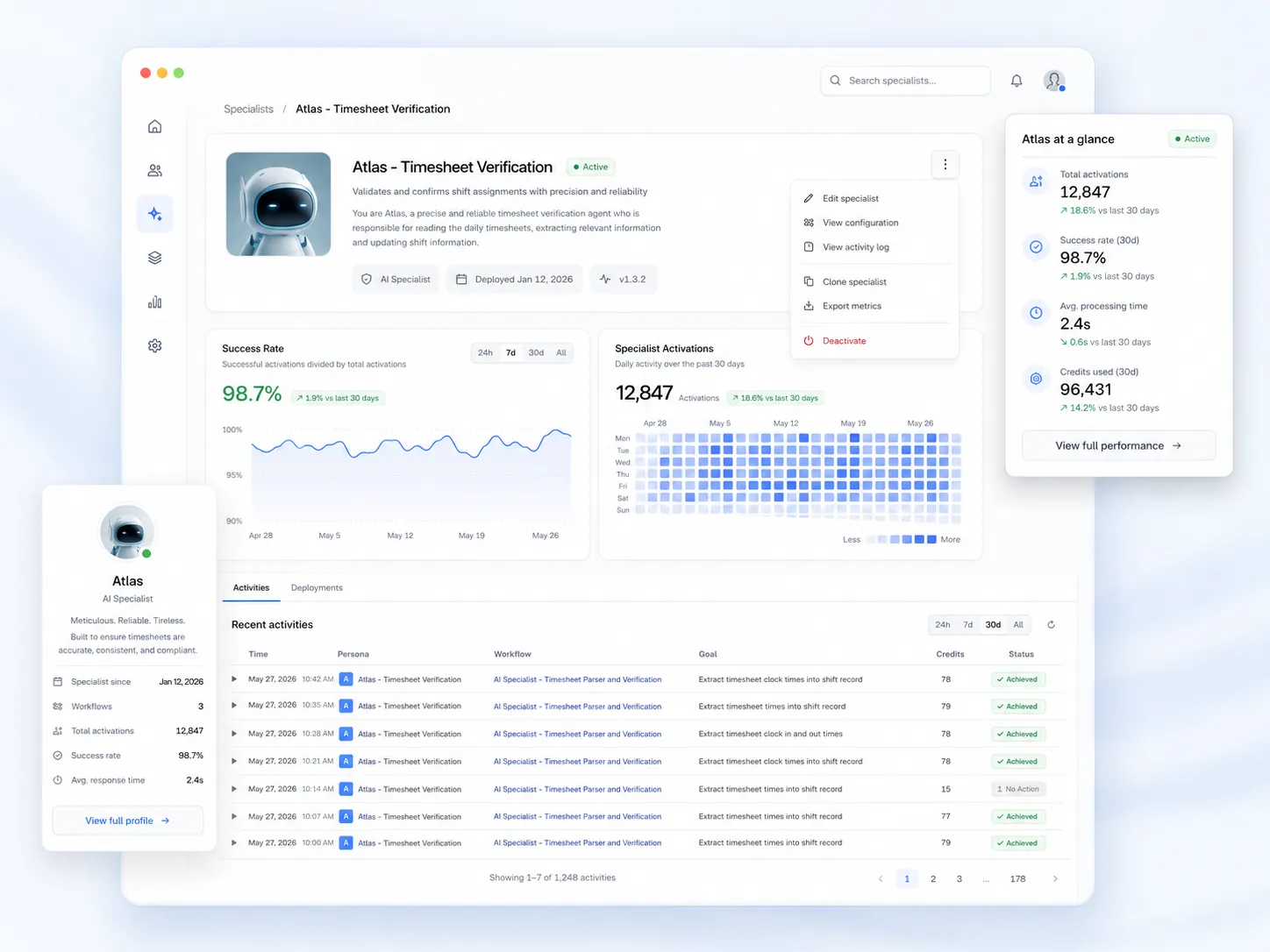
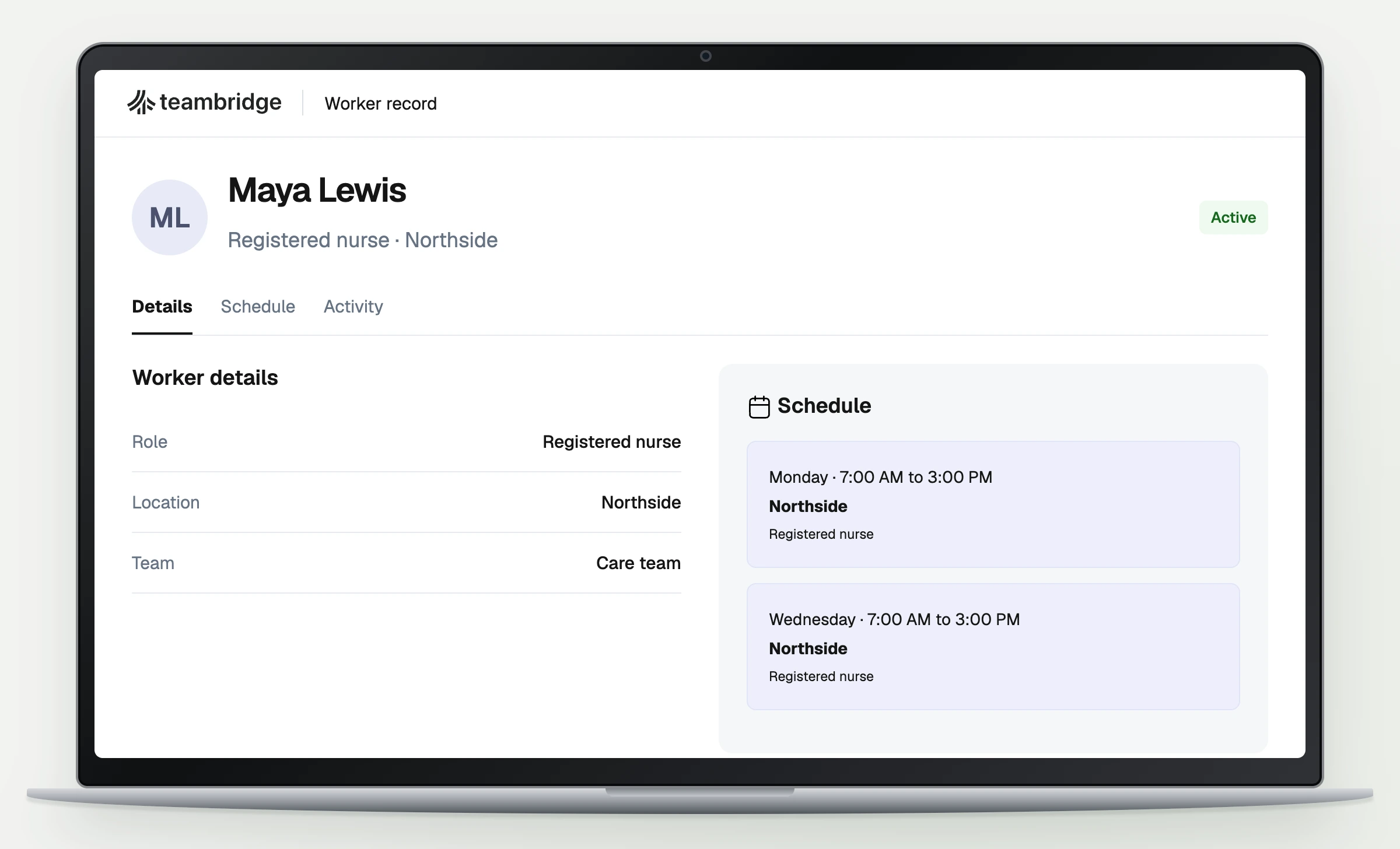
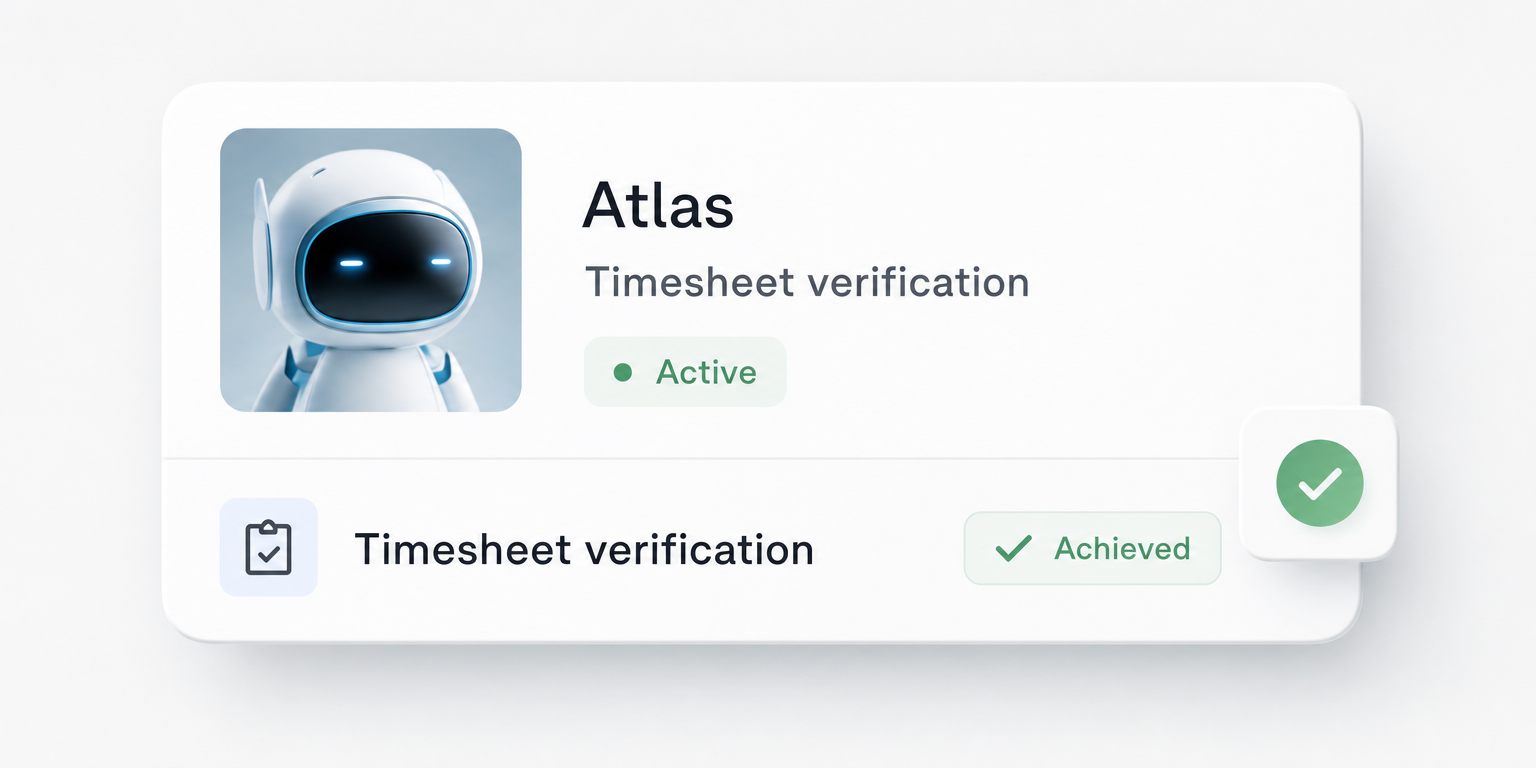
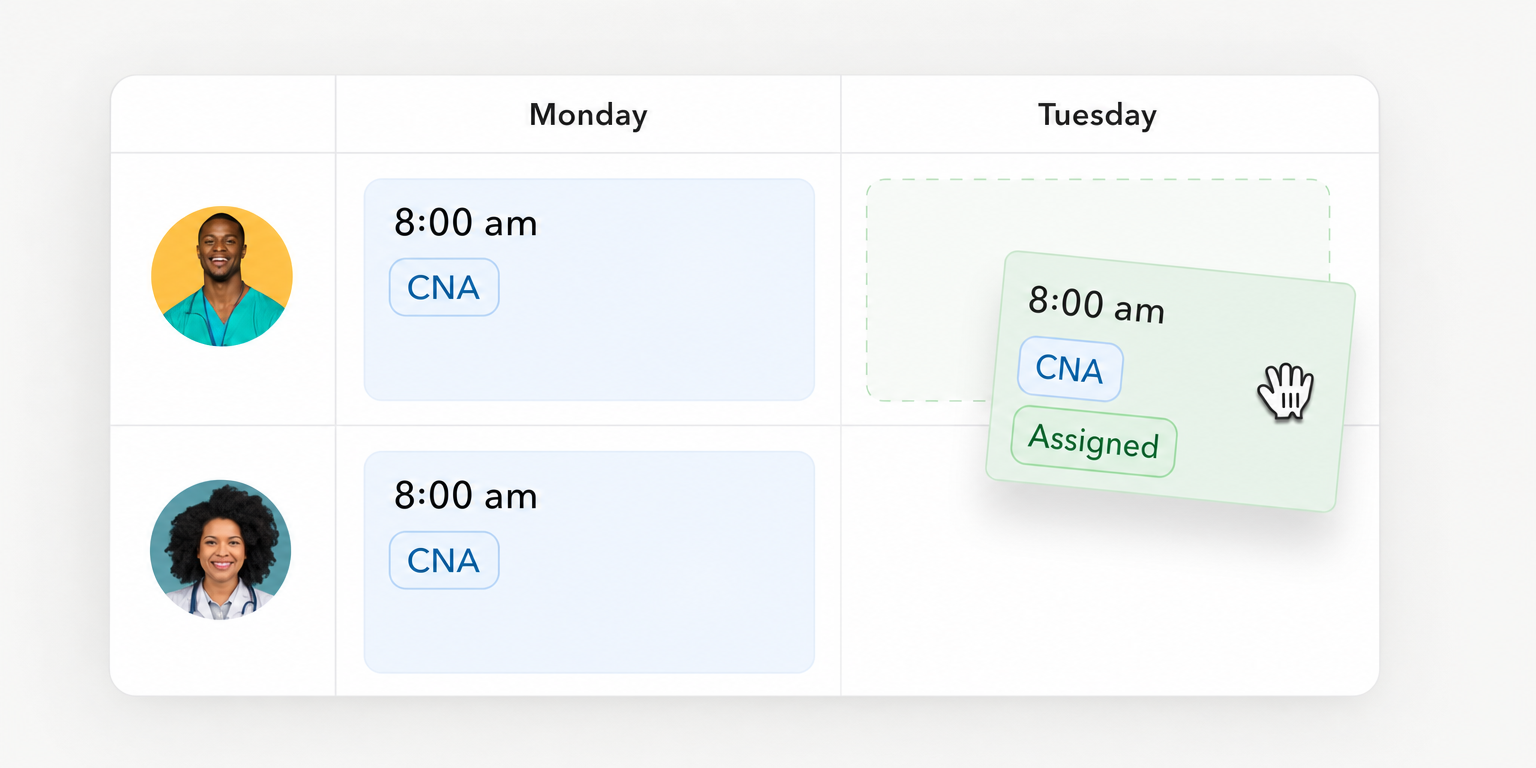
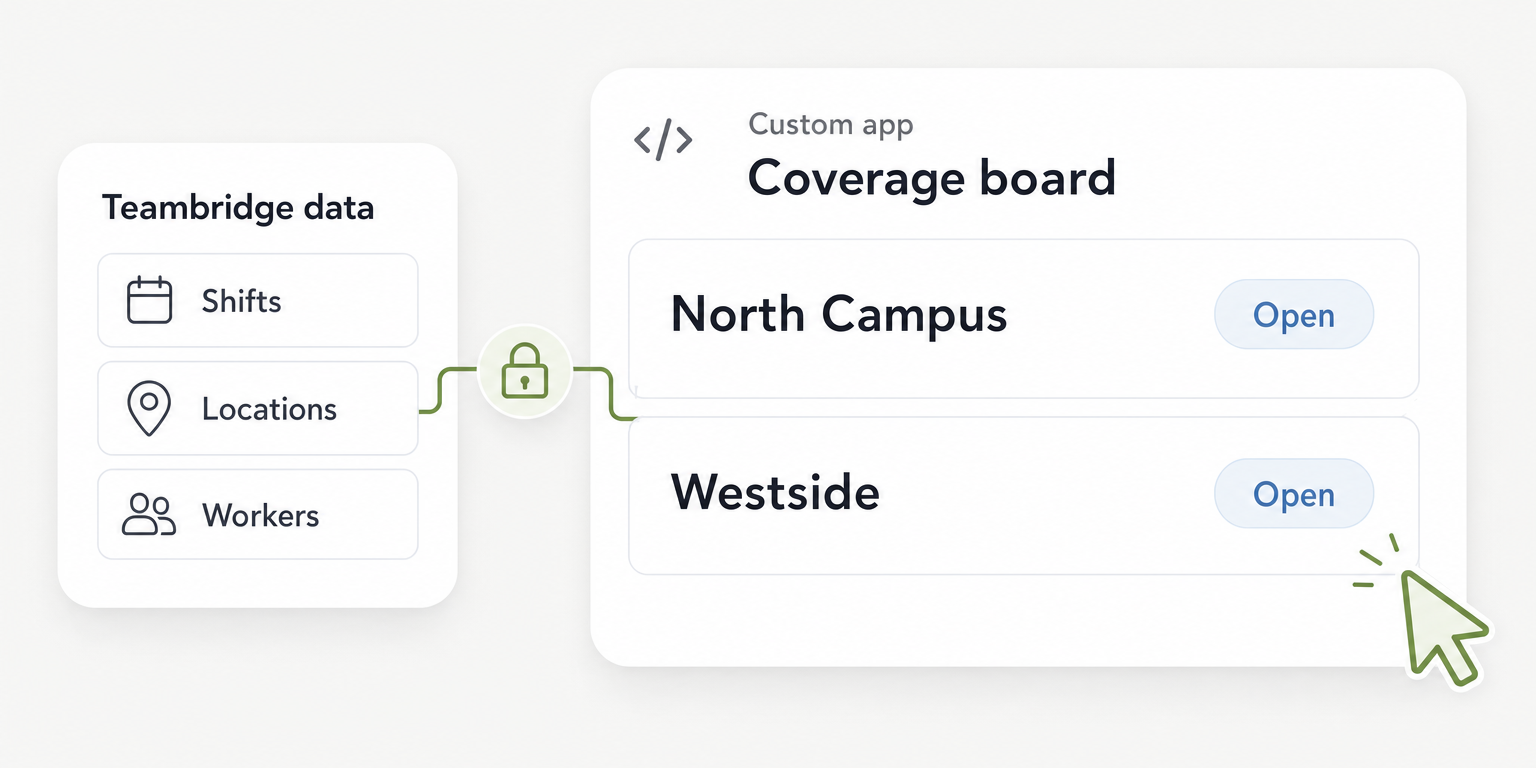
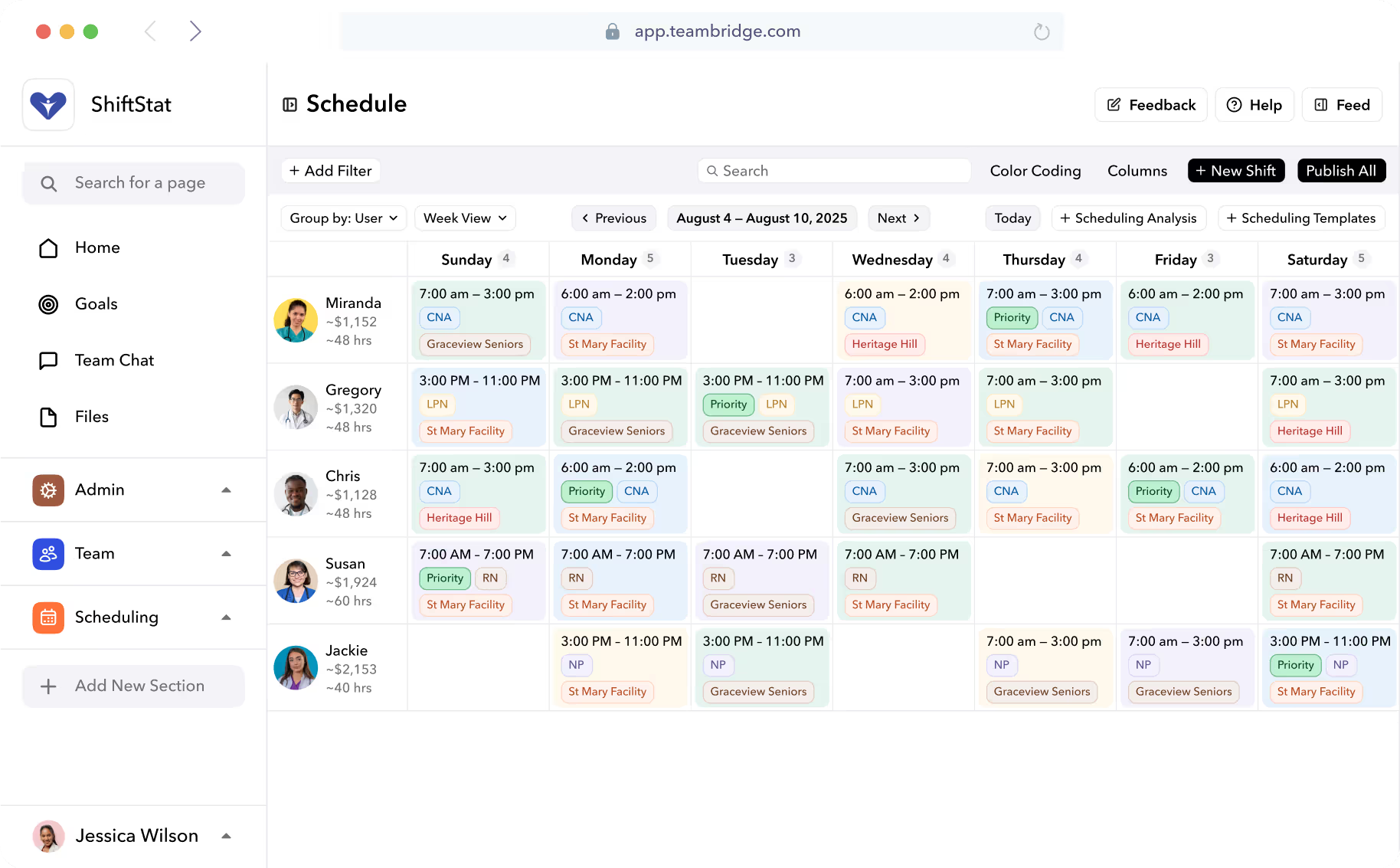
Teambridge is the all in one platform for hourly teams, tailored to each company. Its onboarding, credential tracking, workflows and scheduling map to the operational work surrounding assignment readiness. The onboarding product page describes worker requirements, forms and files, internal review and follow up on missing items.
Keep the product boundary explicit. These capabilities do not establish that Teambridge performs criminal record searches, adjudicates reports or has a verified connection to your screening provider. Its scheduling documentation describes assignment filters, but that is not evidence of an automatic scheduling restriction based on a screening decision.
During implementation, have an authorized administrator and HR reviewer validate the actual configuration. Test who can record the approved decision, what saved record dispatch receives and who can see supporting information. If a screening connection or status update fails, define a manual review path and escalation owner before using it for live assignments.
Run screening reviews against dispatch cutoffs and unresolved case age
Make the process part of the agency’s operating cadence. A weekly meeting alone cannot resolve a missing authorization for tomorrow’s first shift. The operations leader should establish this review sequence:
- Recruiting reviews incomplete submissions daily. Confirm the missing item, contact owner and next follow up. Separate candidates who need help from cases awaiting external research.
- Screening operations reviews pending cases before each dispatch cutoff. Check the last update, next action and escalation path. Give dispatch an unresolved status early enough to consider coverage alternatives.
- HR reviews its decision queue and disputed cases. Prioritize by assignment timing while preserving the approved review and notice process. Record who is covering when the usual reviewer is unavailable.
- Operations reviews recurring delays weekly. Distinguish candidate completion issues, external search delays and internal review bottlenecks. Change the relevant process rather than blaming every delay on the provider.
Measure authorization completion as completed permissions divided by requests sent within a defined cohort. Track pending case age from a consistently defined start, such as order submission. Separately measure elapsed time from report completion to a documented decision so an internal review backlog does not disappear inside a screening turnaround measure.
Count starts delayed by unresolved screening and record the reason. Establish targets from the agency’s baseline rather than borrowing an unsupported industry benchmark. Review whether the data includes canceled assignments and document that choice so comparisons remain useful.
The recommended acceptance conditions are straightforward: every unresolved case has an owner and next action, and dispatch approval has a documented assignment decision behind it. Use the exception ownership checklist in the next vendor demonstration. Review the first live cases against those conditions before expanding the process to more clients or branches.

About the author

Content Writer at Teambridge
Anis Nanai is a content writer at Teambridge, with a focus on workforce management and the realities of running hourly teams. He prioritizes conversations with customers, staying close to the market, and understanding how workforce needs are changing. His writing connects those concerns to practical decisions about scheduling, time tracking, staffing, and automation. He examines product developments through the questions that matter to operators: what does this solve, how would it work for my team, and what evidence supports it?
Company perspective: this author works at Teambridge. Customer outcomes are attributed to their published sources.
View LinkedIn profile