Defining "Home Health Care"
The defining feature is the care delivered, not simply its location. A nurse treating a wound and a physical therapist helping someone regain mobility are providing skilled services at home.
Homebound status is a Medicare coverage requirement, not part of the universal definition of home health care. The distinction matters: identifying a service does not establish whether a particular insurance benefit will pay for it.
What Is Home Care, and How Does It Differ From Home Health Care?
Home care is a broader term for services that help someone live at home. It includes nonmedical assistance with bathing, meals, housekeeping, and companionship. MedlinePlus also includes health services within that broader category, so the terms overlap.
Skilled nursing and therapy distinguish home health services, but personal care can also belong in a home health plan. Agencies may schedule clinical visits around specific treatments, while personal care may involve longer shifts. Neither pattern applies to every patient.
For a hypothetical scheduling example, two 45 minute nursing visits, two 45 minute therapy visits, and three 60 minute aide visits total six direct care hours across seven visits. That is scheduled care, not continuous supervision. The worked example below separates those hours from travel and documentation.
Key Services Included in Home Health Care
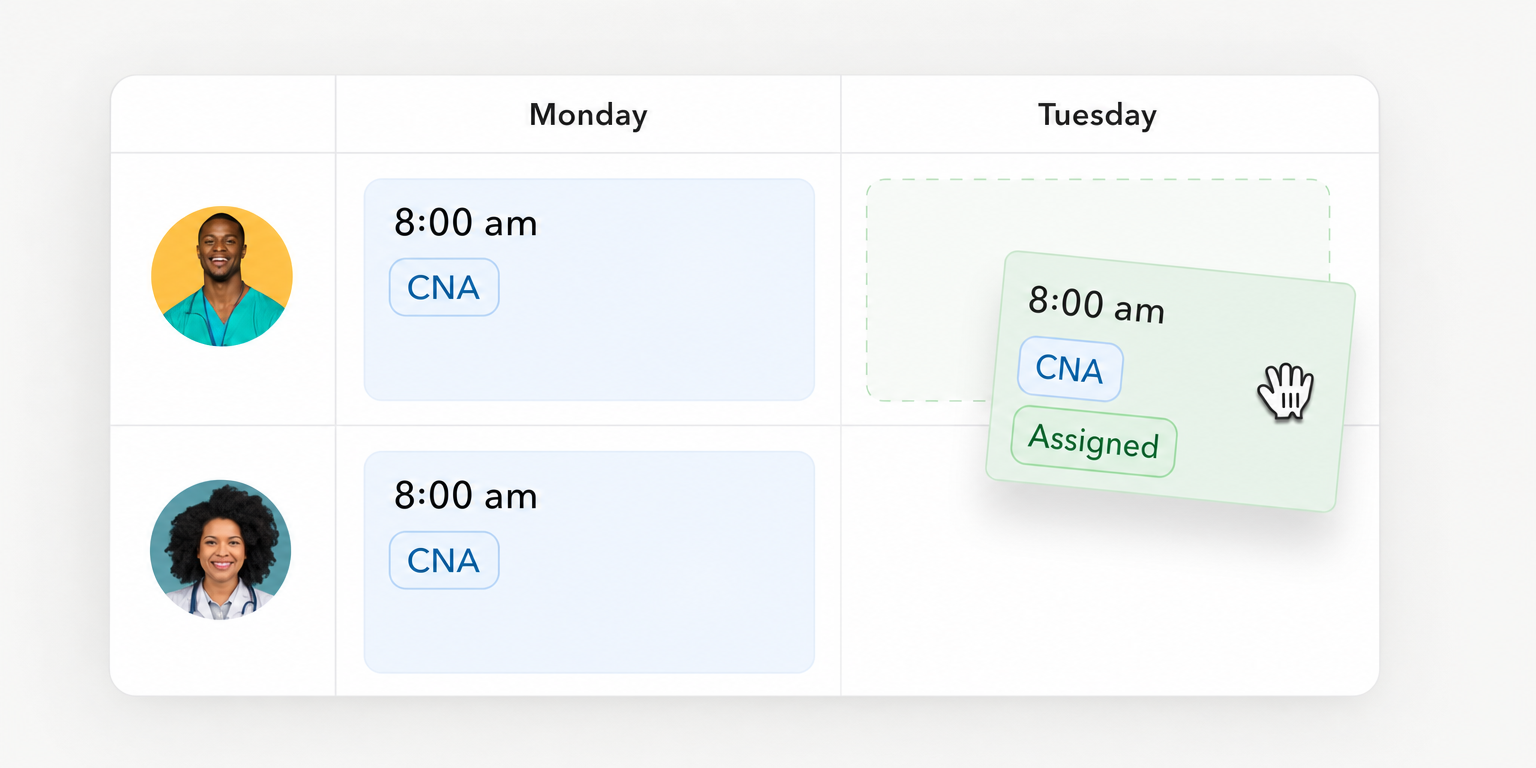
The service determines which worker can perform the visit. An available worker is not necessarily a qualified replacement.
Medicare and MedlinePlus describe services that can include:
- Skilled nursing: Wound care, medication management, and assessment that requires nursing skill. In the example below, an RN performs the ordered wound care.
- Physical therapy: Work on walking, movement, strength, and balance. A physical therapist may assess mobility and teach exercises suited to the patient’s condition.
- Occupational therapy: Help with daily activities such as dressing and bathing, including adapting tasks or the home environment.
- Speech language pathology: Evaluation and treatment for communication or swallowing difficulties.
- Home health aide support: Assistance with bathing, grooming, dressing, and other permitted tasks in the care instructions.
Aides are not universally licensed clinicians. Their qualifications, competency, duties, and supervision must meet the applicable requirements. They cannot take over a nursing task simply because they are already in the home.
For agencies subject to 42 CFR 484.80, an RN or another appropriate skilled professional assigns the aide to the patient and prepares written care instructions. The aide’s work must fit those instructions, state law, and the aide’s training. The scheduler implements the clinical assignment rather than deciding independently what care the aide should provide.
Products discussed
What Is Home Health Care? Services, Visits, and Care Teams tools mentioned
Official marks identify the products materially discussed in this section.
How Home Health Care Works: Eligibility, Referrals, and Care Plans
Accessing services and qualifying for Medicare coverage are separate questions. A family may seek help directly, or a hospital or practitioner may refer someone to an agency. The agency still needs to establish what services it can provide, what clinical documentation is required, and how payment will work.
For Medicare, the process includes distinct requirements:
- Establish a qualifying skilled need. Initial eligibility generally depends on intermittent skilled nursing, physical therapy, or speech language pathology. Occupational therapy has a specific role in continuing eligibility after services were initiated for a qualifying need, so it should not be treated as an automatic standalone route to initial eligibility.
- Confirm homebound status. This does not mean the patient can never leave home. Medicare permits medical appointments and certain short or infrequent absences.
- Complete the required encounter and certification. A referral starts coordination, but it does not automatically satisfy every order or certification requirement.
- Establish the plan and arrange care through a Medicare certified agency. The physician or allowed practitioner establishes and reviews the plan in coordination with agency clinical staff.
The required encounter must relate to the primary reason for home health services. It must occur within 90 days before care starts or 30 days after it starts, with the encounter date documented as required by 42 CFR 424.22.
The plan identifies service types, visit frequency, and duration. The scheduler turns those instructions into worker assignments and visit times. The scheduler does not independently reduce the ordered frequency because the roster is short.
Operator view
Supporting evidence
Important
Medicare’s home health benefit does not cover continuous 24 hour care at home or personal care when that is the only care needed. Covered aide services require concurrent qualifying skilled services. Confirm the actual benefit before promising a family ongoing coverage throughout the day.
Put the workflow into practice
See how your team could use this workflow
Seven Home Health Visits Can Mean Six Hours of Direct Care
The following is a hypothetical planning example, not a treatment recommendation or an observed patient result. Assume an approved weekly plan specifies nursing for wound care, physical therapy for mobility, and aide assistance with bathing. The assumed visit lengths exclude travel and documentation.
| Discipline and task | Assumed weekly visits | Assumed minutes per visit | Calculation | Direct care minutes |
|---|---|---|---|---|
| RN: wound care | 2 | 45 | 2 × 45 | 90 |
| PT: mobility work | 2 | 45 | 2 × 45 | 90 |
| Aide: bathing assistance | 3 | 60 | 3 × 60 | 180 |
| Total | 7 | Not applicable | 90 + 90 + 180 | 360 |
First, multiply each discipline’s visits by its assumed visit length. Next, add the discipline totals: 90 + 90 + 180 = 360 minutes. Finally, divide by 60: 360 ÷ 60 = six direct care hours.
Medicare’s service definitions support these categories of care, not the invented frequencies or durations.
In this hypothetical week, seven visits provide six hours of direct care. They do not provide someone who stays in the home between visits.
The physician or allowed practitioner establishes the plan with clinical input. The scheduler assigns qualified workers within its instructions and the patient’s availability. A request to change visit frequency goes back to the clinical team, even when the request begins as a scheduling problem.
The family also needs to understand the uncovered intervals. If the patient needs help getting to the bathroom between visits, that need cannot be assumed to disappear because a home health plan exists.
Staffing Home Visits Requires Credentials, Travel Time, and Coverage Owners
Match the discipline before filling the opening
If the RN calls off in the hypothetical week, sending an aide does not complete the wound care visit. Scheduling needs a replacement with the qualifications required for the assigned nursing work. The clinical team must assess any proposed change to the care arrangements.
Check the required license or other qualifications, their validity, and any task specific competency before confirming an assignment. For aides, preserve the clinical assignment and written care instructions required by 42 CFR 484.80.
Put travel into the schedule and paid time record
A visit ending at one home cannot be followed immediately by a visit across town. Travel must fit between assignments, and direct care totals are not the full labor requirement.
Under Department of Labor guidance, travel between clients during the workday for the same home care employer is compensable work time. Ordinary commuting is generally different. A planned travel allowance helps build the schedule, but it is not a substitute for recording compensable time actually worked.
Assign both a coverage owner and a clinical escalation owner
As an operating recommendation, make scheduling responsible for finding qualified replacement coverage. Make a designated clinical lead responsible for assessing what a delay or missed visit means for the patient’s plan. These are recommended responsibilities, not federally prescribed job titles.
Record whether the exception was a worker call off, patient cancellation, or inability to access the home. Those events need different follow up, even if all leave an uncompleted visit on the schedule. If replacement coverage cannot be found, route the exception to the clinical lead rather than treating the visit as completed or silently dropping it.
This ownership model supports the coordination duties described in 42 CFR 484.60. The agency’s clinical process determines whether practitioner notification or a plan change is needed.
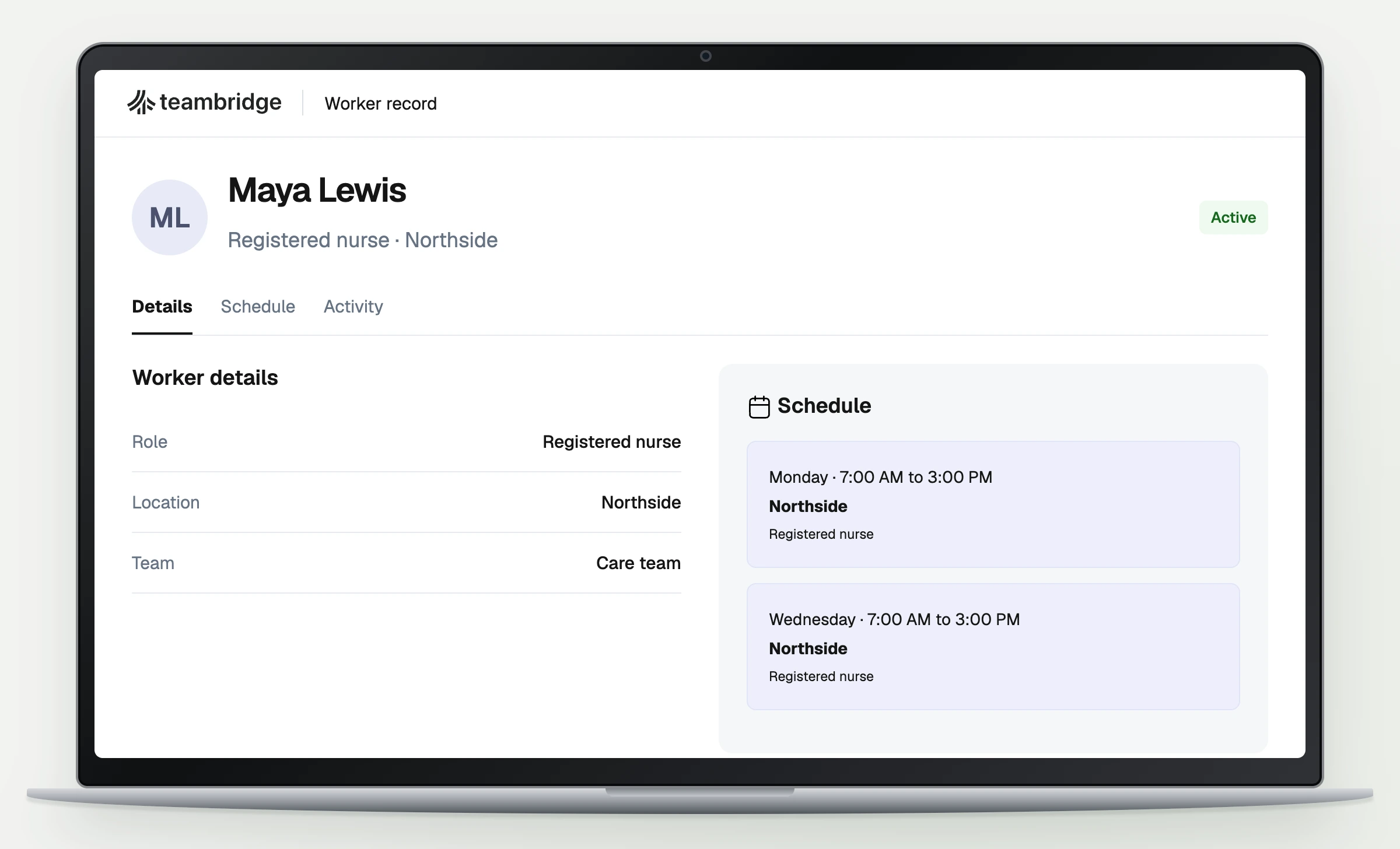
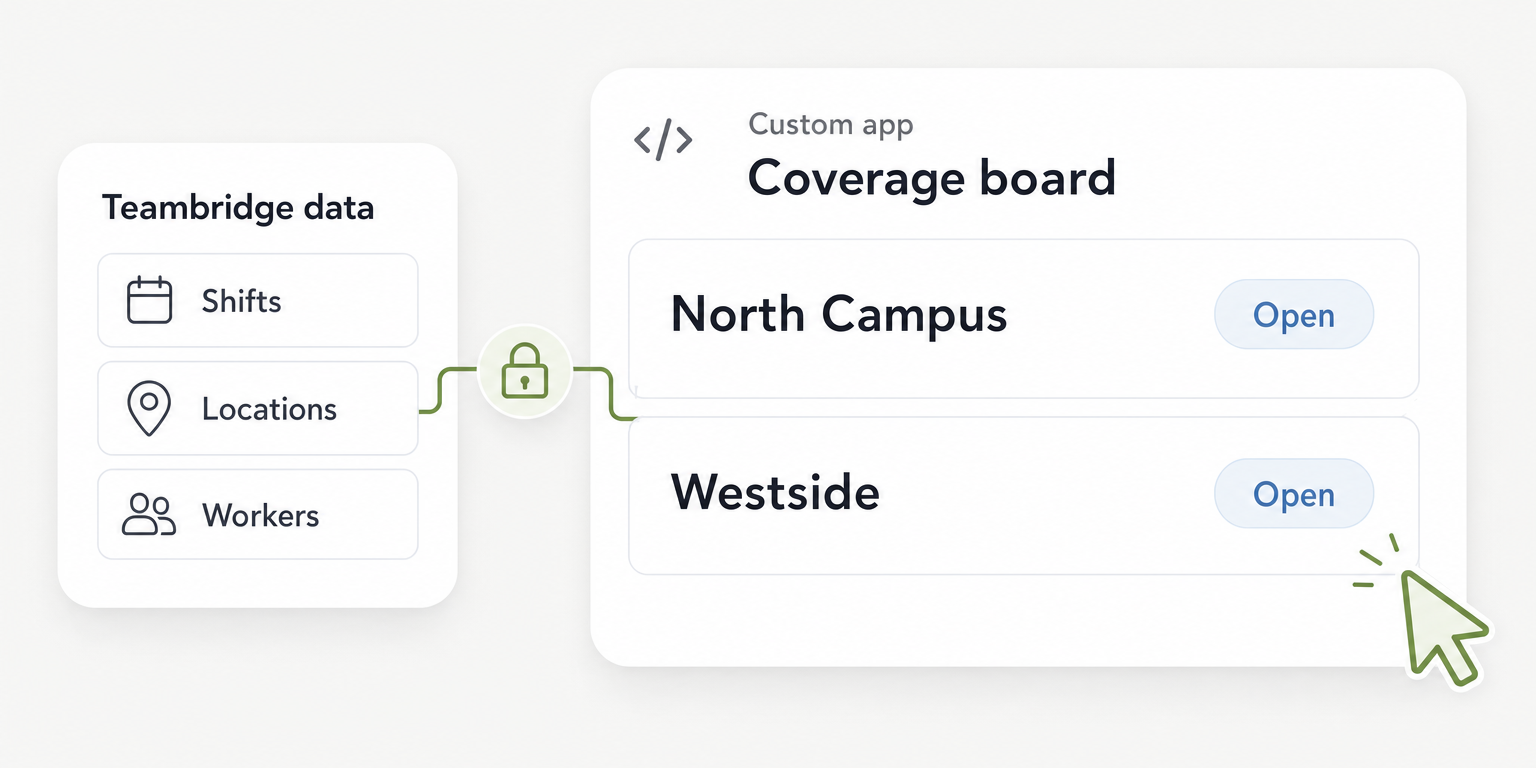
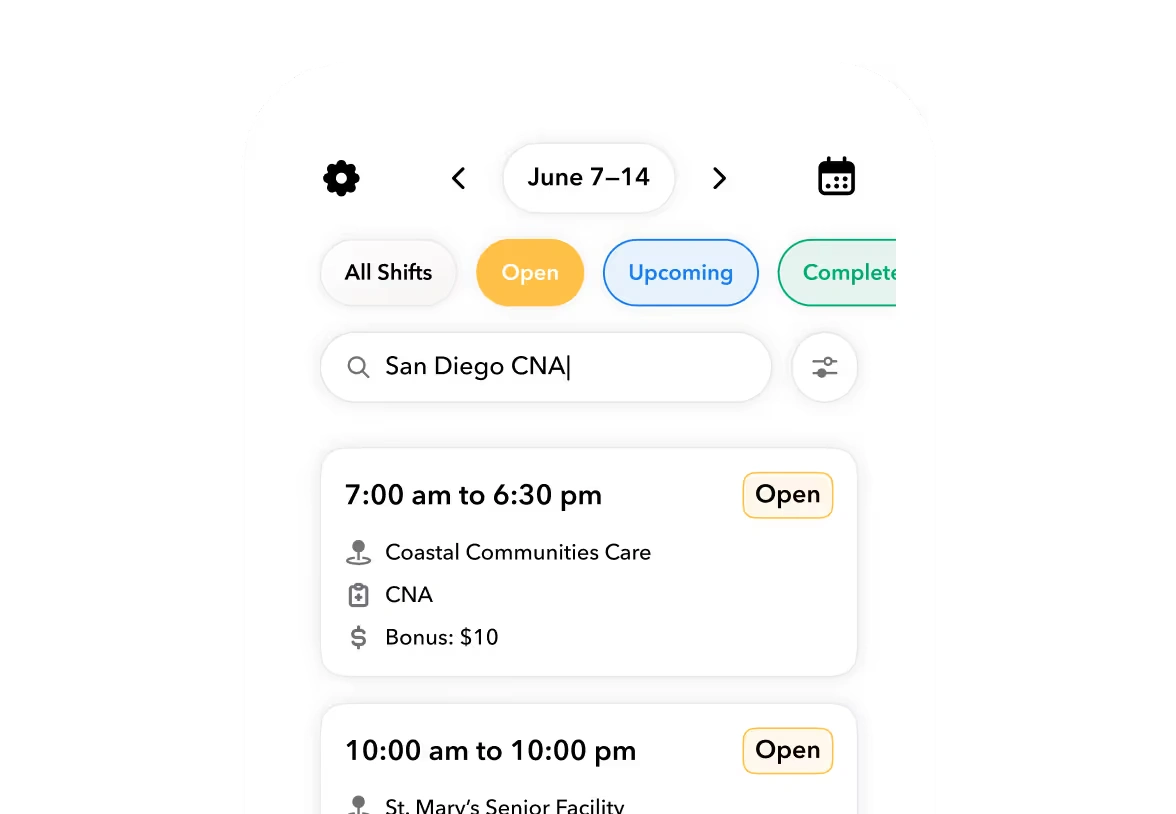
Teambridge scheduling supports workforce assignments using worker qualifications, availability, and location. That maps to staffing the visit, not deciding the treatment or changing its clinical frequency.
Copy This Care Plan to Schedule Handoff Template
Use this editorial operating template to carry approved plan details into scheduling. It is not a mandated form or a replacement for the clinical record. Keep patient identifiers out of public examples and store completed operational records only in an appropriately authorized system.
The fields reflect care planning requirements, aide assignment requirements, and paid travel guidance.
| Handoff field | Entry to complete |
|---|---|
| Approved plan reference | [Reference and effective date in authorized system] |
| Ordered discipline and task | [Discipline and approved task] |
| Frequency | [Visits per week or other ordered interval] |
| Duration | [Ordered service period; separately note planned visit length] |
| Required credentials and competency | [Requirements and verification status] |
| Assigned worker | [Qualified worker confirmed against clinical assignment] |
| Travel allowance | [Planned time between locations; record actual work time separately] |
| Replacement coverage owner | [Named scheduling contact] |
| Clinical escalation contact | [Named clinical contact and contact route] |
| Completion status | [Scheduled, completed, canceled, missed, or awaiting clinical direction] |
Completed example using the hypothetical RN visits
Plan reference: Hypothetical approved weekly plan. Discipline and task: RN wound care. Frequency: Two visits during the example week. Duration: One week shown, with an assumed 45 minutes per visit; no later service period is implied.
Credentials: Current RN license and required wound care competency confirmed for this fictional assignment. Assigned worker: Qualified RN selected by scheduling within clinical instructions. Travel allowance: Assume 20 minutes from the preceding patient for planning only; record actual compensable travel separately.
Coverage owner: Scheduling coordinator responsible for this assignment. Clinical escalation contact: Designated clinical lead through the agency’s established contact route. Completion status: Scheduled, not yet completed.
In live use, replace role labels with specific contacts. Save the assignment and its status in the authorized scheduling record. If the plan is unclear or coverage fails, keep the exception visible and route it for clinical direction rather than inventing a replacement frequency.
Match the Home Care Service to the Need, Then Staff the Plan
For patients and families, the practical questions are specific: Which services are ordered? Who pays for them? Who should be contacted if a worker does not arrive? Ask separately about help needed between visits, because a schedule of skilled visits may leave substantial periods without support.
For agency operators, the care plan must become assignments that workers can actually perform. That means the correct discipline, valid qualifications, realistic travel time, and a clear response when a visit cannot happen.
Teambridge is an all in one platform for hourly teams, tailored to each company. Its scheduling, onboarding and credential tracking, and time tracking and timesheets support home care workforce operations. Those workforce functions do not replace clinical assessment, practitioner orders, or payer coverage determinations.
Home health care defines the skilled services delivered at home. A workable schedule makes those services reachable without confusing a filled shift with a fulfilled clinical plan.

About the author

Content Writer at Teambridge
Anis Nanai is a content writer at Teambridge, with a focus on workforce management and the realities of running hourly teams. He prioritizes conversations with customers, staying close to the market, and understanding how workforce needs are changing. His writing connects those concerns to practical decisions about scheduling, time tracking, staffing, and automation. He examines product developments through the questions that matter to operators: what does this solve, how would it work for my team, and what evidence supports it?
Company perspective: this author works at Teambridge. Customer outcomes are attributed to their published sources.
View LinkedIn profile