

Avionté and Symplr are both established platforms, but they serve different organizational needs. Avionté is designed for staffing agencies focused on recruiter productivity, applicant tracking, CRM workflows, and high-volume placements, while Symplr is built for healthcare organizations that emphasize credentialing, compliance, and clinical workforce operations. The right choice depends on how each platform supports your workflows, automation requirements, and, if necessary, how it works with other technology you use.
Quick look
At first glance, Avionté and Symplr may appear to offer similar functionality, including applicant tracking, talent management, and workforce coordination. In practice, each platform is designed for different staffing needs:
Avionté supports recruiter-led workflows in staffing firms, with tools for job seekers, job search activity, and high-volume placements.
Symplr is built for healthcare staffing, with strengths in credential tracking, provider data accuracy, and clinician scheduling across healthcare and allied health roles.
The goal is not to identify a universal winner, but to help you determine which platform best supports your workflow, whether that means improving recruiter efficiency, supporting retention, or coordinating healthcare talent at scale with fewer manual processes and better real-time visibility.
Platform overviews
Before comparing specific functionalities, it’s important to understand the underlying philosophy behind each platform. Avionté and Symplr are designed around very different assumptions about workflows, automation, and how teams interact with their broader tech stack. These differences shape how each platform supports talent acquisition, compliance, and long-term optimization.
Avionté at a glance
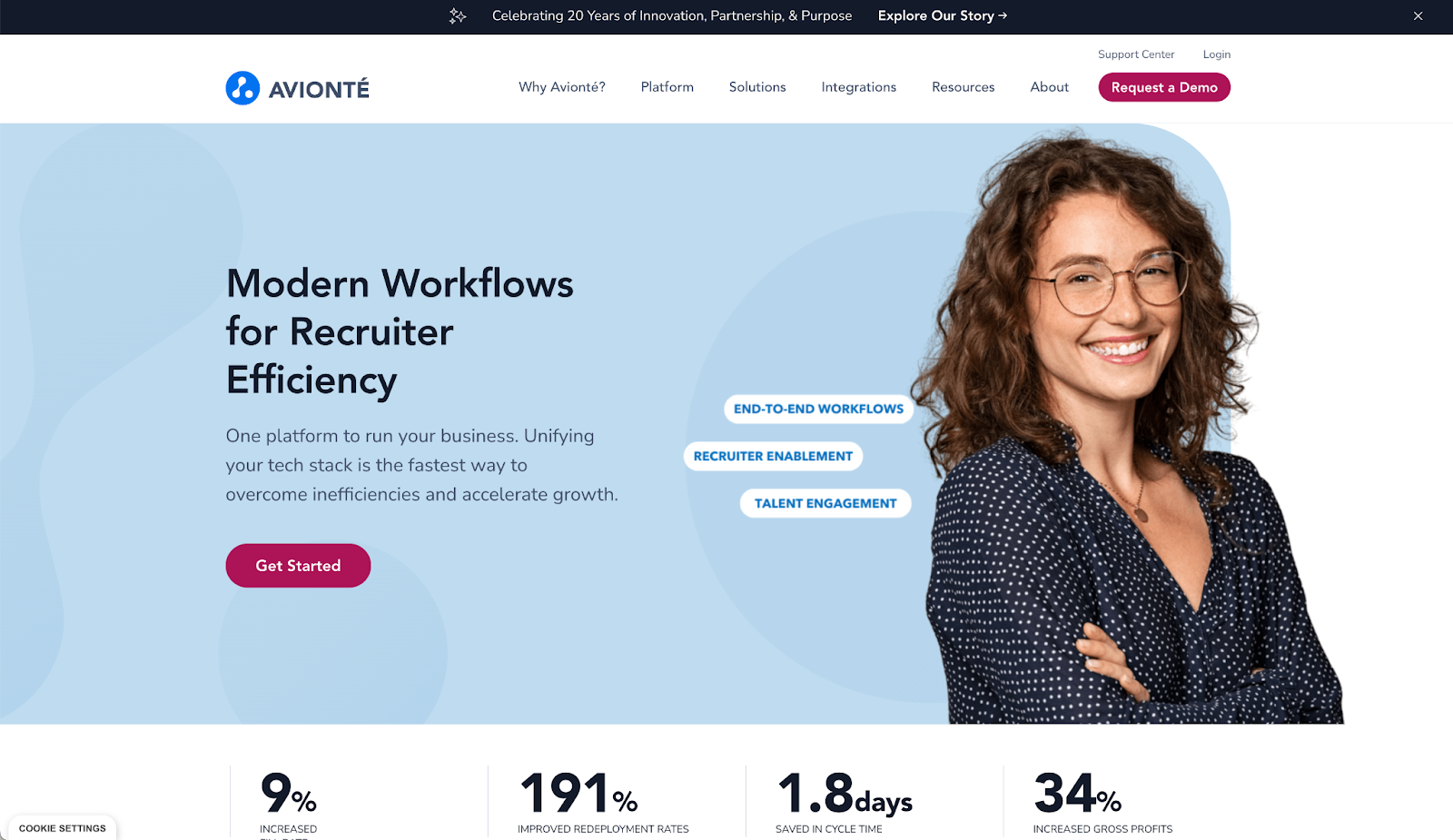
Avionté is a staffing platform designed for agencies that manage large volumes of candidates, clients, and placements. It combines applicant tracking and CRM tools, so recruiters can handle sourcing, job postings, candidate pipelines, referrals, and client relationships. Automation supports many parts of the hiring process through configurable workflows, templates, and notifications, helping teams reduce manual work. It’s commonly used by staffing firms running recruiter-led pipelines and high placement volume, with automation to reduce manual work..
Symplr at a glance
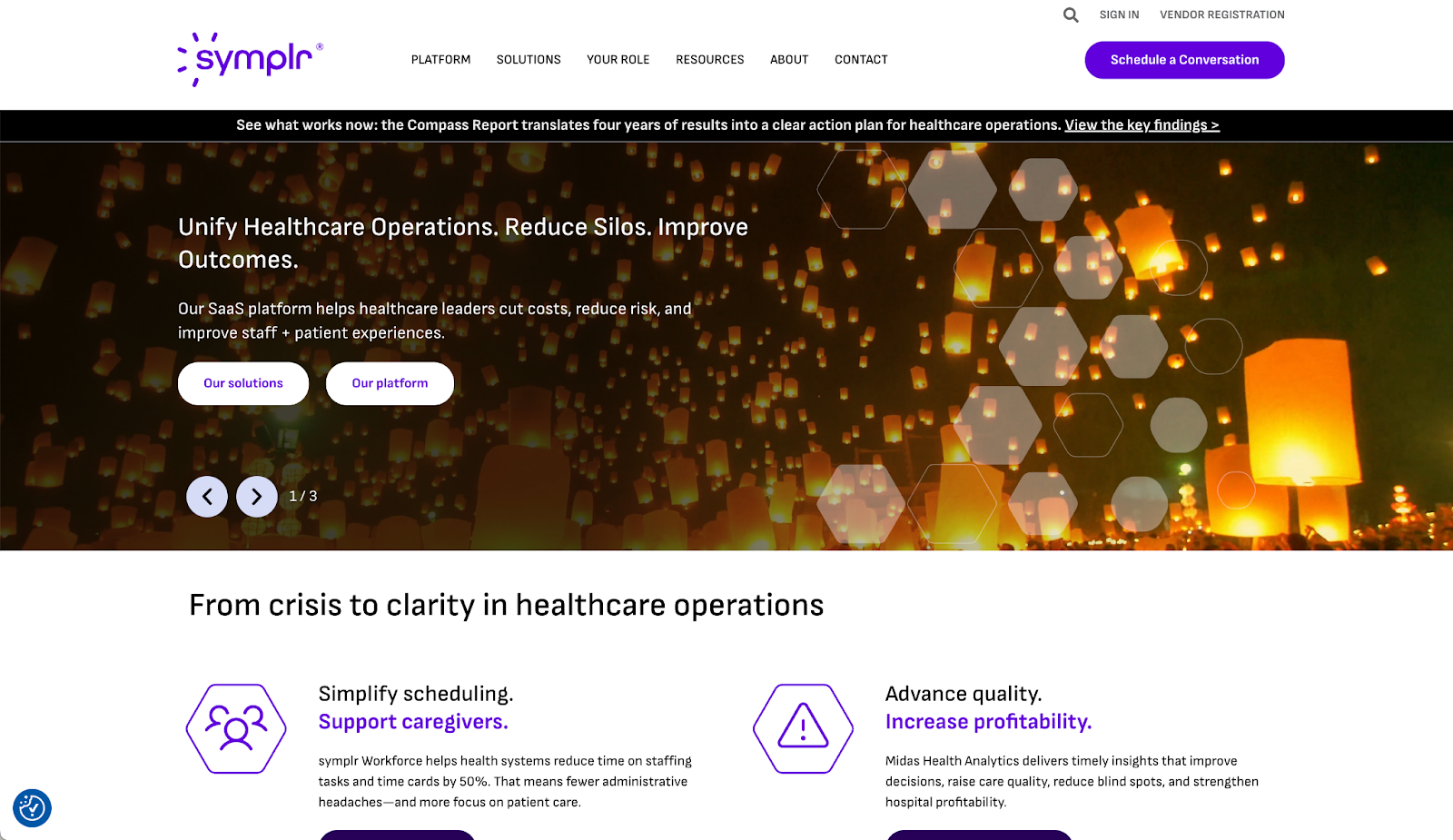
Symplr is a healthcare-focused workforce operations platform used by hospitals, health systems, and healthcare staffing organizations. It focuses on managing the provider lifecycle, with an emphasis on credentialing, compliance, and workforce coordination for clinicians and allied health staff. Rather than functioning as a traditional CRM, Symplr is designed around maintaining accurate provider data, scheduling, and operational visibility to support clinical operations. The platform is commonly used in healthcare settings where regulatory requirements and risk management play a larger role than rapid hiring cycles.
Comparing core features
Recruiting, ATS, and CRM capabilities
Avionté is designed for recruiter-led talent acquisition within staffing agencies and staffing firms. Its applicant tracking system is closely integrated with CRM functionality, allowing recruiters to manage sourcing, job postings, candidate pipelines, referrals, and client relationships. Recruiters can track candidates through each stage of the hiring process, automate outreach through templates and notifications, and move talent toward placement. These capabilities support high-volume recruiting environments where productivity and responsiveness directly impact placement outcomes and candidate experience.
Symplr approaches recruiting differently, reflecting the needs of healthcare environments where hiring is tightly linked to compliance and credential validation. Rather than optimizing for speed alone, Symplr ensures clinicians, healthcare professionals, and allied health candidates cannot advance unless required credentials and provider data are complete and verified. This structure supports healthcare recruiters who must prioritize regulatory alignment, accuracy, and patient safety. While Symplr places less emphasis on CRM-style pipeline management, it is suited for organizations where workforce readiness depends on real-time credential checks and risk mitigation.
Talent management and workforce operations
Beyond hiring, Avionté supports talent management through staffing-focused workforce tools that help agencies manage workers throughout the assignment lifecycle. Once candidates are placed, the platform supports assignment tracking, time capture, payroll workflows, and redeployment for future roles. Approved time data can flow into billing and payroll systems, helping connect recruiting and back-office processes. These capabilities are commonly used by agencies handling temporary or contract workers across multiple clients.
Symplr’s workforce management capabilities are rooted in healthcare operations and clinical oversight. Its tools are designed to ensure only properly credentialed providers are eligible for scheduling, system access, and clinical work. Workforce features often include demand-based scheduling, automated credential monitoring, and visibility into provider availability across departments or facilities. This approach aligns with healthcare environments that require structured workforce processes and ongoing compliance oversight.
Integrations and ecosystem
Avionté relies on a partner-driven ecosystem to extend its functionality across the staffing industry. Integrations with background screening providers, payroll systems, tax credit tools, and vendor management platforms allow agencies to connect front-office recruiting with back-office operations. API access supports custom data flows for organizations with more complex tech stacks. This approach allows staffing firms to tailor their ecosystem but often requires thoughtful configuration and ongoing maintenance to ensure data remains consistent as operations scale.
Symplr takes a more consolidated approach to integrations. Its ecosystem prioritizes connectivity with clinical systems such as EHRs, enterprise payroll platforms, and HR systems to maintain accurate provider data across the workforce lifecycle. This integration model reduces fragmentation and supports compliance-driven workflows, where inconsistent data can introduce operational risk. While APIs are available, Symplr is typically most effective when used as a centralized system of record within a healthcare-focused technology environment.
Pricing comparison
Pricing reflects how each platform aligns with different staffing models and operational priorities.
Avionté uses a custom pricing model based on user count and selected functionality. Costs generally scale with recruiting team size and usage across recruiting, payroll, and billing. Implementation and integration costs should be considered, particularly for agencies replacing multiple systems. For organizations focused on recruiter efficiency and placement volume, the investment is often evaluated against gains in productivity and reduced manual effort.
Symplr follows a modular enterprise pricing structure, with costs typically tied to hospital size, provider count, or licensed modules such as credentialing or scheduling. Implementation can be more complex due to compliance configuration and clinical integrations. Healthcare organizations often assess value based on risk reduction, regulatory alignment, retention, and long-term operational stability rather than hiring throughput alone.
Who Avionté or Symplr could work for
Choosing between Avionté and Symplr depends on how your organization operates day to day and where most complexity exists in your workflow.
When Avionté is the better choice
Avionté is a common choice for high-volume staffing agencies, particularly those with traditional, recruiter-driven hiring processes.
- High-volume recruiting environments: Designed for teams managing frequent job postings, job seekers, and fast-moving placements.
- Recruiter-led workflows: Supports recruiter efficiency through integrated CRM and applicant tracking system tools.
- Talent acquisition at scale: Suited for organizations focused on sourcing, referrals, and securing top talent quickly.
- Operational streamlining: Reduces manual processes by automating outreach, workflows, and notifications.
- Multi-industry staffing: Works for agencies operating beyond healthcare, including general and specialized staffing segments.
- Tech stack consolidation: Helpful when replacing multiple systems within a single tech stack.
When Symplr is the better choice
Symplr is suited for organizations operating in regulated healthcare environments where workforce accuracy and compliance outweigh speed.
- Healthcare staffing operations: Designed specifically for hospitals and healthcare staffing organizations.
- Clinician-focused workforce management: Supports providers, clinicians, healthcare professionals, and allied health staff.
- Credential-driven hiring: Ensures every credential requirement is met before clinicians move through the hiring process.
- Compliance-first workflows: Minimizes risk through structured workflow enforcement and validation.
- Retention-focused operations: Helps improve retention by aligning schedules, credentials, and workforce demand.
- Enterprise healthcare tech stacks: Integrates with clinical systems to maintain consistent data across the tech stack.
Pros and cons for each platform
The trade-offs of each platform focus on practical strengths and limitations based on functionalities, workflow design, and how each fits into a modern tech stack.
Avionté pros and cons
Pros
- Recruiter-centric design: Built to support recruiter productivity across talent acquisition, sourcing, job postings, and placements within a unified applicant tracking system and CRM.
- High-volume staffing support: Suited for staffing agencies and staffing firms managing frequent hiring cycles and large pools of job seekers.
- Operational automation: Reduces manual processes through workflow automation, templates, and notifications tied directly to the hiring process.
- Integrated front and back office: Connects recruiting data with payroll and billing to support operational visibility.
- Extensible ecosystem: Offers integration options and API access to connect with broader recruiting and payroll tools in the tech stack.
Cons
- Higher total cost at scale: Pricing can increase as user counts, modules, and integrations expand.
- Implementation complexity: Initial setup and optimization may require dedicated resources, especially when replacing multiple systems.
- Learning curve for new users: The breadth of functionalities can require structured onboarding for recruiters and operations teams.
- Less healthcare-specific: Not purpose-built for clinical compliance or managing licensed providers and clinicians.
- Customization often consultant-led: Advanced workflow changes may require vendor support rather than full self-serve configuration.
Symplr pros and cons
Pros
- Healthcare-first architecture: Designed specifically for healthcare organizations managing providers, clinicians, healthcare professionals, and allied health staff.
- Credential-driven workflows: Strong enforcement of credential and compliance requirements throughout the hiring process.
- Enterprise workforce coordination: Supports complex scheduling, demand forecasting, and workforce oversight.
- Retention and risk focus: Helps improve retention and reduce regulatory exposure through structured workflow controls.
Cons
- Limited recruiter-style CRM: Does not function as a traditional sales-driven CRM for staffing pipelines or referrals.
- Longer deployment timelines: Enterprise implementations often require significant planning and configuration.
- Higher upfront investment: Pricing and implementation costs may be prohibitive for smaller organizations.
- Utility-focused interface: Some users report a steeper learning curve compared to more user-friendly staffing platforms.
- Less flexible outside healthcare: Not optimized for non-clinical staffing or generalized talent acquisition use cases.
When you need more than Avionté or Symplr
The right platform depends on your day-to-day workflow and where operational complexity shows up. Avionté is typically used by staffing agencies that manage recruiter-led pipelines and high placement volume, while Symplr is more often associated with healthcare environments where credentialing, provider data, and clinician coordination are central. Both are designed around different operational priorities.
However, many modern organizations, especially in healthcare staffing, operate in a hybrid reality, needing both recruiter-driven speed and strict credential enforcement. Managing these needs across separate systems often leads to manual work, reduced visibility, and tech stack complexity. When both efficient recruiting and compliant workforce execution are critical, it’s worth considering a unified platform built to streamline talent management, automation, and compliance, so teams don’t have to choose between speed and safety.
Why Teambridge is the best alternative
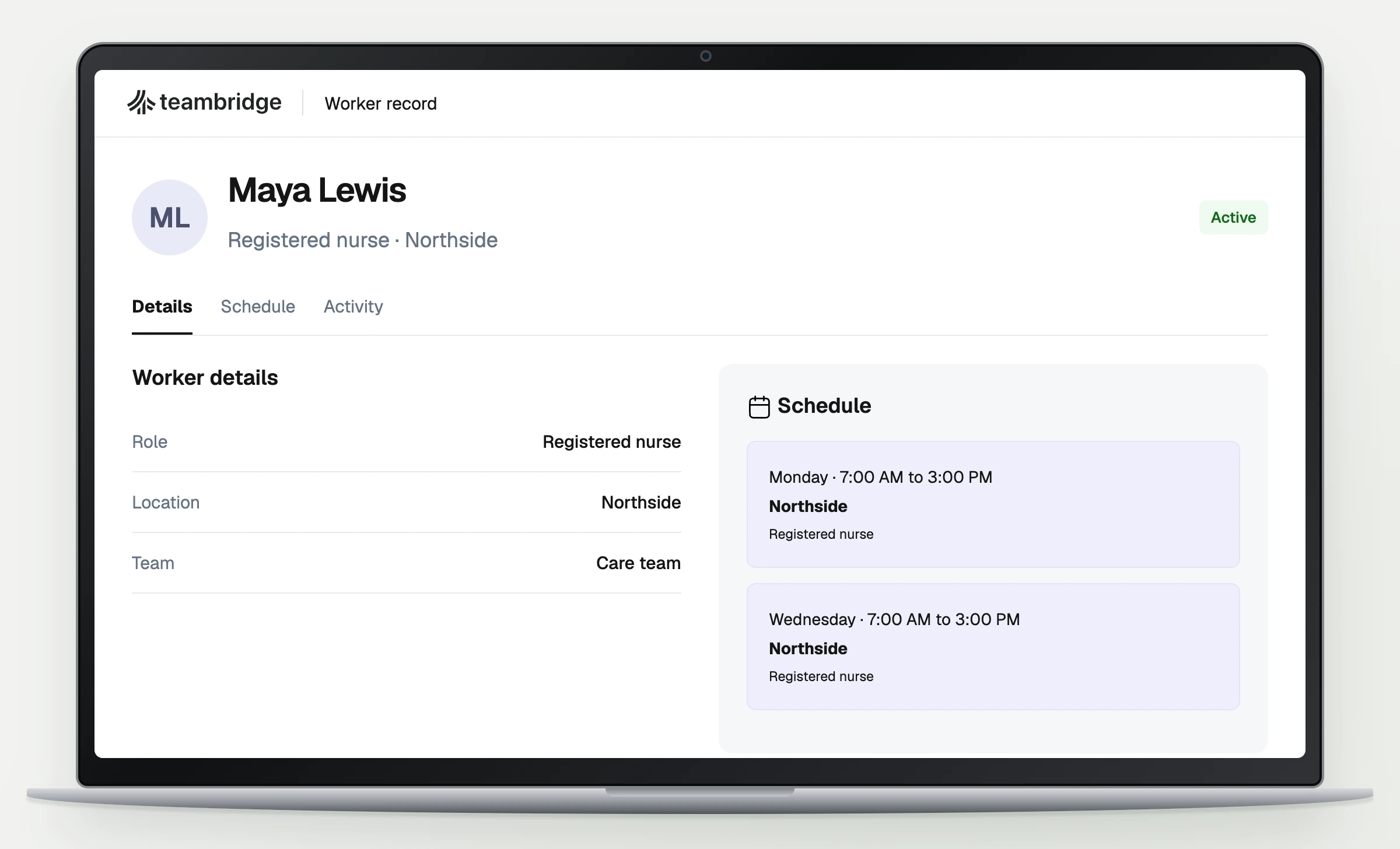
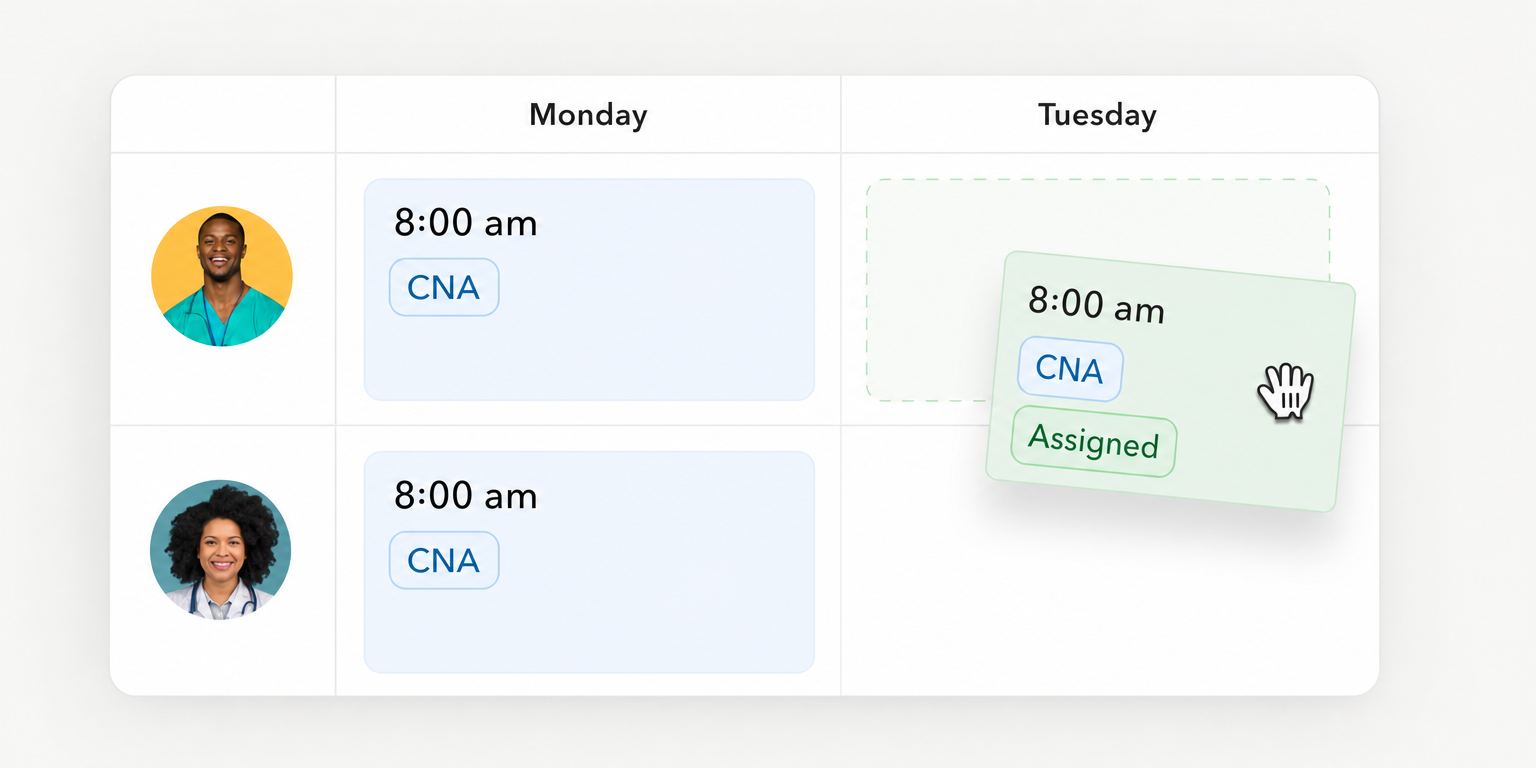
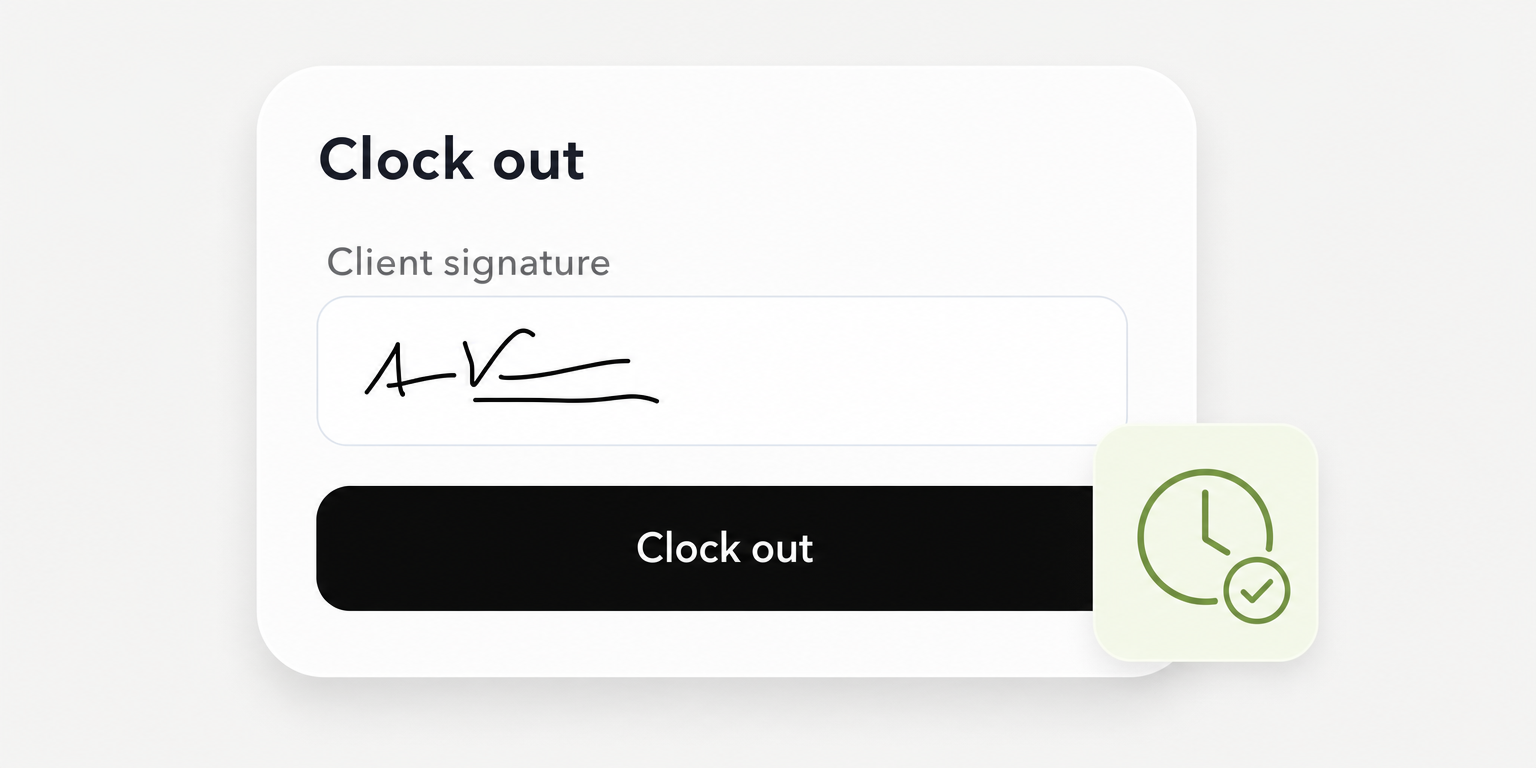
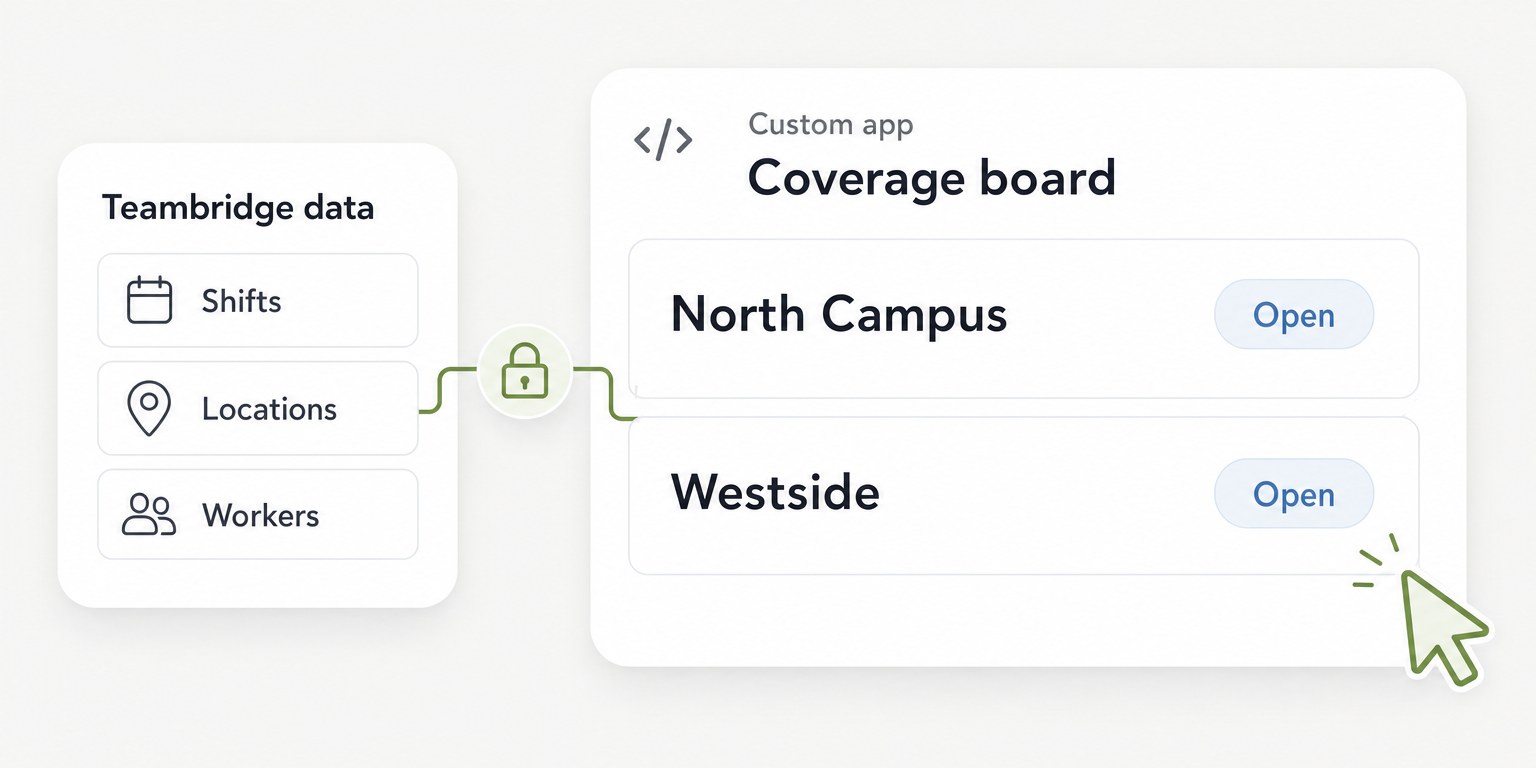
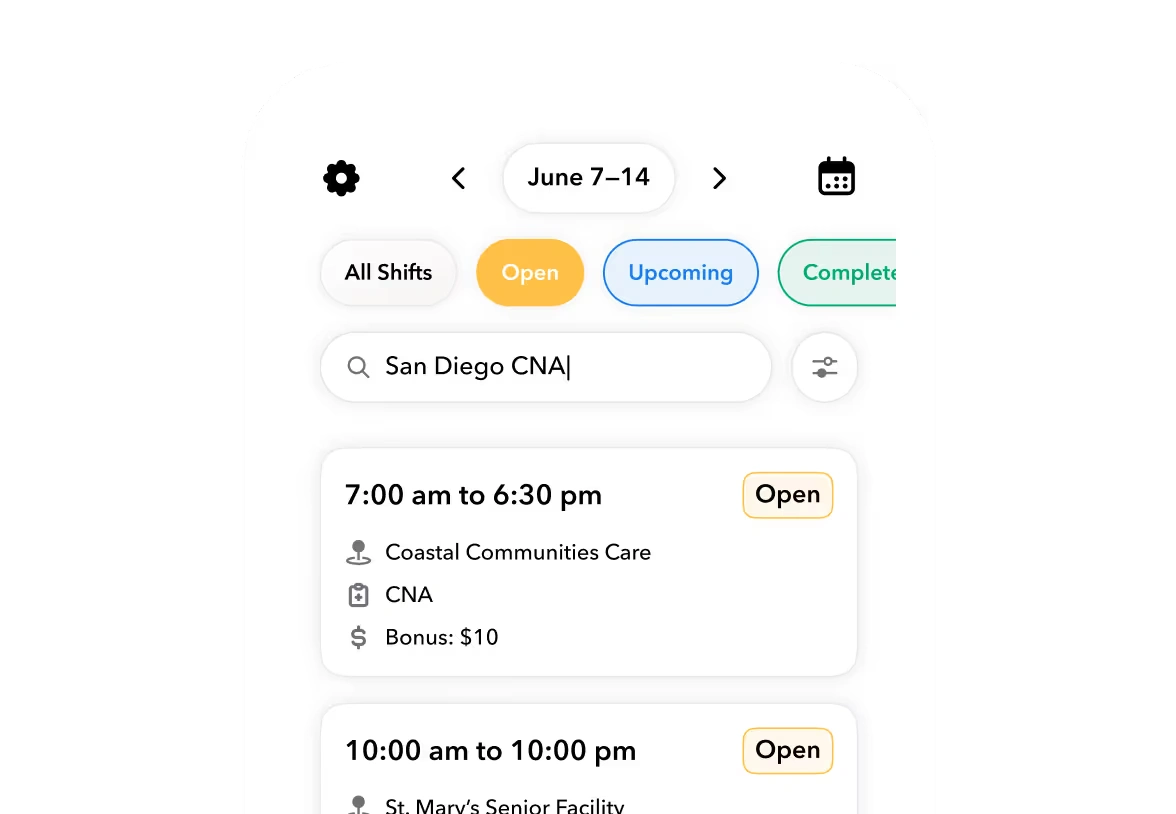
Teambridge takes a more all-in-one approach than both Avionté and Symplr by combining applicant tracking system capabilities, scheduling, time and attendance, onboarding, credential management, and communication into a single platform. Instead of relying on separate tools for recruiter workflows, compliance, and shift management, organizations can manage the entire hiring process and ongoing talent management in one system. This unified setup helps staffing agencies, staffing firms, and healthcare staffing teams reduce manual processes, improve real-time visibility, and streamline coordination across their tech stack.
Designed as modern workforce infrastructure, Teambridge supports fast-moving environments where schedules change frequently and provider and clinician requirements must stay current. Its user-friendly, mobile-first experience and built-in automations allow teams to adapt workflows without heavy configuration. This makes it a flexible alternative for organizations that need recruiting, compliance, and workforce execution working together, not siloed across disconnected platforms.
Book a demo with Teambridge, and see how teams scale efficiently, streamline operations, strengthen retention, and drive impact across general and healthcare staffing.

About the author

Content Writer at Teambridge
Anis Nanai is a content writer at Teambridge, with a focus on workforce management and the realities of running hourly teams. He prioritizes conversations with customers, staying close to the market, and understanding how workforce needs are changing. His writing connects those concerns to practical decisions about scheduling, time tracking, staffing, and automation. He examines product developments through the questions that matter to operators: what does this solve, how would it work for my team, and what evidence supports it?
Company perspective: this author works at Teambridge. Customer outcomes are attributed to their published sources.
View LinkedIn profile